
Even the most fledgling wine enthusiasts are in on the orange wine scene but might wonder how it’s made and what to pair it with. Search no more— we talked to Somms and Restaurant Owners to find out what they pair the orange wines on their lists with. But first…
Orange (skin-contact) wines have the fruit of a white but the tannin and grip of a red, so they bridge to bold, savory, spiced and fermented foods that overwhelm delicate whites and fight lighter reds.
Orange Wine Food Pairings at a Glance
| Food | Recommended Wine | Why It Works |
|---|---|---|
| Ethiopian doro wat / berbere-spiced dishes | Georgian Rkatsiteli qvevri orange | Phenolic tannin and bitter-herbal grip stand up to fiery berbere without the alcohol-heat spike a fruity white would cause; savory notes echo the spice |
| Indian curry (korma, tikka masala) | Skin-contact Pinot Grigio (ramato) | Tannin and dried-apricot fruit carry turmeric, cumin and cardamom; the texture matches creamy spiced sauces where crisp acidity alone gets swamped |
| Moroccan chicken tagine (preserved lemon, olives) | Amber skin-contact Chenin Blanc | Oxidative, briny-savory character mirrors preserved lemon and olive; light tannin cuts the unctuous sauce and dried-fruit sweetness |
| Aged, funky washed-rind cheese (Époisses, Taleggio) | Ribolla Gialla qvevri | Skin-contact bitterness and structure counter the pungent rind; nutty oxidative notes bridge the funk instead of clashing like a fresh white |
| Mushroom risotto / roasted mushrooms | Friulian orange blend | Earthy umami mushroom flavors meet the wine's savory tea-like tannin and oxidative depth; both share a woodsy register |
| Korean BBQ with kimchi | Skin-contact Riesling | Tannin and grip handle chili-garlic gochujang and charred fat; the off-dry fruit and acidity refresh against fermented kimchi's sour-spicy punch |
| Fermented foods (miso, natto, sauerkraut) | Slovenian Rebula orange | Oxidative winemaking gives the wine its own fermented complexity, so it harmonizes with funk rather than being flattened; tannin adds grip against salt |
| Nutty aged hard cheese (Comté, aged Gouda) | Amber Rkatsiteli | Nutty caramelized oxidative notes echo the cheese's toasted-hazelnut flavors; tannin resets the palate between rich bites |
| Charcuterie & cured meats | Ramato Pinot Grigio | Structure and light tannin cut salt and fat the way a red does, while the white-grape fruit keeps it from overwhelming subtler salumi |
| Roast pork with crackling | Skin-contact Chenin or Chardonnay | Tannin slices through fatty crackling and rendered pork fat; ripe orchard-fruit character complements caramelized roasted meat |
| Umami Japanese (grilled eel, dashi braises, teriyaki) | Georgian amber wine | The wine's savory umami-leaning profile aligns with soy, dashi and mirin glazes; tannin balances sweet-salty teriyaki where a crisp white falls short |
| Spiced lamb / merguez sausage | Orange field blend | Bold gamey cumin-and-chili flavors meet tannin and dried-fruit intensity; the wine matches the dish's weight instead of being buried |
What Exactly Are Orange Wines?
An orange wine is simply a wine made with white wine grapes in the style of red wine. Mashed white wine grapes are put in a large vessel (usually something neutral) and left to ferment for a period of time on the skins (which is why it is also referred to as skin-contact wine). Depending on what the winemaker is looking to achieve, this can take as short as a few days or as long as a year or two. The reason is to impart tannic structure and a complex mouthfeel to a wine. The acidity of the grape is maintained while these other layers evolve.
Here are numerous establishments and orange wines to try, along with a perfect dish to enjoy them with.
Brunette Wine Bar, Kingston NY + GoGo Wine (Imported by Terrell Wines)
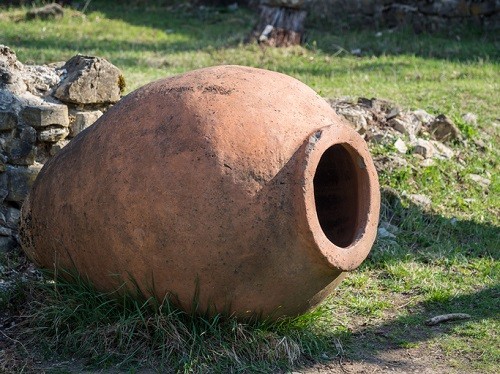
Located in Kakheti, Georgia, GoGo Wines is made by 27-year-old Keti Berishvili. Georgia is known for its distinct orange wines that receive their hue from qveri (oval-shaped terracotta) aging. “I would pair the Gogo wine with the Hayashi Chuka, says Tracy Kennard, co-owner of Brunette Wine Bar, Kingston, NY. “Its bright flavors stand up nicely to the texture in orange wine. Plus the chilled noodles are filling without being heavy—so you can drink a whole bottle for lunch.”
Barcelona Wine Bar, (Various Locations) + Radikon, Jakot (Imported by David Bowler)
Made in Fruili, near the Slovenian border, Radikon has been making its iconic skin-contact wines since 1979. The Jakot (Tokaj backward) is 100 percent Tokai Friulano, or just Friulano as it must be called since the use of the word Tokai/Tokaj was banned for the grape except in Hungary—hence the subtle snub in the wines name. “Our Radikon Jakot wine is at the more extreme end of typical orange wines and not for the faint of heart! With over three months of skin contact during production, this wine is intense, savory and complex,” says Emily Nevin-Giannini, Wine Director of Barcelona Wine Bar. “For me, this is the perfect wine to pair with charcuterie. I’d recommend something salty and fatty like Jamon Mangalica. The nutty richness of the ham complements the wine while letting all of the wonderful orange intensity really shine.”
Han Oak, Portland, OR + Savage Grace Orange Gerwürztraminer
Savage Grace is made by Michael Savage his wife Grace in Washington State. The winery’s orange Gerwürztraminer was made with organically grown grapes from the Oak Ridge Vineyard and fermented using native yeasts. The grapes were fermented on skins for 12 days, giving it a light orange color. “I would pair the Savage Grace Orange Gerwürztraminer with our Pork Bo Ssam and kimchi plate,” says Michelle Ruocco, beverage director of Han Oak. “This orange wine, although a tad floral, has enough acid to cut through the rich fat of the pork belly and the lasting finish to stand up to our kimchi plate and other fermented foods.”
Clay, Harlem, NY + La Stoppa Ageno (imported by David Bowler) and Escoda Sanahuja Els Bassots (Imported by Indie Wineries)
“I couldn’t choose just one pairing,” says Gabriela Davogusto, wine director of Clay. “Clay’s wine list features several skin contact whites from around the globe that are all-stars from their respective regions. The first pairing is the La Stoppa Ageno from in the Emilia region of Italy, and our pork tenderloin with apple, chile sauce, potato, charred cabbage. Ageno is a blend comprised primarily of Malvasia complemented with Ortugo and Trebbiano Toscano. Maceration with the skins for 4 months results in a deep and complex wine. Notes of candied apricots and oranges, savory herbs like sage and thyme, and floral chamomile are brought to life by balancing acidity, making it a perfect match to our pork tenderloin. “
“The second being the Escoda Sanahuja Els Bassots and our confit duck leg with carrot, sumac, farro, collard greens, gastrique. Els Bassots was the first white wine made by Joan Escoda. It is 100 percent Chenin Blanc from Catalunya, macerated with the skins for 10 days, and aged in amphora, this vibrant wine shows notes of stone fruits and honey. It holds its own against the richness of the duck with refreshing acidity complements all the flavors in the dish, providing an especially interesting foil to the earthy brightness of the carrot and sumac.”
La Fromagerie, Old Town, Alexandria, VA + Denavolo Catavela (Imported by Savio Soares)
“Right now we are pairing locally foraged chanterelle mushrooms, sautéed with garlic and shallots in Madeira, with 2018 Denavolo Catavela—an orange wine from the Italian region of Emilia-Romagna,” says Ben Kuna, sommelier at La Fromagerie. “The wine is a blend of the grape varieties Malvasia di Candia Aromatica, Ortugo, Marsanne, and Trebbiano. This blend is an important feature to the wine as the bitter, zesty nuttiness of the orange wine production process is balanced by the sweet, floral aromatics of the Malvasia grape and the fruity flushness of the Marsanne grape. As a result, the wine is able to mirror some of the earthy and forest-floor characteristics of the chanterelles, while also complimenting through contrast the salty and savory aspects of the dish as a whole.”
Lemon’s, Brooklyn, NY + Keltis Zan
“Our orange at Lemon’s is Keltis Zan, from Slovenia. It’s made with a wide variety of grapes— Muscat, Riesling, and Chardonnay, with a direct pressing of Pinot Noir,” says Nick Porpiglia, creator of the natural wine menu at Lemon’s. “Keltis wines attest to the artisan’s approach in the vineyard and the cellar, with this particular Cuvee being unfined, unfiltered, zero sulfur added and all work happening during a full moon. This wine has quite a few highly aromatic varietals with naturally high acidity, making it a fun pairing with the majority of our food in Lemon’s. Orange wine has an enormous spectrum of body and capabilities, with this one on the lighter and more approachable side it’s happiest with cheeses, seafood, and my personal favorite go-to pairing; fattier dishes like our sensational grilled cheese with Bayonne Ham.”
Miss Ada, Brooklyn, NY + La Salade Buffarella (Imported by Coeur Wine Co.)
The La Bufarella from La Salade is made from 100 percent Xarel-lo grapes that are grown biodynamically. The grapes are macerated with the skins for six months and fermented with native yeasts in stainless steel tanks. “Miss Ada carries the La Salade Buffarella Penedes from Catalonia and I love to pair it with a number of our mezze,” says chef and owner, Tomer Blechman. “Especially the sweet potato hummus and the octopus, which is served with eggplant puree, charred peppers, castelveltrano olives.”
BONUS WINE: Fresh on the scene and only available through the winery is Tank Garage Winery’s Skin Flick. Here is an opportunity to make your own pairing— this wine from the Sierra Foothills in California, is a skin-fermented blend, named with a double entendre and featuring a recreated film strip from an erotic film from the 1970s called Wet Wash.
More Ways To Explore Wine & Wine Regions
See All Articles by Carrie Dykes
National Orange Wine Day is October 6th — What is Orange Wine Anyway?
10 Top Virginia Wineries You Must Visit Near Washington DC
8 Unique & Unusual Wineries To Visit Around The World
How to Pair Orange Wine Food Pairings
- Match intensity: orange wine is a big, textural wine, so pair it with equally bold, boldly-flavored food rather than delicate dishes it would overwhelm.
- Lean on the tannin: skin contact leaches phenolics from the grape skins, giving a red-wine-like grip that tames bold spice, chili heat and rich fat where a crisp white would clash.
- Use it to bridge funk and fermentation: oxidative winemaking gives orange wine its own fermented complexity, so it harmonizes with miso, kimchi, aged cheese and umami.
- Serve it slightly cool like a light red (55–60°F), not fridge-cold — too cold mutes the aromatics and hardens the tannin.
- Decant fuller oxidative styles 30–60 minutes to let the savory notes open into fruit and spice.
- When in doubt, follow the origin: Georgian, Slavic and Mediterranean cuisines that grew up with these wines pair naturally with their spice, funk and savoriness.
Frequently Asked Questions
What is orange wine?
Orange wine is white wine made like a red: the juice of white grapes ferments in contact with the skins and seeds. That skin contact extracts color, tannin and phenolics, producing an amber-hued wine with grip, savory depth and texture unlike a conventional white.
How is orange wine made?
White grapes are crushed and left to ferment on their skins for a few days to many months, often in clay qvevri or amphorae. Skin contact leaches tannin, color and aroma compounds, and the style is frequently oxidative and low-intervention, giving savory, structured wine.
How is orange wine different from red and white wine?
It's white by grape but red by method. Like white it shows orchard and stone-fruit character and higher acidity; like red it has tannin, structure and the ability to handle bold, fatty and spiced food. That dual nature makes it uniquely food-versatile.
How should I serve orange wine?
Serve it slightly cool, around 55–60°F, like a light red rather than a chilled white — colder temperatures mute its aromatics and exaggerate the tannin. A short decant helps fuller, oxidative styles open up and soften.
What does orange wine taste like?
Expect dried apricot, orange peel, bruised apple and stone fruit alongside savory notes of nuts, tea, dried herbs, honey and sometimes a sour-beer tang. There's real tannic grip on the finish, giving it more structure and bitterness than a standard white.
What foods pair best with orange wine?
Its tannin and savory character suit bold, spiced and fermented dishes: Ethiopian and Indian spice, Moroccan tagine, Korean BBQ and kimchi, aged and funky cheeses, mushrooms, charcuterie and umami-rich Japanese food — flavors that overwhelm delicate whites and fight lighter reds.