
What are some of the top regions Sauvignon Blanc is coming from currently? What does Sauvignon Blanc taste like? What makes these wines ideal for pairing with seafood?
Sauvignon Blanc originated in the Loire Valley in France and, as such, remains one of the top regions for the grape (which is labeled under its region Sancerre). Currently, New Zealand is leading the way in terms of Sauvignon Blanc production and sales. From these two regions, the wine is seldom oaked. The reason I mention this is because it is this characteristic, aside from the grapes natural flavors, that give it the claim as one of the easiest and versatile wines to pair foods with. It is not to say that some Sauvignon Blanc’s are not oak aged, however when this happens, you tend to treat the wine in a fashion similar to pairing food with a Chardonnay.
Sauvignon Blanc's high acidity and green herbaceous, citrus, and grassy notes make it a natural partner for goat cheese, green vegetables, fresh herbs, and fresh seafood. Its crisp, unoaked profile refreshes the palate rather than weighing dishes down.
Sauvignon Blanc Food Pairings at a Glance
| Food | Recommended Wine | Why It Works |
|---|---|---|
| Goat cheese (chèvre) | Sancerre or Loire style | Classic regional match; high acidity cuts the tangy lactic richness while shared herbal notes echo each other |
| Oysters & raw shellfish | Crisp, mineral (Sancerre) | Bright acidity and saline minerality mirror the brine; the citrus lift acts like a squeeze of lemon |
| Green salad with vinaigrette | Unoaked, zesty | Acid-matches-acid: the wine's acidity meets the vinaigrette so neither tastes flat; grassy notes align with fresh greens |
| Asparagus | New Zealand or Loire | One of the few wines that handles asparagus; shared methoxypyrazine (green) compounds harmonize instead of clash |
| Ceviche | Chilled New Zealand style | The wine's citrus and acidity extend the lime cure; high acid stands up to raw fish and chili without amplifying heat |
| Sushi & sashimi | Light, mineral style | Clean acidity refreshes between bites and cuts fatty fish; low tannin and no oak avoid overwhelming delicate flavors |
| Grilled white fish | Sancerre or crisp cool-climate | Acidity brightens lean fish with a squeeze-of-lemon effect; restrained body keeps the wine from dominating |
| Fresh herbs & pesto | Herbaceous NZ or Loire | Direct flavor bridge: the wine's own green, herbal pyrazine character mirrors basil, parsley and cilantro |
| Thai & Vietnamese dishes | Off-dry to zesty NZ style | Acidity and citrus refresh against chili heat; herbal notes complement cilantro, mint and lemongrass |
| Green-herb roast chicken | Riper NZ or fumé style | Enough acidity and body to match the meat while herb-crusted flavors echo the wine's grassy side |
| Tomato & mozzarella (caprese) | Zesty, unoaked | Wine acidity matches the tomato's acidity; freshness complements creamy mozzarella and basil without heaviness |
| Green vegetables (peas, bell pepper) | New Zealand style | Pyrazine compounds shared between grape and green veg create a natural harmony rather than a metallic clash |
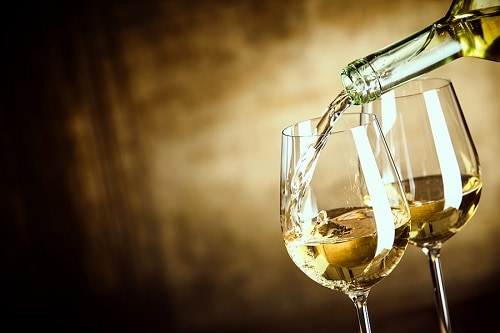
Sauvignon Blanc Taste
The natural flavors range through the fruit and vegetable spectrum. Specifically, you tend to find a lot of citric flavors (lemons and limes) as well as tropical fruits (passion fruit, guava, etc). In addition, it’s not uncommon to find vegetable flavors in line with asparagus associated with youthful Sauvignon Blanc, especially from New Zealand.
RELATED: See Our In-Depth Guide to the Sauvignon Blanc Grape Variety
Food Pairing
With these flavors and its inherent acidity, it pairs very well with seafood. It tends to be in balance with these dishes, as it is not overpowering the fish, and vice versa, the seafood isn’t masking the wine. The only exception would be seafood dishes with very heavy sauces, such as lobster.
This takes me back to oak aging or oak fermenting. Chardonnays are typically oaked which leads to richer flavors, gives the wine more depth and increases its complexity and intensity—and oaked Chardonnay would pair well with lobster in butter sauce. That’s not to say that Chardonnay wouldn’t go great with any other seafood, it simply means that Sauvignon Blanc because of its leaner, lighter taste, would be a better dancing partner with the natural light flavors of seafood.
How to Pair Sauvignon Blanc Food Pairings
- Match the wine's green pyrazine (bell-pepper/grassy) notes to green vegetables and fresh herbs — they share the same aroma chemistry.
- Use its high acidity to cut tangy goat cheese and acidic vinaigrettes; acid-matches-acid keeps both from tasting flat.
- Lean on the citrus character as a built-in squeeze of lemon for oysters, ceviche and grilled white fish.
- Avoid heavy red meats and rich sauced dishes — the wine is light-bodied and low in tannin, so it gets overwhelmed.
- Choose the style to fit the dish: mineral Sancerre for oysters and subtlety; tropical zesty New Zealand for bold herbs, chili and ceviche.
- Serve well chilled (45–50°F) to keep the acidity crisp and the aromatics lively.
The Origins of Sauvignon Blanc
Sauvignon Blanc is a French native, with roots traced to the Loire Valley and Bordeaux in the country’s west and southwest. Its name tells its own story: most accounts derive it from the French sauvage, meaning wild, joined to blanc for white, a nod to the grape’s early life as a vigorous, untamed vine growing in South West France. Records of the variety in the Loire reach back several centuries.
The grape’s family tree runs deeper than its own fruit. In eighteenth-century Bordeaux, a chance crossing of Sauvignon Blanc and Cabernet Franc produced Cabernet Sauvignon, the red grape that now anchors many of the world’s most celebrated reds, a parentage confirmed by DNA analysis in the 1990s. In Bordeaux itself, Sauvignon Blanc found a steady partner in Sémillon, the two blended together across the region’s white wines.
From these French homelands the variety spread across the wine world, but its modern reinvention came far from Europe. Beginning in the 1970s and accelerating through the 1980s, growers in Marlborough, New Zealand, coaxed a strikingly aromatic style from the grape. Montana released the first commercial Marlborough Sauvignon Blanc in 1979, and Cloudy Bay’s 1985 debut turned the region into a global benchmark.
Sauvignon Blanc Styles by Region
Sauvignon Blanc shifts character with climate and cellar, and a handful of regions define its range. In the Loire Valley, Sancerre and Pouilly-Fumé draw on chalk, limestone and flint soils to produce taut, mineral wines; the flinty subsoils lend the smoky, struck-match note often called “gunflint,” and the very name Fumé means smoky.
In Bordeaux, particularly Graves and Pessac-Léognan, the grape is usually blended with Sémillon and frequently aged in oak for a rounder, more textured white. The same pairing, affected by noble rot, yields the sweet wines of Sauternes. Marlborough, New Zealand, offers the opposite pole: pungent, zesty wines bursting with passionfruit, gooseberry and green herbs, typically fermented in stainless steel to keep the aromatics vivid.
California works both sides. Crisp, unoaked bottlings made in stainless tanks sit alongside barrel-aged versions labeled Fumé Blanc, a term Robert Mondavi coined in 1968 by borrowing from Pouilly-Fumé to make the wine an easier sell. South Africa, Chile and Italy’s Friuli each add their own accent, generally leaning toward the fresh, unoaked style. The rule of thumb holds across borders: cooler sites and stainless steel sharpen the wine, while warmth and oak soften and broaden it.
Frequently Asked Questions
What foods pair best with Sauvignon Blanc?
Goat cheese, oysters and shellfish, green salads, asparagus, ceviche, sushi, grilled white fish, and herb-forward dishes pair best. The wine's high acidity and green, citrusy notes complement fresh, light, herbaceous foods rather than rich or heavy meats.
Why does Sauvignon Blanc pair so well with goat cheese?
Goat cheese is tangy and lactic, and Sauvignon Blanc's high acidity cuts through that richness cleanly. Both also share fresh, herbal, grassy notes, so the flavors echo each other — the classic Loire pairing of Sancerre and chèvre.
Does Sauvignon Blanc go with asparagus?
Yes — it's one of the few wines that handles asparagus well. Both share green methoxypyrazine compounds, the aroma molecules behind grassy, vegetal notes, so instead of clashing they harmonize. New Zealand and Loire styles work especially well.
What's the difference between Sancerre and New Zealand Sauvignon Blanc for pairing?
Sancerre (Loire) is more mineral, restrained and flinty — ideal for oysters and delicate seafood. New Zealand is riper, with tropical fruit and bold herbaceous notes — better for chili heat, ceviche and strongly herbed dishes. Match style intensity to the dish.
Should Sauvignon Blanc be served cold?
Yes, serve it well chilled at about 45–50°F. Cold temperatures keep its signature acidity crisp and refreshing and preserve the bright citrus and herbal aromatics. Too warm and the wine tastes flabby and loses its refreshing edge.
What foods should you avoid with Sauvignon Blanc?
Avoid heavy red meats, rich cream sauces, and big tannic or oaky pairings. The wine is light-bodied, low in tannin and high in acidity, so bold fatty dishes overwhelm it. It shines with lighter, fresher, more acidic or herbaceous foods.