 ★ Top rated 6 to 8 hours 📍 Aix en Provence
 Marsanne at a Glance
Common Flavors
- Marsanne Tasting Notes
Structure
- Body Medium - Full
- Sugar Dry (Primarily) Occasionally vinified Sweet.
- Acid Medium
- Alcohol High (13 - 15%)
Food Pairings
- Fried Shrimp
- Lobster
- Chicken Paid Thai
- Pork
- Lean Meats & Turkey
The Shape of Marsanne
Each spoke runs from delicate (centre) to pronounced (edge). Tap a benchmark to lay a familiar grape over the top.
Marsanne
More About Marsanne
Marsanne Grape Variety & Wine Profile
Marsanne is believed to originally be from the Rhône Valley, where it still thrives. Often blended with Roussanne, Viognier, Clairette and other varieties found throughout Southern France, it produces a weighty wine that can stand up to a broad range of dishes.
RELATED: Learn About France's Rhone Valley Wine Region
On the nose, expect oranges, sweet lemon, figs, apricot, pear, and almond notes. On the palate, its rich texture elicits beeswax, roasted nuts, pears, Meyer lemon, cardamom and anise. Marsanne can produce a fairly decadent wine because its weight begs to be paired with seafood, cream-based dishes, and other luxurious meals. Marsanne and Marsanne-blends can often replace Chardonnay for those who would like to expand their palates and try something different.
Although not as commonly found, Marsanne can also be used to produce sweet wine. For this, the grapes are dried out first on straw mats, which allows them to dry enough to concentrate sugar. However, these can lack acidity and therefore tend not to be quite as sought-after as dessert wines produced from high-acid varieties.
Due to the delicate balance of acidity and ripeness, Marsanne has a rather small window for harvest. If it’s left too long, acidity drops and the wines can come across as flabby. When harvested at the perfect moment, however, Marsannes are lush, layered, and delicious.
Wine Growing Regions for Marsanne
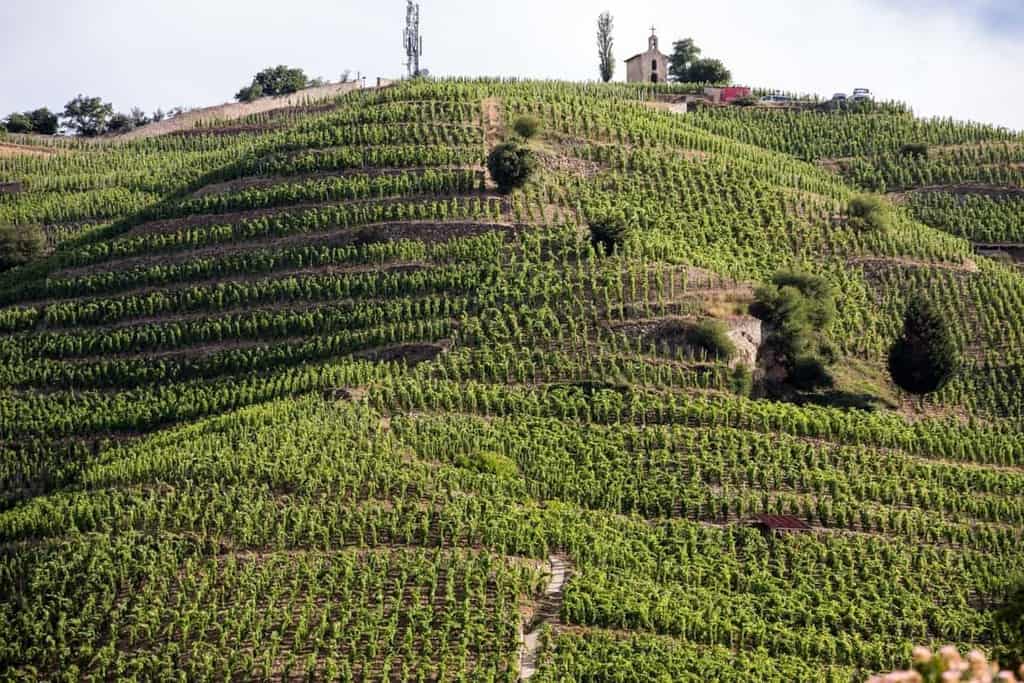
Marsanne shines brightest in the Northern Rhône, and particularly in Hermitage. However, it can also be found all throughout the Southern Rhône, Languedoc-Roussillon, and Provence where it is typically blended with a huge range of other varieties. Wines from these regions tend not to be as expressively specific as single-varietal bottlings of Marsanne.
The Central Coast of California has become home to many Marsanne producers, thanks in part to Tablas Creek’s efforts to spread the gospel of Rhône wines. Even throughout this “Rhône Ranger” territory, it is often blended with Roussanne, Viognier, and Grenache Blanc.
The Sierra Foothills AVA of California is another region to watch for Marsanne. Rhône varieties tend to love the huge diurnal swings and thrive. It can also be found in smatterings throughout Sonoma and Napa.
Other regions, like Australia, are producing more white Rhône blends, but not single-varietal bottlings of Marsanne just yet. That said, these delicious blends stand on their own and show how crucial Marsanne is to the flavor profile.
Check out some of these Marsanne and Marsanne-based blends from around the world:
- Jean-Louis Chave, Hermitage, France
- Chapoutier “Chante Alouette”, Hermitage, France
- Guigal “Lieu-Dit”, Saint-Joseph, France
- Tablas Creek “Cotes de Tablas Blanc”, Adelaida District, Paso Robles, California
- Qupé, Santa Ynez Valley, Santa Barbara County, California
- John Duval “Plexus White”, Barossa, Australia
- B Minor Marsanne Rousanne, Yarra Valley, Victoria, Australia
Learn About These Other Wine Grape Varieties
Where It Grows
Taste Marsanne at the Source
Marsanne is tied to a handful of regions. Explore each as a travel destination — with wineries, tours and guides.
Editor’s spotlight
Featured Winery · Marsanne
Chêne Bleu
★ 4.9
Last Updated on August 23, 2019. La Verrière is uniquely situated at an elevation of 550 meters (1,800 feet) within a UNESCO biosphere reserve in the shadow of the Mont Ventoux. Typical of other high ...
Explore Chêne Bleu →Visit
Browse all →
Wineries Known for Marsanne
Estates specializing in Marsanne, open for tastings.
Book It
Tours Featuring Marsanne
Bookable experiences in Marsanne's home regions.
★ Top rated 6 to 8 hours 📍 Aix en Provence
★ Top rated 8 hours 📍 Aix en Provence
★ Top rated 7 hours 30 minutes 📍 Aix en Provence Wine, Olive Oil and Scenic Villages of Provence
🕑 Full-day
★ Top rated 9 hours 📍 Avignon Châteauneuf du Pape Wine Day Tasting Tour including Lunch from Avignon
🕑 Full-day 🍽 Lunch included
★ Top rated 7 hours 📍 Marseille Côtes de Provence Wine Day Tour : 7 hours
🕑 Full-day
4 hours 15 minutes 📍 Aix en Provence Half day Wine Tour in Côteaux Aix from Aix en Provence
🕑 Half-day
Marsanne: Frequently Asked Questions
What does Marsanne taste like?
Marsanne is a rich, full-bodied white with flavors of pear, quince, honeysuckle, and almond. Young wines show delicate floral and citrus notes, while aged examples develop honey, marzipan, and beeswax. It has a waxy, oily texture and relatively low acidity.
Is Marsanne sweet or dry?
Marsanne is usually made as a dry white wine, though its ripe, honeyed fruit can suggest richness. Its low acidity and full body give a rounded mouthfeel. Some late-harvest and sweet versions exist, but most Marsanne is fully dry.
What foods pair well with Marsanne?
Marsanne's rich, waxy body pairs well with roast chicken, pork, and creamy dishes. It complements mild curries, grilled fish, and soft cheeses. The nutty, honeyed notes suit roasted vegetables, risotto, and dishes with almond or herb-butter sauces.
What is the difference between Marsanne and Roussanne?
Marsanne and Roussanne are traditional Rhône blending partners. Marsanne is fuller-bodied, richer, and more textural with lower acidity, offering nutty, waxy flavors. Roussanne is more aromatic and elegant with higher acidity and floral, herbal-tea notes. They complement each other beautifully in blends.
Where is Marsanne grown?
Marsanne is native to France's northern Rhône Valley, starring in whites from Hermitage, Crozes-Hermitage, and Saint-Joseph. It is also grown in Australia (notably Victoria's Goulburn Valley), Switzerland, California, and Spain, often blended with Roussanne.
How should you serve Marsanne?
Serve Marsanne lightly chilled at 50 to 55 degrees Fahrenheit; serving too cold mutes its rich texture and aromatics. Young wines show best in this range, while aged Marsanne benefits from slightly warmer temperatures to reveal honeyed, nutty complexity.