 ★ Top rated 6 to 8 hours 📍 Aix en Provence
 Roussanne at a Glance
Common Flavors
- Roussanne Tasting Notes
Structure
- Body Medium
- Sugar Dry
- Acid Medium-Plus
- Alcohol High (13% - 15.5%)
- Tannin Low
Food Pairings
- Chicken
- Duck
- Salmon
- Turkey
- Pork
- Fall Vegetables
The Shape of Roussanne
Each spoke runs from delicate (centre) to pronounced (edge). Tap a benchmark to lay a familiar grape over the top.
Roussanne
More About Roussanne
Roussanne Grape Variety & Wine Profile
Roussanne is one of the main white grapes of the Rhône Valley in France. It can be somewhat similar to its Northern Rhône blending partner, Marsanne but the differences are profound enough to make them perfect together.
Roussanne is characterized by bright floral aromas with stone fruit, nuts, baked bread, and spices. On the palate, its rich texture opens up notes of chamomile, sweet anise, white peach, pear, beeswax, and lanolin with surprising acidity on the finish. The combination of acidity and weight provides a silky texture that Roussanne-devotees find to be irresistible.
Since Roussanne is more acidic than Marsanne, it has the potential to age 15 to 20 years. It does have the tendency to shut down for several years after the first few so those looking to age Roussanne-based wines should be in it for the long haul.
Food Pairing Roussanne-based Wines
That acidity is what makes Roussanne both age-worthy and a very versatile food partner. Although still on the richer side, it can work with a range of seafood, chicken, duck, salmon, and turkey. Roussane can even work well with pork depending on the preparation. Roasted squash and fall vegetables also work beautifully with Roussanne because they play off the nutty-spicy notes found in the wine.
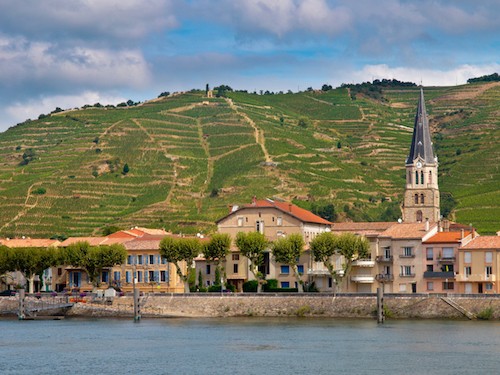
[caption id="attachment_8828" align="aligncenter" width="500"] A riverside Village and Vineyards on the Hills of the Cote du Rhone Area in France. Roussanne ripens optimally in dry, sunny climates and is known to grow well in the hillsides of the Northern Rhone Valley.[/caption]
Wine Growing Regions for Roussanne
Roussanne is thought to originally hail from the Northern Rhône Valley. Its very name comes from “roux,” a French reference to the reddish hue that fully ripened grapes develop. It is still one of the main grapes of the Northern Rhône, particularly in Saint-Joseph, Hermitage, Crozes-Hermitage, and Saint-Péray. In the Southern Rhône, it’s one of the main white grapes for Châteauneuf-du-Pape and Côtes du Rhône blancs.
Similar to Marsanne and Viognier, Roussane can also be found throughout Languedoc-Roussillon and Provence, but it’s seldom the star of the show there. Throughout southern France, it’s most like to be one of many white grapes in field blends.
Interestingly, Roussanne is also a main white grape in the much-colder region of Chignin in the Savoie AOC. There, it’s known as Bergeron and produces much higher acid and highly aromatic wines.
Beyond France, Roussanne can be found throughout the Central Coast of California, mostly thanks to Tablas Creeks and John Alban’s efforts to plant more Rhône varietals in California. Washington has begun to plant more Roussanne as well. Globally, there are increased plantings in Australia, South Africa, and Israel.
Check out some of these Roussanne and Roussanne-based blends from around the world:
- Château de Beaucastel Châteauneuf-du-Pape Vieille Vignes, Rhône Valley, France
- Eric Texier Brézème, Côtes du Rhône, Rhône Valley, France
- Black Sheep Finds Holus Polus, Santa Barbara County, California
- Qupé, Bien Nacido Hillside Vineyard, Santa Maria Valley, California
- Kinero Cellar’s Rustler, James Berry Vineyard, Willow Creek District, Paso Robles, California
- Ben Haines Wine Co, Yarra Valley, Victoria, Australia
- Andrew Rich, Columbia Valley, Washington
Learn More About These Other Wine Grape Varieties
Where It Grows
Taste Roussanne at the Source
Roussanne is tied to a handful of regions. Explore each as a travel destination — with wineries, tours and guides.
Editor’s spotlight
Featured Winery · Roussanne
Chêne Bleu
★ 4.9
Last Updated on August 23, 2019. La Verrière is uniquely situated at an elevation of 550 meters (1,800 feet) within a UNESCO biosphere reserve in the shadow of the Mont Ventoux. Typical of other high ...
Explore Chêne Bleu →Visit
Browse all →
Wineries Known for Roussanne
Estates specializing in Roussanne, open for tastings.
Chêne Bleu
★ 4.9 · Crestet
Chateau Tumbleweed
★ 4.8 · Clarkdale
Foundry Vineyards
★ 4.8
Margerum Santa Barbara Tasting Room
★ 4.7 · Los Olivos
Stolpman Vineyards Tasting Room
★ 4.7 · Los Olivos
Derby Wine Estates
★ 4.7 · Paso Robles
Folded Hills Winery, Ranch & Farmstead
★ 4.5 · Gaviota
CASS Wines
★ 4.5 · Paso Robles
Book It
Tours Featuring Roussanne
Bookable experiences in Roussanne's home regions.
★ Top rated 6 to 8 hours 📍 Aix en Provence
★ Top rated 8 hours 📍 Aix en Provence
★ Top rated 7 hours 30 minutes 📍 Aix en Provence Wine, Olive Oil and Scenic Villages of Provence
🕑 Full-day
★ Top rated 9 hours 📍 Avignon Châteauneuf du Pape Wine Day Tasting Tour including Lunch from Avignon
🕑 Full-day 🍽 Lunch included
★ Top rated 7 hours 📍 Marseille Côtes de Provence Wine Day Tour : 7 hours
🕑 Full-day
4 hours 15 minutes 📍 Aix en Provence Half day Wine Tour in Côteaux Aix from Aix en Provence
🕑 Half-day
Roussanne: Frequently Asked Questions
What does Roussanne taste like?
Roussanne offers pear, quince, honeysuckle, and herbal tea notes with a distinctive floral, sometimes nutty character. It is full-bodied with a rich texture and refreshing acidity, developing honeyed, waxy complexity with age. Its aromatics are elegant and often described as delicate yet perfumed.
Is Roussanne sweet or dry?
Roussanne is made as a dry white wine. Despite its rich texture and honeyed aromas, it typically has no residual sugar. The refreshing acidity keeps it balanced and food-friendly, with a full, dry finish that can gain complexity with bottle age.
What foods pair with Roussanne?
Roussanne's body and aromatics pair with roast chicken, pork, and richer fish like halibut. It complements creamy sauces, soft cheeses, and herb-driven Provençal dishes. Its texture and freshness also suit mildly spiced cuisine and dishes featuring nuts, pear, or aromatic herbs.
What wines are made from Roussanne?
Roussanne is a key white grape of the Rhône Valley, often blended with Marsanne in appellations like Hermitage, Crozes-Hermitage, and Châteauneuf-du-Pape blanc. It appears in white Rhône-style blends worldwide and is occasionally bottled on its own as a rich, aromatic, age-worthy single varietal.
Where is Roussanne grown?
Roussanne originates in France's northern Rhône Valley and is grown across the southern Rhône and Languedoc. It is also planted in California, Washington, and Australia by producers making Rhône-style whites. It is often paired with Marsanne in classic Rhône blends, adding aromatics and acidity.
How should I serve Roussanne?
Serve Roussanne at 50-55°F (10-13°C); too cold hides its aromatics and texture. Use a broader white wine glass to reveal its floral, honeyed bouquet. Younger versions are fresh and vibrant, while quality examples reward a few years of age with added complexity.