
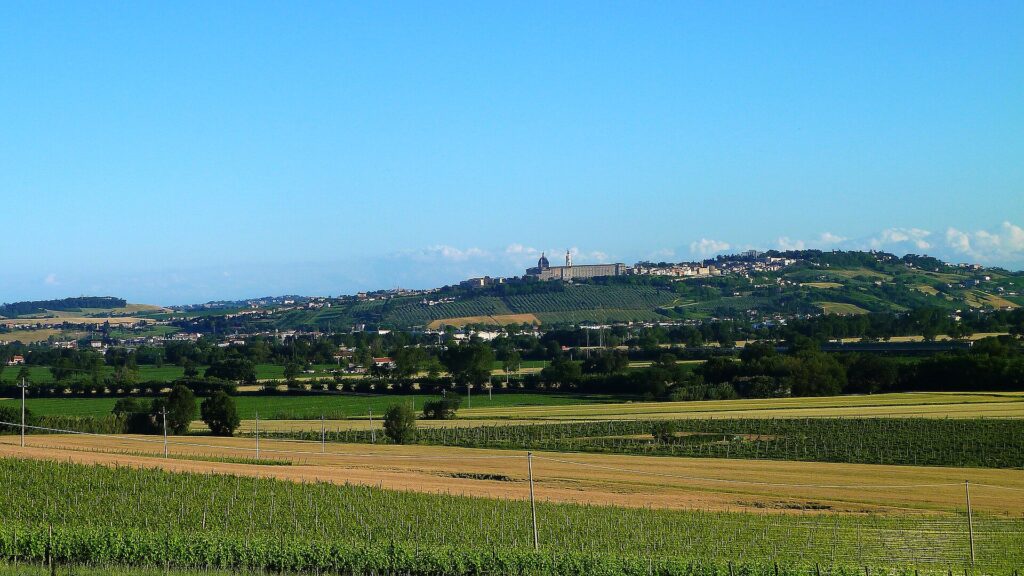
Tucked between the Apennine mountains and the Adriatic Sea, Le Marche is one of central Italy’s best-kept secrets. It has the rolling hills and hilltop towns you might expect from Tuscany, but far fewer crowds and much lower prices. For wine travelers, it is a rewarding place to explore. This is the home of Verdicchio, one of Italy’s finest native white grapes, along with a set of characterful reds that almost no one outside Italy has tried.
The region divides into a few distinct wine zones. The hills around Jesi and Matelica are Verdicchio country. The Monte Conero promontory south of Ancona produces deep Rosso Conero from Montepulciano grapes. The southern hills around Ascoli Piceno turn out Rosso Piceno reds and the whites Pecorino and Passerina. Below is our guide to the best wineries to visit in Le Marche, along with where to eat, where to stay, and how to plan the trip.
RELATED: Le Marche Wine Region Guide: Verdicchio, Conero & Piceno
In This Guide
- Background on the Le Marche Wine Region
- Travel Logistics
- Best Wineries in Le Marche
- Where to Eat
- Where to Stay
- What to Pack
- Frequently Asked Questions about Le Marche Wineries
Wines of Le Marche
The signature wine of Le Marche is Verdicchio, a native white grown on the limestone hills near the coast. At its best it is crisp and mineral when young, with a distinctive bitter-almond note on the finish, and it can age for years into something richer and honeyed. The two appellations to know are Verdicchio dei Castelli di Jesi, from the hill towns inland of Ancona, and the smaller, higher Verdicchio di Matelica farther inland. Both make dry still wines, plus traditional-method sparkling and sweet passito versions.
The reds are worth seeking out too. Rosso Conero, from the Montepulciano grape grown on the Monte Conero headland, is dark, saline, and age-worthy. Rosso Piceno, a blend of Montepulciano and Sangiovese from the south, is friendlier and everyday. Around Ascoli Piceno you will also find the whites Pecorino and Passerina, and near Ancona the aromatic red Lacrima di Morro d’Alba. For a fuller look at the region’s zones and grapes, see our Le Marche wine region guide.
Travel Logistics
The closest airport is Ancona (Marche Airport, AOI), about 12 kilometers from the city, with seasonal flights from a handful of European cities. Most travelers arrive instead through a larger gateway and drive in. Bologna is about two hours north by car, Rome around three and a half hours, and Perugia about an hour and a half from the Jesi wine hills. You can watch for flight deals with Skyscanner as you plan.
Ancona sits on the main Adriatic rail line, with fast trains from Bologna in about two hours. The city of Jesi is also on a regional line from the airport and Ancona, so it is reachable by train. Beyond those main-line towns, though, the wineries are scattered across rural hills with little public transport, so renting a car is essential for a proper wine trip. If you would rather not drive, a few local operators run private driver-guided wine tours of the region.
The zones are close enough to combine over a few days. Jesi and its Verdicchio hill towns sit inland of Ancona, the Conero coast is just south of the city, and the Piceno hills around Ascoli are about an hour and a half farther south. Ancona or a country agriturismo in the Jesi hills both make good bases. Most estates ask you to book ahead, so call or email before you go.
Best Wineries for Wine Tasting in Le Marche
The wineries below span the region’s main zones, from the Verdicchio hills around Jesi and Matelica to the Conero coast and the southern hills of Piceno. Most welcome visitors by appointment, and a few keep a public shop with walk-in tastings. Book ahead where you can, and confirm hours and fees directly before you go.
Umani Ronchi
Osimo (Ancona)
What Guests Like About It: A polished, hospitality-minded estate that is a great introduction to Marche wine
One of the largest and most awarded producers in Le Marche, Umani Ronchi near Osimo is set up for visitors, with structured tours that you can book online. You can walk the barrel cellar, taste the flagship Casal di Serra and Plenio Verdicchio alongside the Conero reds, and even book a cellar visit paired with dinner.
Because it works across the region’s terroirs, a visit here gives you the full sweep of Marche wine in one stop, from crisp Verdicchio to structured Montepulciano. It is a natural first call on any wine trip through the region. Book your visit in advance.
Garofoli
Castelfidardo (Ancona)
What Guests Like About It: Five generations of Verdicchio, with tastings that include local Marche delicacies
Founded in 1871, Garofoli is one of the historic names of Marche wine, still run by the family five generations on. Guided cellar tours end in a tasting of four wines paired with the estate’s olive oil and regional specialties like Prosciutto di Carpegna and ciauscolo salami.
The wines to look for are the Verdicchio Podium and Serra Fiorese, and the Rosso Conero made at the Castelfidardo winery. Tours run in English and Italian and are tailored to dietary needs. Booking in advance is required.
Sartarelli
Poggio San Marcello (Ancona)
What Guests Like About It: A single-minded Verdicchio specialist with a museum and tasting room in the hills
Perched at around 350 meters in the Jesi hills, Sartarelli is one of the very few estates that makes nothing but Verdicchio. The range runs from the crisp Classico up to the late-harvest Balciana, a rich, honeyed wine that first put the estate on the map internationally.
There is a public shop plus a small museum and multimedia room used for tastings and seminars. It is a good place to understand just how much range a single grape can have. Contact the estate to arrange a tasting.
Colonnara
Cupramontana (Ancona)
What Guests Like About It: A pioneer of sparkling Verdicchio, in the self-styled capital of the grape
In the hill town of Cupramontana, often called the capital of Verdicchio, Colonnara helped pioneer traditional-method sparkling Verdicchio. Its long-aging Cuprese is said to hold for decades, and the sparkling Metodo Classico is a local specialty worth trying at the source.
Reservations are required. The “Le sfumature del Verdicchio” experience runs about an hour for €20 per person and pairs a guided cellar visit with a tasting of four selections, including the sparkling. It is one of the few estates here with a clear, published visitor program.
Pievalta
Maiolati Spontini (Ancona)
What Guests Like About It: The region’s first certified biodynamic winery, with a hands-on vineyard-and-cellar visit
Founded in 2002 by the Franciacorta house Barone Pizzini, Pievalta became the first certified biodynamic winery in Le Marche in 2008. The Verdicchios here, including the San Paolo cru, are precise and expressive, and the estate is happy to explain what biodynamic farming actually means in practice.
Two experiences are published. A two-hour vineyard walk, cellar visit, and five-wine tasting runs €25 per person. A shorter 30-minute “Smart Tasting” of five wines is €10, waived with a €100 purchase. Book ahead.
Villa Bucci
Ostra Vetere (Ancona)
What Guests Like About It: A cult, benchmark Verdicchio from a serious working estate
Ampelio Bucci’s Villa Bucci is widely credited with restoring Verdicchio’s reputation as a wine that can age and stand alongside Italy’s great whites. The Verdicchio dei Castelli di Jesi Classico Superiore Riserva is internationally acclaimed and worth the effort to taste.
This is a working agricultural estate rather than a polished tasting room, and visits are strictly by prior arrangement. Think of it as a meeting with a serious producer rather than a casual cellar door, and confirm everything directly before you go.
La Monacesca
Matelica (Macerata)
What Guests Like About It: A benchmark producer of the rarer, inland Verdicchio di Matelica
Matelica sits in a high inland valley, the only Verdicchio zone that does not run down toward the sea, and its wines have a firmer, more structured character. La Monacesca is the reference estate here, and its Mirum Riserva is one of the great expressions of the grape.
The estate welcomes visitors into the vineyards and through the winemaking process, ending in a tasting. Details are arranged directly, so contact them ahead to set up a visit.
Belisario
Matelica (Macerata)
What Guests Like About It: Matelica’s leading cooperative, with one of the best-stocked wine shops in the region
Founded in 1971, Belisario is the largest producer of Verdicchio di Matelica, farming its vineyards organically. Its Cambrugiano Riserva is a decorated wine and a good place to start, and the estate shop is one of the best-stocked in Le Marche.
Guided tastings are offered to help you get to know the winery and the appellation. Booking details are arranged directly, so contact them before visiting.
Moroder
Montacuto, Ancona
What Guests Like About It: Rosso Conero from a family estate inside the Conero park, with a restaurant and rooms
Set in the green heart of the Conero Natural Park just outside Ancona, Moroder is a family estate that has been making wine here since the 18th century. Its Rosso Conero, especially the Dorico Riserva, is a benchmark for the appellation, dark and saline from the sea-facing hills.
Tastings take place in a historic vaulted cellar, and there is an on-site restaurant serving local dishes plus a few guest rooms if you want to stay. Contact the estate to arrange a visit.
Fattoria Le Terrazze
Via Musone 4, Numana (Ancona)
What Guests Like About It: Conero reds with a rock-and-roll streak, near the beaches of Numana
In the Conero foothills near Numana, the Terni family have farmed Fattoria Le Terrazze since 1882. The wines are Montepulciano-based Conero reds, including the Sassi Neri Riserva and the Bob Dylan-inspired “Visions of J,” a nod to the family’s love of his music.
The farm shop is open for tastings of the wines and estate olive oils, generally Monday to Saturday morning and afternoon and Sunday afternoon. It pairs well with a day on the Conero Riviera beaches just below.
Velenosi
Via dei Biancospini 11, Ascoli Piceno
What Guests Like About It: A well-run Piceno estate with a clear, generous tasting program
Founded in 1984 by Angela and Ercole Velenosi, Velenosi has become one of the best-known names in southern Le Marche. Angela was an early champion of the Pecorino grape, and the range spans Rosso Piceno, Pecorino, and Passerina up to the flagship reds Roggio del Filare and Ludi.
Cellar tastings are by reservation. A “Classic” tasting of four wines with local snacks like Ascolana olives and cured meats runs €20 per person, and a “Top” tasting that adds two premium wines is €30. Booking is required.
Saladini Pilastri
Spinetoli (Ascoli Piceno)
What Guests Like About It: One of Italy’s early organic estates, with an aristocratic history
The noble Saladini Pilastri family farm around 320 hectares in the Piceno hills, and were among the first certified-organic producers in Italy. Saladini Pilastri makes reliable, well-priced Rosso Piceno along with Offida Pecorino and Passerina.
Visits are arranged directly, often led by the estate’s oenologist through the vineyards and cellar. Contact them ahead to organize a tailored visit and tasting.
Tenuta Cocci Grifoni
San Savino, Ripatransone (Ascoli Piceno)
What Guests Like About It: A Pecorino pioneer with terrace tastings, picnics, and rooms to stay
Between Ripatransone and Offida, the Tenuta Cocci Grifoni has been a family estate since 1933. It holds an important place in Marche wine history: Guido Cocci Grifoni planted the “mother vineyard” of Pecorino here in 1987, helping rescue the grape from near-extinction.
The estate welcomes visitors for guided cellar tours, panoramic terrace tastings, and vineyard picnics, and has its own accommodation if you want to stay over. Arrange your visit in advance.
Marotti Campi
Morro d’Alba (Ancona)
What Guests Like About It: Verdicchio plus the aromatic red Lacrima, with a vineyard guest house and pool
In the village of Morro d’Alba, Marotti Campi is one of the leading producers of Lacrima di Morro d’Alba, a deeply perfumed red that smells of roses and violets and grows almost nowhere else. The estate also makes polished Verdicchio, including the Salmariano Riserva.
Tastings and tours are available, and the estate runs an agriturismo among the vines with a swimming pool. It is an easy, welcoming stop and a chance to try a grape you will rarely see elsewhere. Contact the estate to book.
Want more options? Browse our full Le Marche wine region guide and winery directory to keep exploring.
Where to Eat
Marchigiana cooking is honest and regional, and it changes as you move around. On the coast it means brodetto, the local Adriatic fish stew, and every kind of fried and grilled seafood. Inland you will find vincisgrassi, a rich baked pasta, and ciauscolo, a soft spreadable salami. In the south, the signature dish is olive all’ascolana, large green olives stuffed with meat, breaded, and fried. Save room, and drink the local wine with all of it.
Uliassi
Senigallia
On the beachfront at Senigallia, just north of the Conero wine zone, Uliassi holds three Michelin stars for the creative Adriatic seafood of chef Mauro Uliassi. It is one of Italy’s very best restaurants and a destination in its own right. Book far ahead.
L’Officina
Sirolo
Up on the Sant’Erasmo belvedere at Sirolo, with views over Monte Conero and the sea, L’Officina serves creative, mostly seafood cooking from chef Davide Breccia. It is listed in the Michelin Guide and makes a fine dinner after a day on the Conero coast.
Osteria Forno Ercole
Jesi
In the old-town alleys of Jesi, at the heart of Verdicchio country, this former bakery turned osteria serves authentic regional cooking in a warm, informal setting. It is a good, unfussy lunch stop between winery visits, and it is listed in the Michelin Guide.
Migliori
Piazza Arringo, Ascoli Piceno
On the grand Piazza Arringo in Ascoli, Migliori is the city’s best-known address for olive all’ascolana and fritto misto. It is a casual, classic stop for the dish the region is famous for, best washed down with a glass of local Pecorino.
Where to Stay in Le Marche Wine Country
Le Marche does relaxed country lodging very well. Many wineries run their own agriturismi, and there are wine resorts and country houses across the hills and along the Conero coast. Here are a few we would book first.
Filodivino Wine Resort & Spa
San Marcello (Ancona)
A modern wine resort on a 20-hectare estate producing Verdicchio and Lacrima, Filodivino has rooms among the vineyards, an on-site winery, a spa, a panoramic pool, and a gourmet restaurant. It is about 40 minutes from Ancona and the Conero coast. Check prices and availability on Tripadvisor.
Hotel Monteconero
Sirolo (Ancona)
Run by the Umani Ronchi winery, this hotel occupies a restored 12th-century Camaldolese abbey on the summit of Monte Conero, inside the natural park with the Adriatic spread out below. It is a memorable base for the Conero coast and its Rosso Conero estates. See the hotel details or check prices on Tripadvisor.
Agriturismo Villa Cicchi
Abbazia di Rosara, Ascoli Piceno
A charming organic farmhouse in the Piceno hills near Ascoli, Villa Cicchi has a handful of rooms with 19th-century furniture, a pool with valley views, and a farmhouse kitchen serving classic Piceno dishes, including olive all’ascolana. It is both a place to stay and a place to eat. Check prices on Tripadvisor.
Tenuta di Tavignano Guest House
Cingoli (Macerata)
For a stay right among the Verdicchio vines, the Tenuta di Tavignano guest house sits high on a hilltop between the Esino and Musone valleys, at the heart of the Castelli di Jesi Classico zone. The estate also runs tastings of its Misco cru Verdicchio. Check prices on Tripadvisor.
What to Pack
Le Marche has a mild Mediterranean climate on the coast that turns cooler and more continental as you head inland into the hills. Summers, from July into August, are warm and dry, with coastal highs around 29°C (84°F) and slightly cooler evenings in the hills. Pack light, breathable clothing, a hat, and sunscreen, plus something for a swim if you are near the Conero beaches.
Spring and early autumn are the best times to visit. April and May and then September and October are mild and pleasant, ideal for touring, with the September harvest adding to the atmosphere. Bring layers and a light jacket for cooler mornings and evenings, especially in the higher inland zones like Matelica. Winters are cool and can be wet, so pack warm layers and a rain jacket. Comfortable walking shoes are essential in every season for hill towns and vineyard paths. Dress throughout is relaxed and smart-casual.
Peruse the Winetraveler Shop for some of our trending casual vineyard-hopping apparel, ideal for a day out among the vines.
The Magic of Le Marche
Le Marche is the kind of place Italy used to be before the crowds arrived. The hill towns are quiet, the beaches are uncrowded, and the wineries are still small and family-run, where the person pouring your glass often shares the name on the label. Come for the Verdicchio and the Conero reds, and stay for a region that has not yet learned to take itself too seriously.
Frequently Asked Questions about Le Marche Wineries
What wine is Le Marche known for?
Le Marche is best known for Verdicchio, a native white grape grown on the limestone hills near the Adriatic. The main appellations are Verdicchio dei Castelli di Jesi and the rarer, inland Verdicchio di Matelica. The region also makes notable reds, above all Rosso Conero from Montepulciano grapes near Ancona and Rosso Piceno in the south, plus the whites Pecorino and Passerina and the aromatic red Lacrima di Morro d’Alba.
Is Le Marche worth visiting for wine?
Yes. Le Marche offers much of what draws people to Tuscany, including rolling hills, historic towns, and excellent food and wine, but with far fewer crowds and lower prices. The wineries are mostly small and family-run, the welcome is genuine, and grapes like Verdicchio, Pecorino, and Lacrima give you wines you simply will not find at home.
How do you get to Le Marche wine country?
The nearest airport is Ancona (AOI), with seasonal European flights. Many visitors fly into a larger gateway instead and drive, with Bologna about two hours away, Rome around three and a half, and Perugia about an hour and a half from the Jesi hills. Ancona is well connected by train, but the wineries are rural, so a rental car is essential once you arrive.
When is the best time to visit?
Spring and early autumn are ideal, when the weather is mild and the region is quiet. April through June and September into October are the sweet spots, with the September harvest adding energy to a visit. Summer is warm and pairs wine touring with the Conero beaches, while winters are cool and low-key.
You are reading “Best Wineries to Visit & Where to Stay in Le Marche, Italy.”
For more wineries, travel guides, and itineraries in Italy, please browse our directory: Italy wine travel destinations.
Le Marche wine region travel guide, best wineries to visit in Le Marche, Verdicchio wineries, Rosso Conero, Ascoli Piceno wine, Jesi wine tasting


Collect your Winetraveler passport — tap the regions & grapes you’ve tasted. Your stamps follow you across the whole site.
- Curious1 stamps
- Explorer3 stamps
- Connoisseur6 stamps
- Sommelier12 stamps
- Vigneron20 stamps
Your stamps are saved on this device.