
Wine destination
Switzerland makes some of Europe’s most distinctive wine — and drinks almost all of it.
Switzerland makes some of Europe’s most distinctive wine — and drinks almost all of it. Barely two per cent ever leaves the country, so its vineyards remain a genuine traveler’s secret: terraced, spectacular and rarely crowded. Vines climb from the shores of Lake Geneva and the Rhône Valley to the slopes above the Rhine, and a cellar door is seldom more than a short train ride from Lausanne, Sion or Geneva.
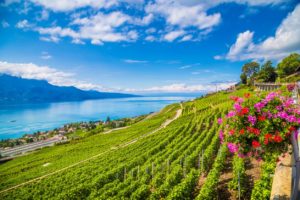
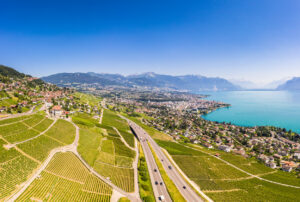
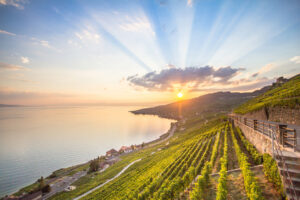
The Romans planted the first vines here two thousand years ago, but it was medieval monks — Cistercians above Lake Geneva among them — who built the dry-stone terraces that still define the landscape, nowhere more so than in Lavaux. Winegrowing has been continuous ever since, shaped by steep hand-worked slopes, family estates handed down over centuries, and a national taste for fresh, food-friendly whites.
Six main regions divide the country’s roughly 15,000 hectares of vines:
Choose a region below to explore its wineries, tastings and how to get around.
The signature grape is Chasselas — a pale, mineral, famously “transparent” white the Swiss take more seriously than anyone (it becomes Fendant in the Valais and Gutedel in the German-speaking north). Alongside it: Pinot Noir and Gamay for reds, the Valais specialities Petite Arvine, Cornalin and Humagne, and Ticino’s Merlot.
Use these tools to shape a trip — compare the regions, find the right month, filter the wineries, or let the quiz point you somewhere to start.
Late spring through early autumn (April–October) is ideal, with the vines in leaf and cellar doors open; September and October bring the harvest and its festivals — among them Caves Ouvertes Vaudoises in late May and the Lutry wine festival in September. Many family estates ask you to reserve tastings ahead.



Collect your Winetraveler passport — tap the regions & grapes you’ve tasted. Your stamps follow you across the whole site.
Your stamps are saved on this device.
