
Portugal's Douro Valley is the oldest demarcated wine region in the world. That means it's not the earliest place wine grapes have been grown, but rather the earliest recognized and documented region to do so. It's now designated a UNESCO World Heritage Site, and cultivation of wine here dates back to the Roman's.
So what does the age of the place tell us? Not unlike a well crafted wine overtime, the Douro Valley splashes a rich history and culture across a beautiful sensory experience.
[caption id="attachment_1248" align="aligncenter" width="500"] Grape vines resting in late December at Quinta da Pacheca.[/caption]
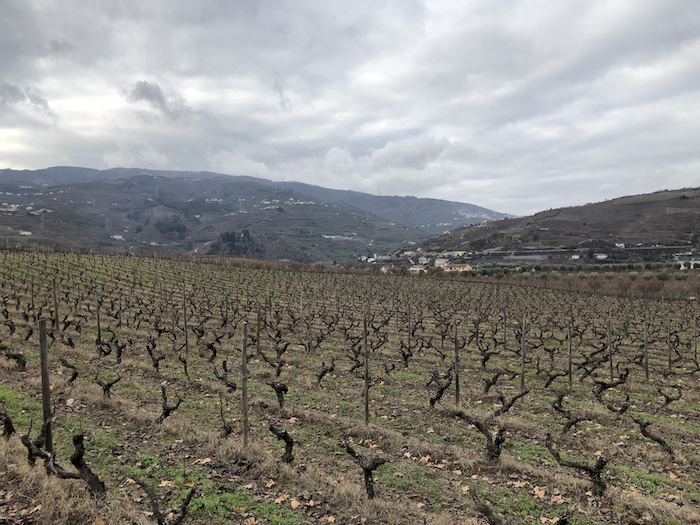
Traveling through the winding roads and switchbacks throughout the Douro brings one word to mind... majestic. Everything from the scent of the Earth after a fresh rain to the steep terraced grape vines along the winding elegance of the Douro River.
The Douro is one of 26 "Denominação de Origem Controlada" or "DOCs" -- not including sub-regions. However, it's by far the most well known wine region in Portugal with respect to the outside world.
Top Douro Valley wine tours & experiences
Graham’s Port House
Graham’s has always been a pioneer. Graham’s was one of the first Port companies to invest in its own vineyards in Portugal’s Douro Valley in 1890 and is now at the cutting edge of innovation ...
Explore Graham’s Port House →A ready-made itinerary to turn these tours into a full Douro Valley wine trip.See the itinerary →
Know the wines of Douro Valley
Wineries to visit
Best time to visit Douro Valley
More about Douro Valley
What To Expect While Visiting The Douro
The River Douro has carved an iconic winding route throughout the region for millenia, ultimately creating the valley we know today. The river continues to leave steep hillsides and cliffs in its wake, which for centuries have been planted on by vintners. We call these plantings today vineyard "terraces."
Traversing the valley by car will give up jaw-dropping views of the surrounding landscape. You'll probably cross the river a few times, ascend to beautiful hilltop vistas and then back down again to enchanting small villages. Along the way, you'll have the opportunity to stop at dozens of exceptional vineyards for tastings and tours. Sadly, these producers are not yet getting the recognition they deserve outside of Portugal for their wines they're producing. They are world class.
In a sense, the Douro Valley is the beginning of a beautiful journey for many of the wines it produces. While all wines undergo a fermentation process in the valley, the Douro is best known for growing grapes that produce Port.
What Are Port Wines?
Unlike other wine regions around the world, some producers in the Douro grow their grapes in the valley and then craft or sell them them to produce something unique -- Port.
Port wines are fortified dessert (sweet) wines. The grapes that make them are grown in the valley and are then fermented to produce typical red wine. These un-fortified reds are then transported to the town of Porto a few hours to the West, near the coast. Here, famous Port houses including Graham's, Cálem, Taylor's, Sandeman and Ferreira refine it further to produce various forms of Port wines. We'll explore the process of making Port Wine and its various styles in a future post.
The Douro Valley and its Wines
In terms of its table wines, the Douro is perhaps best known for its dry reds. These are commonly made from the grape variety Touriga Nacional, although many producers blend this grape with others. Including Tinta Roriz (Tempranillo), Touriga Franca and/or Tinta Barroca.
On the white wine front, the most prominant varieties typically include Malvasia Fina, Rabigato, Viosinho and Gouveio.
What's interesting to me about the Douro is how some of the vineyards are so old that the grape vines aren't consistent in plantings. It's not uncommon to find a Touriga Nacional vine planted immediately next to Tinta Roriz. Originally, this was done as a way to combat the phlyoxerra. Today it serves as special method of blending to produce world-class wines that can't be found anywhere else in the world.
[caption id="attachment_1253" align="aligncenter" width="300"] Enjoying a beautiful dry white wine at Quinta do Bomfim.[/caption]
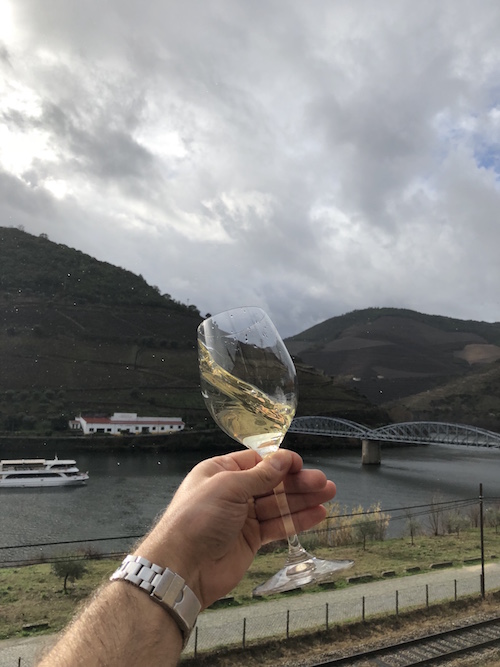
The soil composition of the Douro Valley also helps in the creation of exciting wines. It's rocky, mostly comprised of schist. This kind of terroir forces the vines to struggle through the rock for their nutrients. Compounding the demand on the vine, the dry climate and sunlight of the Douro during the growing season also heats up the schist, punishing the vine roots. While all of this may sound painful, these beat up vines end up producing remarkably intense and complex wines.
By harvest time, the grapes have sprouted in tight bunches, with individual grapes being relatively small yet extremely concentrated with phenolic compounds and sugars. Ultimately, these grapes yield finer, more refined flavors and textures when a wine is produced.
As Robertson Davies once said... “Extraordinary people survive under the most terrible circumstances and they become more extraordinary because of it.”
Have you been to the Douro Valley wine region before? Let us know in the comments your favorite stops or if you'd like any recommendations!
More Ways To Explore Portugal's Douro Valley
10 Essential & Authentic Things To Do in Porto Portugal
11 Delicious Facts About Port and Fortified Wines