Primitivo at a Glance
Common Flavors
- Fruit
- Earth & Additional Characteristics
Structure
- Body Medium - Full
- Sugar Dry
- Acid Medium Minus
- Alcohol Medium Plus, High
- Tannins Medium
Food Pairings
- Pizza
- Hamburgers
- Roasted Lamb
- Eggplant Parmesan
- Hearty Lentil Stews
The Shape of Primitivo
Each spoke runs from delicate (centre) to pronounced (edge). Tap a benchmark to lay a familiar grape over the top.
More About Primitivo
Primitivo Wine Profile
There’s a very good chance that the first time you taste Primitivo, you’ll think “Haven’t we met before?” And you wouldn’t be entirely wrong. Primitivo is almost genetically identical to Zinfandel, California’s powerhouse and arguably most famous variety. Both are descendants of the indigenous Croatian Cjljnek (aka Tribidrag) which basically means that Primitivo and Zinfandel are those twins that you knew in high school who always made you think “Wait now, who is who again?”
In reality, though, Primitivo and Zinfandel can produce different wines for a variety of reasons. Zinfandel is known for being a musclehead of a red, with big dark fruit and fiery zest. Primitivo is a little more restrained and that’s partially due to how it is harvested. The name “Primitivo” is a reference to how early it ripens, and it is usually not left to hang as long as Zinfandel is. It still has the dark inky berry characteristics, but it will also have more of a fig and other dried fruit notes in there. It also tends to be a smidge lighter in body and carry more acidity than its California sibling.
Primitivo Tasting Notes & Food Pairings
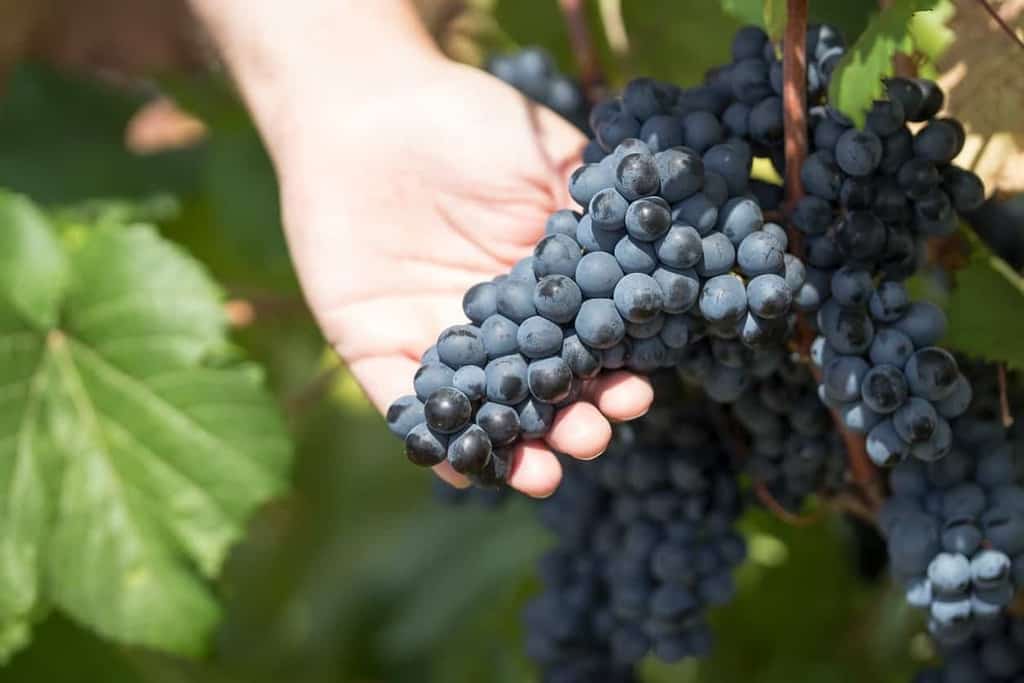
On the nose, Primitivo exhibits black fruit, blue berries, figs, and leather-earthiness. On the palate, expect blackberry and fruit compote with a tannic rusticity on the finish. Since it’s not clobberingly huge – and since it’s usually very reasonably priced – Primitivo is the perfect Tuesday night wine for pizza and burgers. It’s remarkably versatile, though, and can work with everything from roasted lamb, eggplant parmesan, and hearty lentil stews. The key is to pair dishes that have enough heft and depth to support Primitivo’s brawn.
RELATED: See a List of Wine Grape Varieties and Information About Each
Taking a hard right in a completely different viniferal direction, Primitivo is also used to make Primitivo di Manduria Dolce Naturale, a delicious dessert wine made by allowing the grapes to dry on the vines. Since the weather conditions have to be just right for this to happen, Primitivo’s Dolce Naturale is quite rare but it is absolutely worth seeking out.
Wine Growing Regions for Primitivo
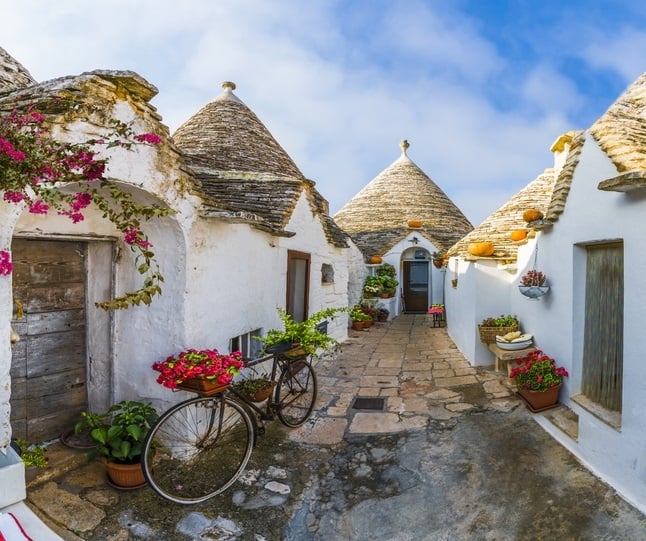
After descending from Mother Croatia, Primitivo has happily settled in the Puglia region of Italy, which is the heel of the boot. This makes sense because it’s pretty much due south of Dubrovnik. Primitivo is the star of Puglia, which is a region that is not necessarily as famous as, say, Piedmont or Tuscany. This is good news for consumers because it means that Primitvos and other Puglian wines tend not to break the bank. Primitivo is also grown in Veneto and other areas of Italy.
Outside of Italy, Primitivo can be found in California, which is an interesting twist considering its near-twin Zinfandel is often considered the quintessential Californian grape. It’s very versatile in California and thrives in hotter regions, like Dry Creek in Sonoma, Lodi, and the Sierra Foothills. It also can be found in Washington, where it tends to have a silkier texture.
Check Out These Primitivo Wines from Around The World:
- Castello Monaci Artas, Puglia, Italy
- Tormaresco Trocicoda, Italy
- Li Veli ‘Orion’, Puglia, Italy
- Cantele, Italy
- Collier Falls Hillside Estate, Dry Creek Valley, Sonoma County, California
- Andis, Amador, Sierra Foothills, California
- Hendry Block 24, Napa Valley, California
- Casa Smith ‘Procospino’, Wahluke Slope, Columbia Valley, Washington
Learn About These Other Wine Grape Varieties
Jeff Runquist Wines
Last Updated on November 20, 2019. Jeff Runquist Wines is a small producer of single vineyard designated red table wines from throughout California. Most of his wines are produced in limited quantities and all of ...
Explore Jeff Runquist Wines →Wineries Known for Primitivo
Estates specializing in Primitivo, open for tastings.
Primitivo: Frequently Asked Questions
What does Primitivo taste like?
Primitivo bursts with ripe blackberry, black cherry, and plum jam, layered with notes of dried fig, spice, tobacco, and vanilla when oaked. It is a bold, full-bodied red with high alcohol, soft tannins, and a warm, fruit-forward, often slightly raisined character.
Is Primitivo sweet or dry?
Primitivo is typically made as a dry red wine, though its ripe, jammy fruit and high alcohol can give an impression of sweetness. Some producers make sweeter dessert styles, but most bottlings finish dry with lush, concentrated fruit and a warm, generous mouthfeel.
What foods pair with Primitivo?
Primitivo's bold fruit and soft tannins pair well with grilled and barbecued meats, spicy sausage, and rich tomato-based pasta. It complements pizza, aged cheeses, and hearty stews. The wine's ripeness and warmth also handle spicy and boldly seasoned dishes gracefully.
Is Primitivo the same as Zinfandel?
Primitivo and Zinfandel are genetically the same grape, originating from the Croatian variety Tribidrag (Crljenak Kaštelanski). Italian Primitivo tends to be slightly more rustic and earthy, while California Zinfandel often shows riper, jammier, higher-alcohol fruit, but they share the same DNA.
Where is Primitivo grown?
Primitivo is most famous in Puglia in southern Italy, especially the Primitivo di Manduria appellation. As Zinfandel, it is widely planted in California. The grape traces its ancient origins to Croatia's Dalmatian coast, where it is known as Tribidrag or Crljenak Kaštelanski.
How should I serve Primitivo?
Serve Primitivo at 60-65°F (16-18°C); serving slightly cooler tames its high alcohol and highlights the ripe fruit. Decant younger, richer bottlings for 30-60 minutes to soften them. Use a large-bowled glass to help disperse the alcohol and concentrate its jammy, spiced aromas.