Pinot Meunier at a Glance
Common Flavors
- Pinot Meunier Tasting Notes
Structure
- Body Medium
- Sugar Dry | Off-Dry
- Acidity High
- Alcohol Medium-Minus
- Tannins Low
Food Pairings
- Roasted Chicken
- Duck
- Turkey
- Grilled Pork
- Mushroom-based Dishes
- Fall Roasted & Grilled Vegetables (Squash, Pumpkin)
The Shape of Pinot Meunier
Each spoke runs from delicate (centre) to pronounced (edge). Tap a benchmark to lay a familiar grape over the top.
More About Pinot Meunier
Pinot Meunier Grape Variety & Wine Profile
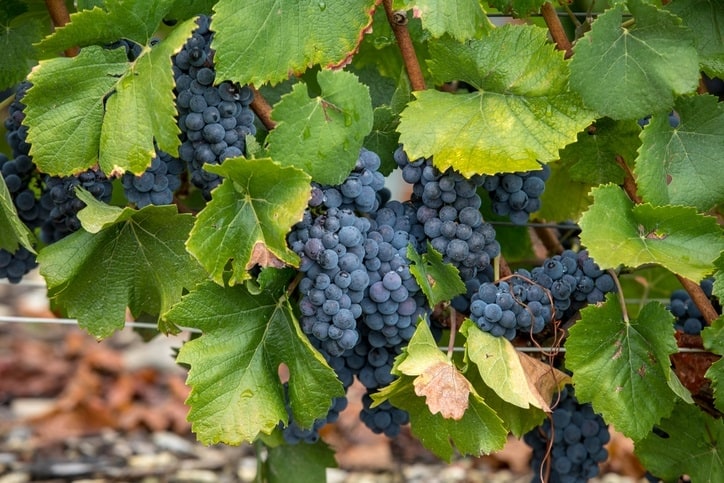
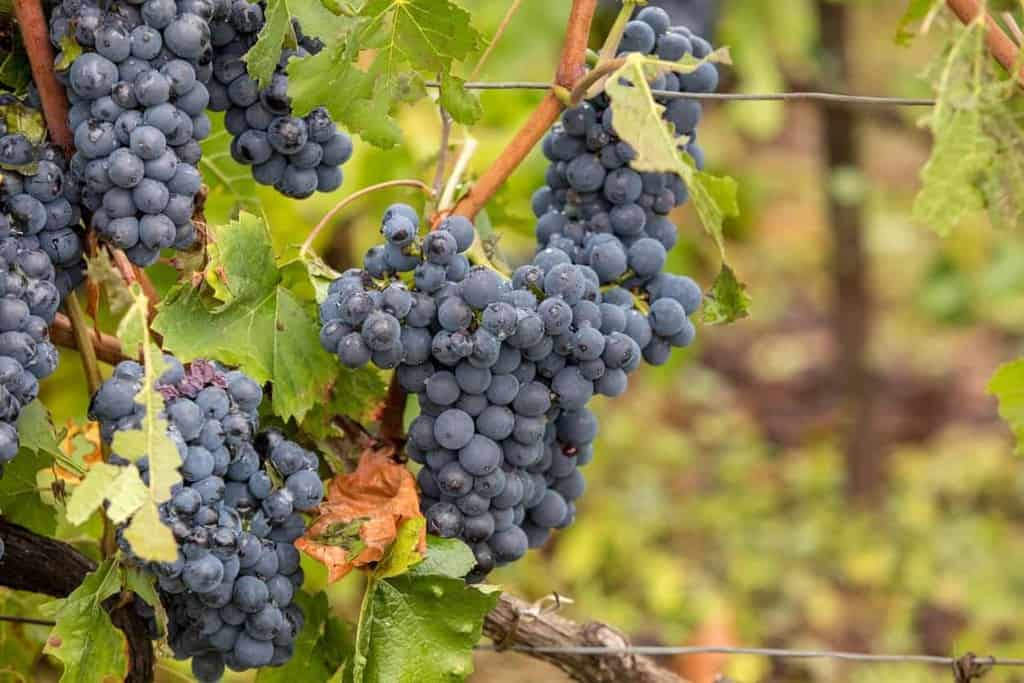
Pinot Meunier is the ultimate Jan Brady: it’s always overlooked. It is, however, the secret behind Champagne, and it’s also bottled as a still wine under several aliases like Meunier and Schwarzriesling. In fact, it most recently has been termed only Meunier throughout Champagne which is an indication that this name will replace Pinot Meunier in the future.
Although a mutation of Pinot Noir, Pinot Meunier is known for adding bright fruit to Champagne blends. Its name – Meunier in French – means “miller”, which is a reference to a flour-like dustiness that appears on its leaves.
Since it isn’t often bottled as a single varietal, it can be a little tricky to nail down. It’s a high-acid, cool-climate grape so it tends to yield lighter and fruitier wines. One the nose, expect bing cherry, raspberry, strawberry, minerality, and forest floor. On the palate, the berry notes are braced by acidic zip with a dusting of earthy, mushroomy notes. When blended in Champagne, it adds in that fruitiness and aromatics to Pinot Noir’s depth and Chardonnay’s richness. Interestingly, blanc de noirs Champagnes tend not to be 100% Pinot Meunier because they do not to hold up to long distance travel as well as Pinot Noir-blended versions do. Pinot Meunier is often compared to Gamay due to its light and bright nature. Consider it the more quaffable Pinot than Noir is.
Food Pairing Pinot Meunier
Pinot Meunier pairs well with poultry – think roasted chicken, duck, or turkey – or grilled pork. For vegetarian dishes, it works well with mushroom-based recipes like a vegetarian mushroom stroganoff. It would be the perfect wine to work with traditional Thanksgiving meals based around turkey and roasted fall vegetables.
Wine Growing Regions for Pinot Meunier
Pinot Meunier is prevalent throughout Champagne and makes up about 40% of plantings there. Since it’s actually a mutation of Pinot Noir, it is often debated whether it should be considered a varietal on its own, but at this stage, it warrants individual consideration since it is grown and valued separately from its ancestor. Outside of Champagne, it is a minor planting in the nearby Loire Valley where it is most often blended in to make sparkling wines.
RELATED: 2 Day Itinerary For Exploring The Champagne France Wine Region
Beyond France, Pinot Meunier can be found in Germany where it’s known as both Müllerrebe (‘müller’ means miller so it’s also a reference to the dustiness on its leaves) or Schawrzriesling. The latter is misleading because it means ‘black Riesling,’ but it is not related to Riesling at all. Within Europe, Pinot Meunier can also be found in Austria and Switzerland, neither of which are surprising since their cool climates tend to mean they cultivate grapes similar to those of German and cooler parts of France.
Among New World wine producing regions, Australia, New Zealand, Canada, and California have all seen experimentation with Pinot Meunier. With trends learning towards lower alcohol wines, Pinot Meunier is gathering a little cult following that predicts more experimentation in the future.
Check out some of these Pinot Meunier and Pinot Meunier-based blends from around the world:
- Billecart-Salmon Brut Rosé, Champagne, France
- Nicolas Feuillatte Brut Reserve, Champagne, France
- Weingut Darting, Pfalz, Germany
- Heitlinger, Baden, Germany
- Best’s Great Western Old Vine, Victoria, Australia
- Keep Wines, Yount Mill Vineyard, Napa, California
- The Eyrie Vineyards, Oregon
Learn About These Other Wine Grape Varieties
Taste Pinot Meunier at the Source
Pinot Meunier is tied to a handful of regions. Explore each as a travel destination — with wineries, tours and guides.
Hambledon Vineyard
Last Updated on November 20, 2019. Hambledon Vineyard is an English Sparkling Wine producer of exceptional quality not far from Winchester in the United Kingdom. Let us show you round our beautiful vineyard, nestled on ...
Explore Hambledon Vineyard →Wineries Known for Pinot Meunier
Estates specializing in Pinot Meunier, open for tastings.
Pinot Meunier: Frequently Asked Questions
What does Pinot Meunier taste like?
Pinot Meunier offers bright red-fruit flavors of cherry, raspberry, and strawberry with subtle earthy and bready notes. In Champagne it contributes fruity roundness, approachability, and softness to the blend. Rare still versions are light-bodied with fresh acidity and a gentle, fruit-forward, easy-drinking charm.
Is Pinot Meunier sweet or dry?
Pinot Meunier is used almost entirely in dry sparkling wines, especially Champagne, where most styles are brut and dry. Still versions are also made dry. Any sweetness in the finished wine comes from dosage decisions in sparkling production, not the grape itself.
What foods pair with Pinot Meunier?
As part of Champagne, Pinot Meunier pairs with appetizers, fried foods, shellfish, soft cheeses, and roast poultry. Its fruity roundness suits richer dishes and brunch equally well. Rare still red versions complement charcuterie, mushroom dishes, salmon, and lighter roasted meats with ease.
What is Pinot Meunier used for?
Pinot Meunier is one of the three main Champagne grapes, alongside Chardonnay and Pinot Noir. It adds fruitiness, softness, and early approachability to blends, ripening more reliably than Pinot Noir. It is occasionally bottled as a still red or in single-varietal sparkling wines.
Where is Pinot Meunier grown?
Pinot Meunier is grown primarily in the Champagne region of France, particularly the Vallée de la Marne where it resists spring frost well. It is also planted in Germany, England, Australia, and the United States, chiefly for traditional-method sparkling wine production.
How should I serve Pinot Meunier?
Serve sparkling Pinot Meunier and Champagne chilled at 45-48°F (7-9°C) in a tulip glass to preserve the aromatics and fine bubbles. Still red versions are best lightly chilled around 55°F (13°C). Avoid over-chilling, which mutes its delicate, charming red-fruit character.