Wine city
Bolgheri is the Tuscan coast's most celebrated wine appellation — the birthplace of the "Super Tuscans" that rewrote Italy's rulebook.
Bolgheri is the Tuscan coast's most celebrated wine appellation — the birthplace of the "Super Tuscans" that rewrote Italy's rulebook. On the gravelly flats a few kilometres from the Tyrrhenian Sea, Cabernet Sauvignon, Merlot and Cabernet Franc ripen alongside Sangiovese, producing structured, age-worthy reds under the Bolgheri DOC.
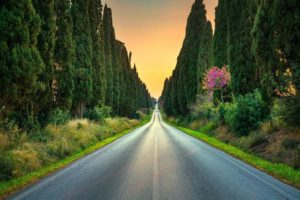
The estates strung along the cypress-lined Viale dei Cipressi — Sassicaia at Tenuta San Guido, Ornellaia, Grattamacco and their neighbours — draw collectors from around the world, yet the village of Bolgheri itself stays small and walkable. Spring and early autumn are the sweet spot for cellar visits, when the coastal light is soft and harvest energy is building. Use this guide to plan which estates to book, how Bolgheri fits alongside the wider Tuscan Coast, and when to go.
Bolgheri’s estates are spread across rural Castagneto Carducci, and the marquee names require advance booking (the founding estate is not open to the general public):
Guided tours from Livorno make winery-hopping easy across the rural coast, several pairing wine with the area’s olive oil:
Bolgheri is the birthplace of the Super Tuscan — Tenuta San Guido’s Sassicaia, first released commercially with the 1968 vintage, launched the category — and Bolgheri Sassicaia is the only Denomination of Origin in Italy reserved for a single estate’s wine (autonomous DOC since 2013). Beyond the cellars, walk the Viale dei Cipressi, the 5 km avenue of 2,540 centuries-old cypresses immortalized in Carducci’s poetry, and the medieval hilltop village of Bolgheri. Late spring and early autumn are ideal; harvest runs September–October, when the top estates limit visits.