
Traverse City is a summer destination for Midwesterners. As a matter of fact, it is a summer destination for people across the country. Direct flights originate to this middle of Michigan town from NYC, Boston, Florida, Texas, Phoenix and Denver. It is an incredibly lively destination for people who enjoy watersports and the outdoors. What’s even more, it is the entry point for the Midwest’s most notable and awarded wine regions, the Leelanau Peninsula and Old Mission Peninsula AVA. While Winetraveler.com has covered Old Mission Peninsula in the past, the magic of Michigan’s Leelanau Peninsula is yet to be discussed.
Michigan’s Leelanau Peninsula is roughly 30 miles long, jettisoning into Lake Michigan from Traverse City, making it about a third larger than its Old Mission Peninsula neighbor. It has more than double the wineries of Old Mission, peppered between cherry, apple, and peach orchards as far as the eye can see.
From the outside, Michigan’s Leelanau Peninsula has an inviting, artsy vibe. The tasting rooms are relaxed, welcoming you straight from your bike off the 17-Mile Traverse Area Recreation Trail (TART) that spans the peninsula, or from a fancy dinner at one of Traverse City’s award winning restaurants. And while what is served inside the tasting rooms is a delicate blend of art and science, the soils and climate of the area tee up the grapes for wineries to have no choice but to deliver.
The Soils and Topography of Michigan’s Leelanau Peninsula
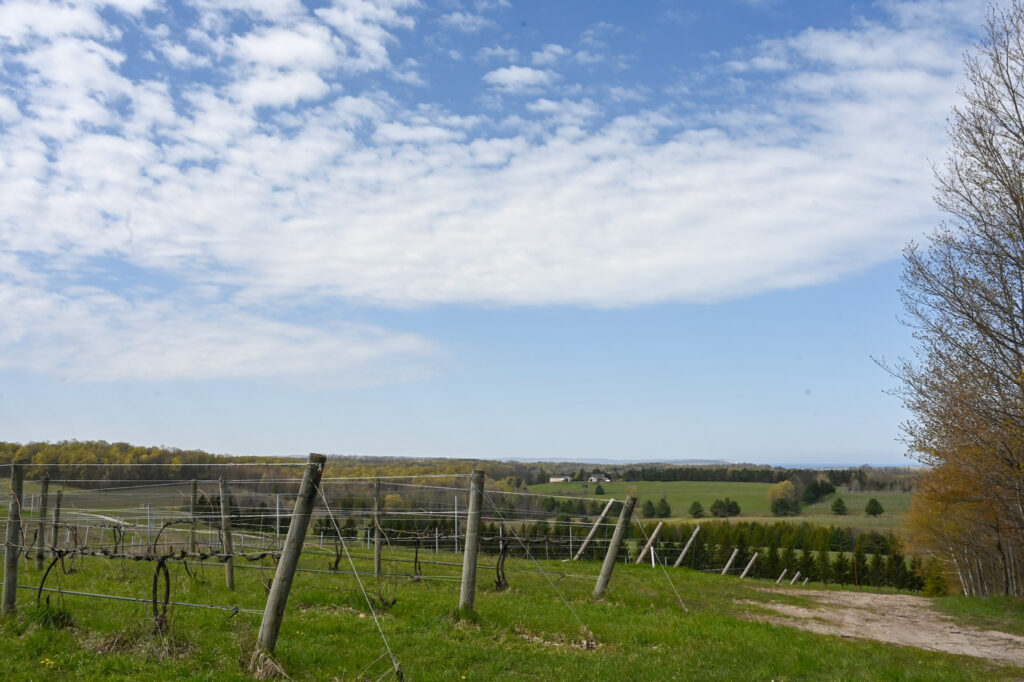
Driving in Michigan’s Leelanau Peninsula is a bit like riding nature’s geriatric rollercoaster. Undulating hills of various heights and slopes paint a portrait of what the wine is like in the region. Incredibly varied and terroir driven, this is a paradise for water sport lovers and the most technical of wine geeks. Where ancient glaciers carved out the topography of the great lakes, there is sandy loam with plentiful small rocks. Here, the average slope is 25 degrees although it can range as high as 50 degrees, as anyone who has visited Sleeping Bear Dunes National Lakeshore can attest.
With a mean annual temperature of just 45 degrees Fahrenheit and a short growing season, the question is how can vitis vinifera survive the extreme cold of a North Michigan winter? While the moderation of cold is certainly offset by the warmed air above Lake Michigan, it is the lake effect snow that holds the key. With an average snowfall of 145 inches annually, the snow serves as insulation and protection for the vines. Just like an igloo, the snow traps the heat from the earth and helps temper the beating that cold wind and ice can have on the vines.
Vine Management
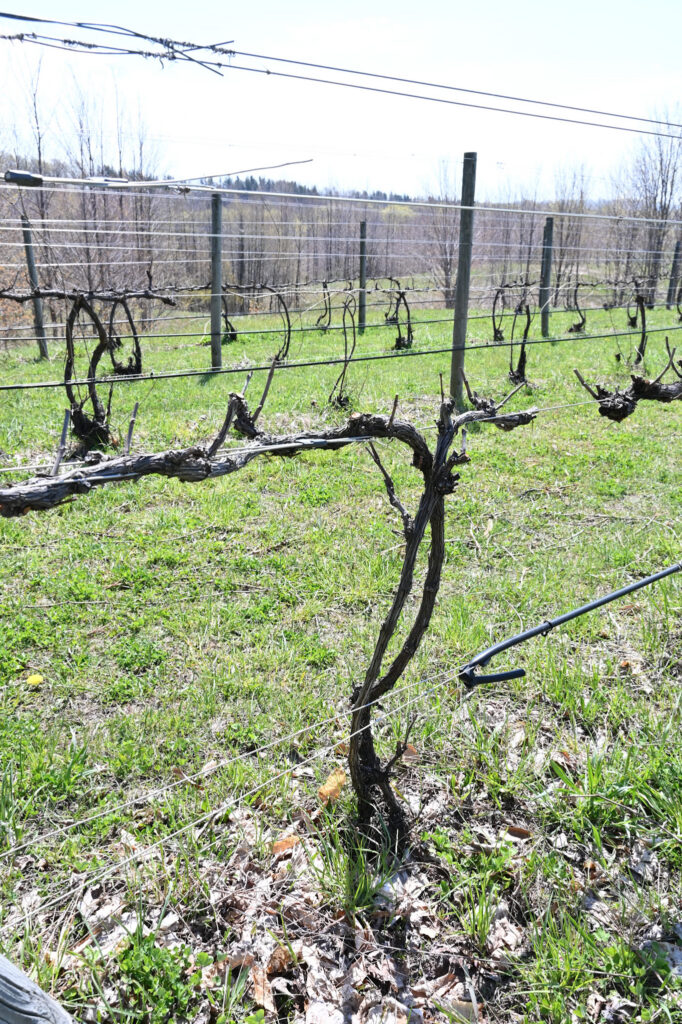
But snow can’t protect everything. As Tomas Moreno, Vineyard Manager of Harmony Estate Vineyards points out, there is an insurance system that one must build into vineyard management when working in Northern Michigan’s Leelanau Peninsula. VSP style trellising with a two trunk and double cordon system provides an insurance policy. One trunk and cordon might get hit by frost damage, pests, or disease, but the other may survive. In a way, it is sacrificial vine management. While the dual trunks can create additional fruit, resulting in less concentrated flavors in the grape, most growers in the cold climates of the Midwest are able to train the shoots to mitigate this. Simply put, the same number of buds are distributed across two trunks and cordons, resulting in a more balanced growth that is adaptable in the face of extreme cold or pests.
Moreno explains why they use a traditional method of harvesting: “Everything is hand harvested. We’ve never used mechanical devices mainly because the terrain is hilly, but also, by the time it is collected in the bin, the grapes are often slightly crushed and juicy.” With hand harvesting, the speed and whether to do a hard or soft press, and for how long, is all determined by the winemaker. The winemaker has more control over the process, something that is necessary for a team helming three different wine labels under a single umbrella. They use select picking through multiple passes, where they scour the vines by variety and take the more ripened grapes first. Over the course of six weeks between late September and early November, they’ll work through the grapes in various passes, depending on how the grapes will be used. First pickings are used for single vineyard wines to reflect the wine and the quality of the terroir, and subsequent pickings are used for blends or with grapes from other areas of the property.
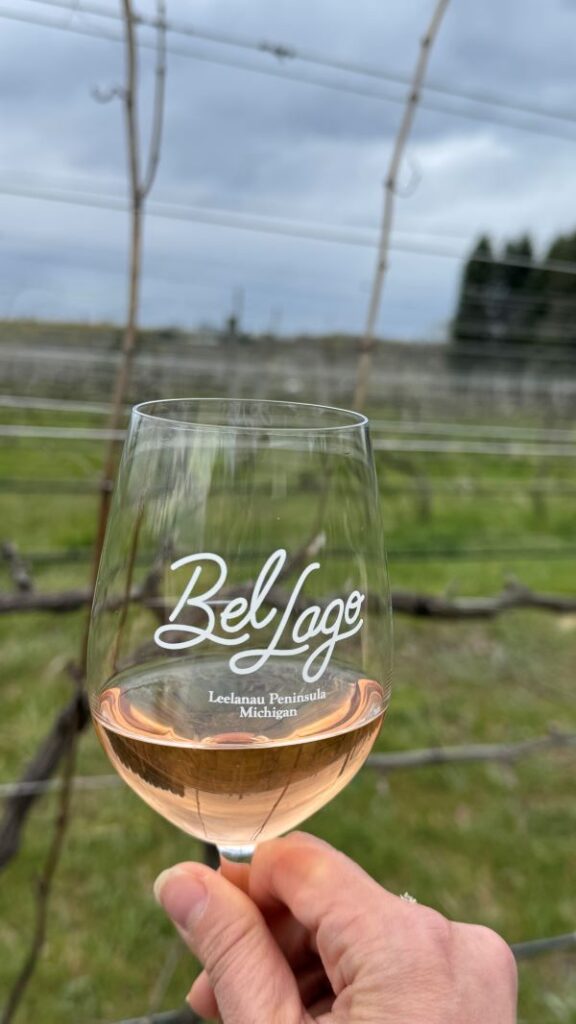
Moreno has much at stake as he manages the vines for the three prestigious wineries Harmony Estate on Michigan’s Leelanau Peninsula: Bel Lago, French Valley, and Dune Bird. Located in the With production levels of 15,000 cases annually, it is his responsibility to tend to the grapes to make sure that the wine can be made properly.
Sustainability in Practice on Michigan’s Leelanau Peninsula
With 27 years working this land, Moreno has seen many iterations of these vines. In 2021, the North Farm property of Harmony Estate became SIP certified. Standing for “Sustainability in Practice,” SIP certification is a point system that is achieved through sustainability in the people, prosperity of the business, and the planet. Planet sustainability at Harmony Estate is a commitment to more biodynamic practices across all their wineries. At the solar powered North Farm homestead, 180 acres surround an Amish built barn and homestead, including dense forest, grapes vineyards and apple orchards. With this certification, they stopped using Round up, herbicides or insecticides. Instead, they use compost from their herd of on property Scottish Highlander cows. These cows graze the grass for food, aerate the soil with their hooves and provide rich compost and compost tea to enrich the structure of the soil. Cover crops, and wildflowers are also embedded into the land to enrich the soil. This is especially important as some of the property’s vines are pushing 40 years old and need all the help they can get.
Not every property on Michigan’s Leelanau Peninsula finds using organic materials and biodynamic processes necessary in their wine making processes, but that is an area where vineyards like Bel Lago, French Valley, and Dune Bird differentiate themselves. At the time of publication, there appeared to be only one other SIP certified property on the Leelanau Peninsula and one more in the entire state of Michigan. Not only is the wine at these estates bright and expressive of the land and the winemaker, but they also are working to enrich the land and the environment with the process. Where larger wine houses may use grapes from different sources to make up for inconsistent growing years, the wineries of Harmony Estate welcome vintage variation as it shows a sense of time and place within each glass. My personal favorites from each estate are: Bel Lago’s Cabernet Franc, French Valley’s Rosé, and Dune Bird’s Dry Riesling.
Make the Most of A Visit
If you want to be walkable to restaurants, shops and with quick access to major roads to other areas of Michigan, stay in Traverse City proper. If you prefer quiet rolling hills, forests, and vineyards, many of the wineries have on site vacation rentals, such as this stunner at Dune Bird.
Don’t forget to check out the restaurants, wineries and shops at the sprawling estate of the former sanitarium, now known as The Village at Grand Traverse Commons.


Collect your Winetraveler passport — tap the regions & grapes you’ve tasted. Your stamps follow you across the whole site.
- Curious1 stamps
- Explorer3 stamps
- Connoisseur6 stamps
- Sommelier12 stamps
- Vigneron20 stamps
Your stamps are saved on this device.