Pork tenderloin is the cut that makes wine lovers happy. It is lean, tender and mild, which means it does not fight the wine the way a fatty pork shoulder or a heavily marbled steak can. That mildness is also the key to pairing it well. With pork tenderloin, you are rarely matching the wine to the pork itself. You are matching it to whatever you put on the pork, which is why the same roast can call for a juicy red one night and an off-dry white the next.
Because the meat sits right on the line between red-wine and white-wine territory, it is one of the most flexible mains you can cook. Get the logic right and you have a dish that flatters almost anything in the rack.
For a plain roasted or herb-crusted tenderloin, reach for Pinot Noir first. Its bright red fruit and soft tannins flatter lean pork without overwhelming it. Cooking with a fruit or Dijon glaze? Switch to an off-dry Riesling. Serving a mushroom or cream sauce? A lightly oaked Chardonnay is the move. The rule to remember: match the sauce, not the meat.
Pork Tenderloin Wine Pairings at a Glance
| Preparation | Recommended Wine | Why It Works |
|---|---|---|
| Roasted or herb-crusted | Pinot Noir | Red fruit and earthy notes echo the herbs, and soft tannins will not bully the lean meat. |
| Apple or Dijon glaze | Off-dry Riesling | A touch of sweetness mirrors the glaze and balances the mustard tang. |
| Mushroom or cream sauce | Lightly oaked Chardonnay | A rounder, fuller white matches the weight of the sauce and adds savory depth. |
| Peppercorn or spice rub | Grenache (Cotes du Rhone) | Ripe berry fruit and gentle spice ride alongside the pepper. |
| Grilled with char | Zinfandel | Brambly fruit and a hint of sweetness flatter the caramelized, smoky edges. |
| Bacon-wrapped | Gamay or Pinot Gris | Bright acidity cuts the added fat without steamrolling the pork. |
Why Pork Tenderloin Is So Wine-Friendly
Pork is often called the other white meat, and tenderloin is the leanest, mildest part of it. There is very little fat to coat your palate and no strong gaminess to clash with the wine. That neutrality is a gift. It lets the seasoning, the sauce and the cooking method decide the pairing, so a cook who understands a few simple principles can pour almost anything and make it work.
The two levers that matter most are sweetness and weight. A sweet or fruity glaze wants a wine with a little sweetness of its own, or bright fruit, so the food does not make the wine taste sour and thin. A rich, creamy or mushroom sauce wants a wine with more body so the pairing feels balanced rather than lopsided. Keep those two ideas in mind and the rest falls into place.
The Best Red Wines for Pork Tenderloin
Pinot Noir is the classic and the safest bet. Its red-cherry fruit, silky texture and gentle tannins were made for lean pork, especially a simple roast finished with thyme and garlic. Look to Burgundy, Oregon or a cooler-climate California bottling for the freshness that keeps the pairing lively. The producers of Burgundy at the Bureau Interprofessionnel des Vins de Bourgogne describe Pinot Noir as a wine of finesse rather than power, which is exactly why it suits a delicate cut.
When the tenderloin is grilled, spice-rubbed or glazed, reach for something with a touch more fruit and warmth. Grenache and Grenache-led blends from the southern Rhone bring ripe berry and a whisper of pepper. Inter Rhone, the trade body for the Rhone Valley, points to these wines as natural partners for herb-driven and lightly spiced dishes. Zinfandel is the American answer, with brambly fruit and a hint of sweetness that loves char and barbecue glazes. Gamay, the grape of Beaujolais, is the lightest of the group and a smart pick for a bacon-wrapped tenderloin.
The one red to approach with caution is a big, tannic Cabernet Sauvignon. Its firm structure is built for a fatty steak, and against plain lean pork it can taste drying and severe. A peppercorn crust or a rich pan sauce can bridge the gap, but for a simple preparation there are friendlier choices.
The Best White and Off-Dry Wines
White wine is not a compromise with pork tenderloin. It is often the better call. When the dish is sweet, an off-dry Riesling is hard to beat. The small amount of sugar in the wine meets the apple, maple or Dijon in the glaze head on, while its high acidity keeps everything fresh. Wines of Germany and the VDP, the association of the country top estates, note that Riesling is measured on a sweetness scale for exactly this reason, so read the label and choose a Kabinett or a wine marked off-dry for glazed pork.
For a tenderloin served with mushrooms or a cream sauce, a lightly oaked Chardonnay gives you the body and the subtle toasty, savory notes to match. Alsace Pinot Gris, with its stone-fruit richness, is another excellent option for fuller preparations. If you are keeping things light and herbal, a dry rose splits the difference between red and white and works with almost any midweek version of the dish.
Two Pork Tenderloin Recipes to Cook Tonight
These two preparations cover both sides of the pairing map. The first leans sweet and calls for an off-dry white or a fruity red. The second is savory and earthy, built for Pinot Noir or a creamy Chardonnay. Both cook a whole tenderloin to a safe 145F internal temperature, per USDA guidance, followed by a short rest.
 Recipe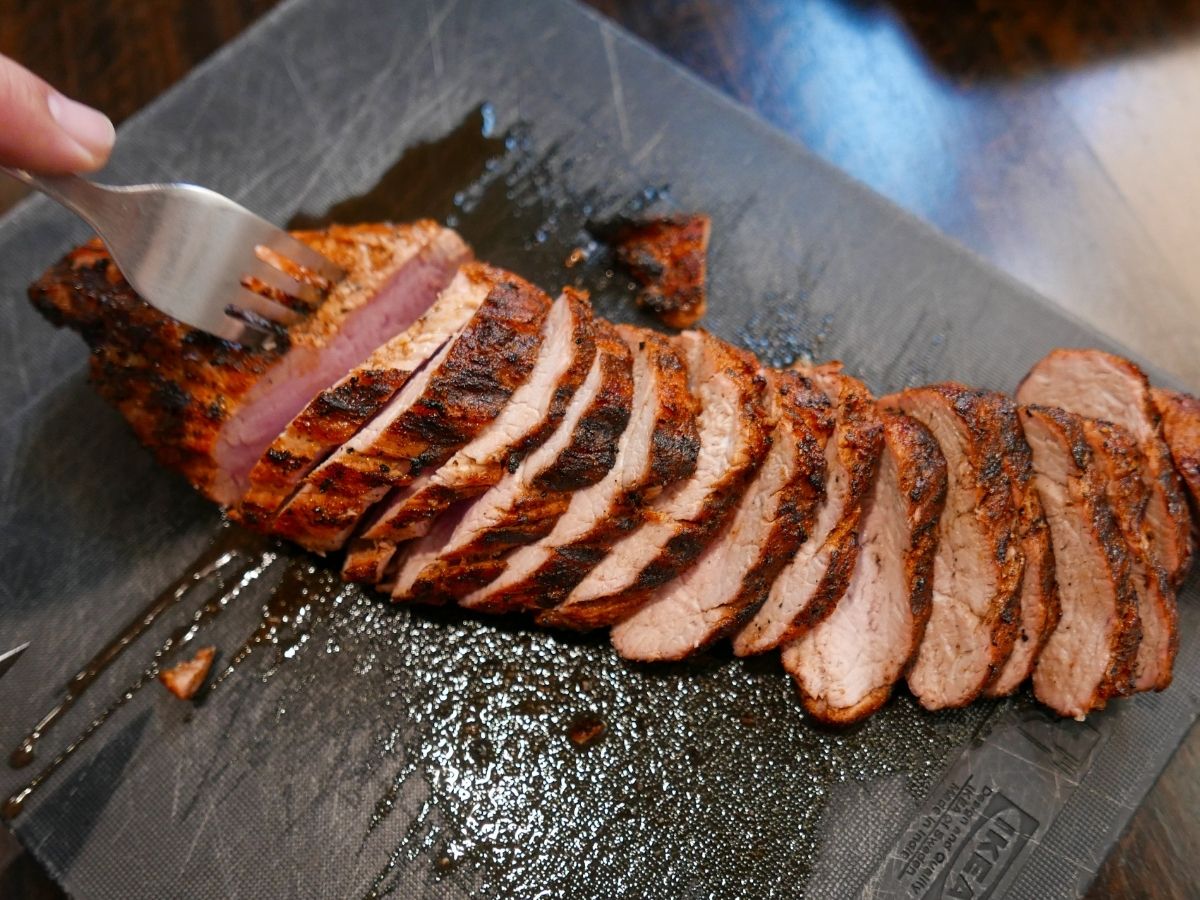
Roasted Pork Tenderloin With Apple-Dijon Glaze
A weeknight roast with a sweet-and-tangy glaze that begs for an off-dry Riesling or a fruity Pinot Noir.
Ingredients
- 1 pork tenderloin, about 1.25 lb (565 g)
- 1 tsp kosher salt
- 1/2 tsp black pepper
- 2 tbsp olive oil
- 2 tbsp Dijon mustard
- 2 tbsp apple butter (or apple jelly)
- 1 tbsp maple syrup
- 1 tsp fresh thyme leaves
- 1 garlic clove, minced
Method
- Heat the oven to 400F (205C). Pat the tenderloin dry and season all over with salt and pepper.
- Heat the olive oil in an oven-safe skillet over medium-high. Sear the pork until browned on all sides, about 2 to 3 minutes per side.
- Whisk together the Dijon, apple butter, maple syrup, thyme and garlic. Brush the glaze generously over the pork.
- Transfer the skillet to the oven and roast for 18 to 22 minutes, until the internal temperature reaches 145F (63C).
- Rest the pork for 5 to 10 minutes before slicing. Spoon any pan glaze over the top to serve.
Pour it with: An off-dry Riesling (Kabinett) or a fruit-forward Pinot Noir.
Recipe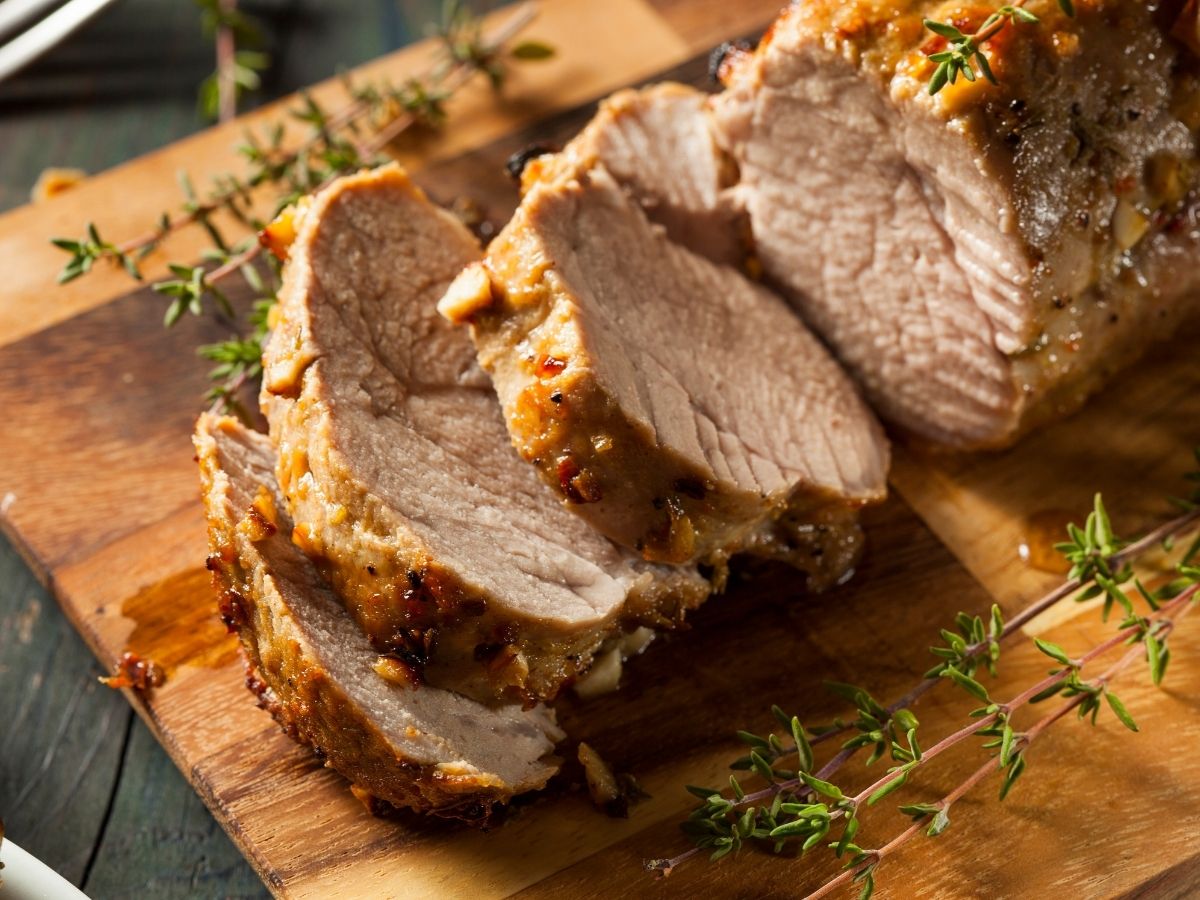
Herb-Crusted Pork Tenderloin With Mushroom Pan Sauce
A savory, earthy preparation built for Pinot Noir or a lightly oaked Chardonnay.
Ingredients
- 1 pork tenderloin, about 1.25 lb (565 g)
- 1 tsp kosher salt
- 1/2 tsp black pepper
- 2 tbsp chopped fresh rosemary, thyme and parsley
- 2 tbsp olive oil
- 8 oz (225 g) cremini mushrooms, sliced
- 1 shallot, minced
- 1/4 cup (60 ml) dry white wine
- 1/2 cup (120 ml) chicken stock
- 2 tbsp butter
- 1 tsp Dijon mustard
Method
- Heat the oven to 400F (205C). Season the pork with salt and pepper, then press the chopped herbs over the surface.
- Heat the olive oil in an oven-safe skillet over medium-high and sear the pork on all sides until browned, about 2 to 3 minutes per side.
- Roast in the oven for 18 to 22 minutes, until the internal temperature reaches 145F (63C). Move the pork to a board to rest.
- In the same skillet over medium heat, cook the mushrooms and shallot until golden, about 5 minutes. Pour in the wine and stock, scraping up the browned bits, and reduce by half.
- Swirl in the butter and Dijon until glossy. Slice the rested pork and spoon the mushroom sauce over the top.
Pour it with: Pinot Noir or a lightly oaked Chardonnay.
Frequently Asked Questions
What is the best wine to pair with pork tenderloin?
Pinot Noir is the most reliable all-round choice for a roasted or herb-crusted tenderloin. If the dish has a fruit or Dijon glaze, an off-dry Riesling is better, and for a mushroom or cream sauce a lightly oaked Chardonnay wins. Match the wine to the sauce rather than to the pork itself.
Does red or white wine go better with pork tenderloin?
Both work, which is what makes the cut so versatile. Pork tenderloin is lean and mild, so medium-bodied reds like Pinot Noir and fuller whites like Chardonnay both suit it. Let the preparation decide: sweet glazes lean white and off-dry, while grilled or peppered versions lean red.
What red wine goes with pork tenderloin?
Choose soft-tannin, red-fruited reds. Pinot Noir is the classic, with Grenache, Zinfandel and Gamay all excellent depending on the preparation. Save big, tannic Cabernet Sauvignon for richer, saucier versions of the dish.
What white wine pairs with pork tenderloin?
Off-dry Riesling is the standout for glazed or fruit-forward preparations, lightly oaked Chardonnay is ideal with mushroom or cream sauces, and Alsace Pinot Gris works well with richer dishes. A dry rose is a reliable middle path.
What wine goes with apple or Dijon glazed pork?
An off-dry Riesling is the best match. The small amount of sweetness in the wine meets the glaze directly while its acidity keeps the pairing fresh. A fruit-forward Pinot Noir or a dry rose also work nicely.
Should I avoid Cabernet Sauvignon with pork tenderloin?
Usually, for plain preparations. Cabernet firm tannins are built for fattier, richer meats and can taste drying against lean pork. A peppercorn crust or a rich pan sauce can bridge the gap, but for a simple roast a softer red is a smarter pour.
Sources and further reading
- Bureau Interprofessionnel des Vins de Bourgogne (BIVB), on Burgundy Pinot Noir and Chardonnay
- Inter Rhone, on Grenache and southern Rhone reds
- Wines of Germany (Deutsches Weininstitut), on Riesling and its sweetness scale
- USDA FoodSafety.gov, safe internal temperature for pork is 145F with a 3 minute rest