
Croatia is one of those places where the wine can feel almost beside the point — until you actually taste it. This is a country making wine from grapes most travelers have never heard of (and, in Zinfandel’s case, one they have), across secluded islands, hilltop villages, and a coastline that keeps stealing the show. Ask us where the best place in Croatia is to open a bottle and the honest answer is anywhere, just about anytime. But to give you somewhere to start, here are five of our favorite ways to go wine tasting in Croatia — from a beach picnic to a yacht deck to a truffle-scented café in the hills.
Five Ways to Taste Croatia at a Glance
| The experience | Where | Region | Croatian wine to try |
|---|---|---|---|
| A beach picnic | Lokrum, off Dubrovnik | Dalmatia | Pošip, Plavac Mali |
| A yacht charter | Split | Dalmatia | Debit, Plavac Mali rosé |
| A café with a view | Motovun | Istria | Malvazija Istarska, Teran |
| A guided wine tour | Opatija & Istria | Kvarner / Istria | Žlahtina, Istrian Malvazija |
| Winery day trips | Around Zagreb | Continental Croatia | Graševina, Škrlet, Kraljevina |
On a Beach in Lokrum
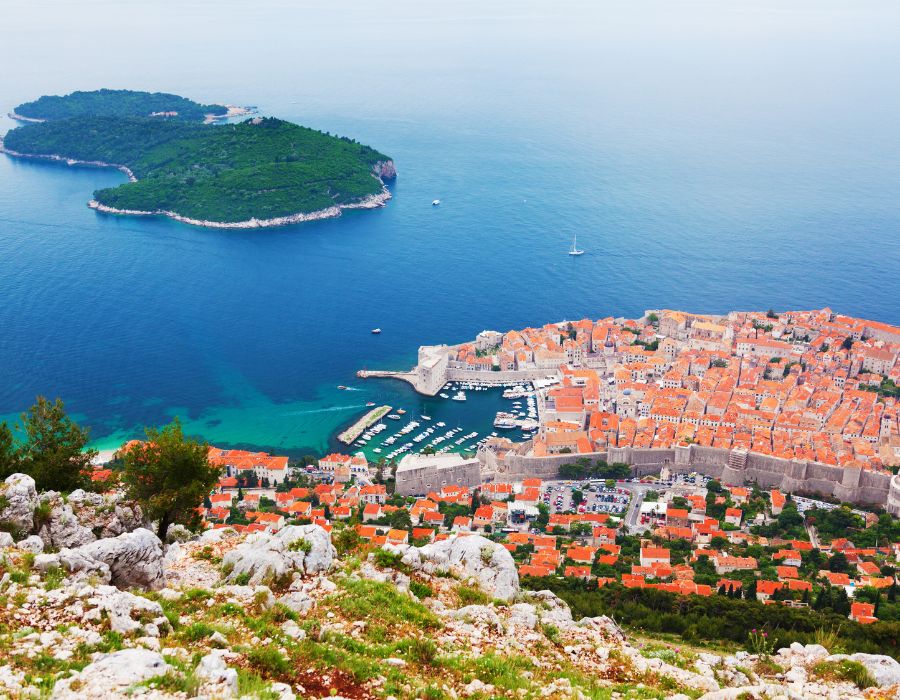
Just a short boat ride from Dubrovnik, the little island of Lokrum is where locals go to escape the crowds and the summer heat. Fringed by thick pines and limestone boulders, its beaches are quieter and more private than anything on the mainland — the kind of place you settle into for the whole afternoon.
Lokrum is a UNESCO-protected nature reserve, with a botanical garden growing some 800 species of Mediterranean and exotic plants. Nearby you’ll find a 19th-century summer mansion built by Maximilian of Habsburg and Fort Royal, a fortress the French put up in 1806. On the island’s southern tip is a small salt lake — nicknamed the Dead Sea — linked to the open water by an underwater passage.
RELATED: Croatian Wine? Here’s Why You’ve Probably Never Tried It
The island’s most famous landmark is its 11th-century Benedictine Monastery, which now houses a replica of the Iron Throne — Lokrum stood in for the city of Qarth in Game of Thrones, and you can even take a Game of Thrones tour of the island. Fittingly for a wine story, 15th-century records show the monks here cultivated fruit and made wine on the estate.
There are only a couple of cafés on Lokrum, so most people bring their own food and drink and claim a shaded cove. When you do, skip the imports and drink like a Dalmatian: a crisp, faintly saline Pošip — the coast’s great white, from the nearby island of Korčula — is perfect in the heat, as is a Dubrovnik-area Malvasija. If you’d rather have red, this is Plavac Mali country, Dalmatia’s bold, sun-loving signature (and a close cousin of Zinfandel).
On a Yacht in Split

Long warm summers, dependable winds, and well-run marinas make Split a natural base for sailing. The old city is a glorious mishmash of Roman ruins and modern life, but the real draw is just offshore: sandy coves, pebble beaches, and that vivid cobalt-blue Adriatic.
RELATED: Medieval Wine Tasting: 10 Things To Do in Dubrovnik Croatia
There’s no better way to see this coast than from the deck of a yacht. Stretch out on the sundeck, dive in for a swim, or snorkel the clear shallows — and when you want to stretch your legs, sail across to the island of Čiovo and tie up at Trogir, a UNESCO-listed harbor town packed with Romanesque and Renaissance stonework.
Wine and a Croatian charter were made for each other. Picture a chilled Dalmatian rosé — a dry, coral-pink Plavac Mali or Opolo — cracked open as the sails go up, or a glass of crisp Debit as the sun drops behind the islands. Booker currently has a good deal on a charter out to the Krka Waterfalls with a food-and-wine tasting built in: hike, swim below the falls, have lunch in the park, and finish the day with a tasting at a nearby wine estate.
In a Café in Motovun
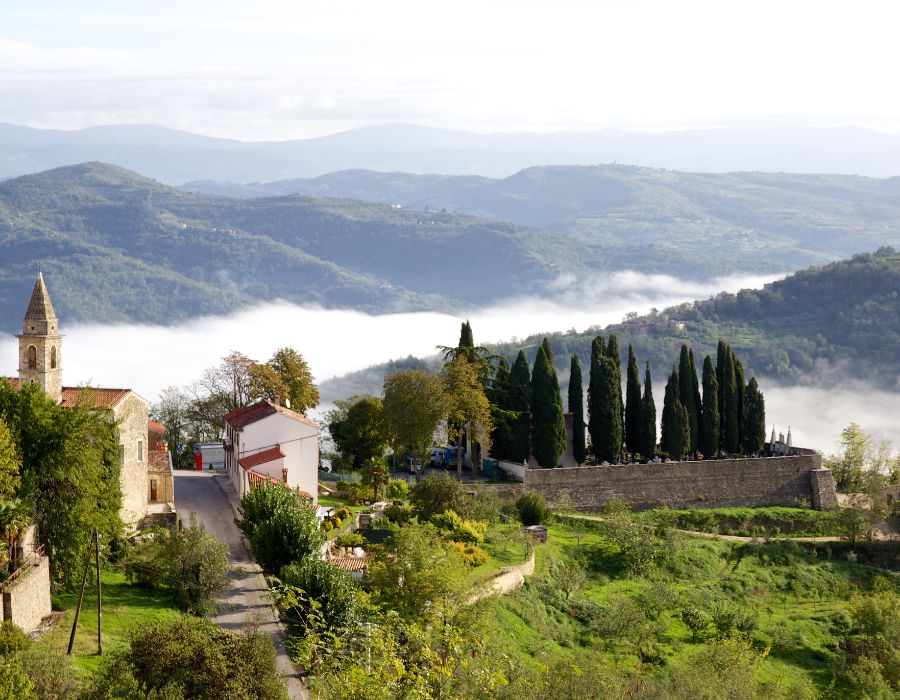
For wine with a view, few places beat Motovun. This medieval village sits atop a 277-meter hill in the Istrian interior, looking out over the Mirna River valley and a forest of oak, poplar, and ash. It’s truffle country — Motovun’s prized black and white truffles turn up in nearly every dish on the local menus, and they’re the whole reason to build your visit around a long lunch.
For a small village, there’s plenty to do in Motovun. Hike or bike the Parenzana Trail, a former narrow-gauge railway that once linked Trieste and Poreč to the inland towns; take a spa break at the Hotel Kaštel; paraglide off the ridge; or walk the old fortification walls. Come in summer for the week-long Motovun Film Festival, or in autumn to join a truffle hunt.
Whatever you do, don’t leave without pairing those truffles with a local glass. Order a Malvazija Istarska — Istria’s signature dry white, medium-bodied and full of aroma, zest, and freshness — or, if you’re after red, a Teran, prized for its bracing acidity and note of wild berries.
On a Tour of Opatija
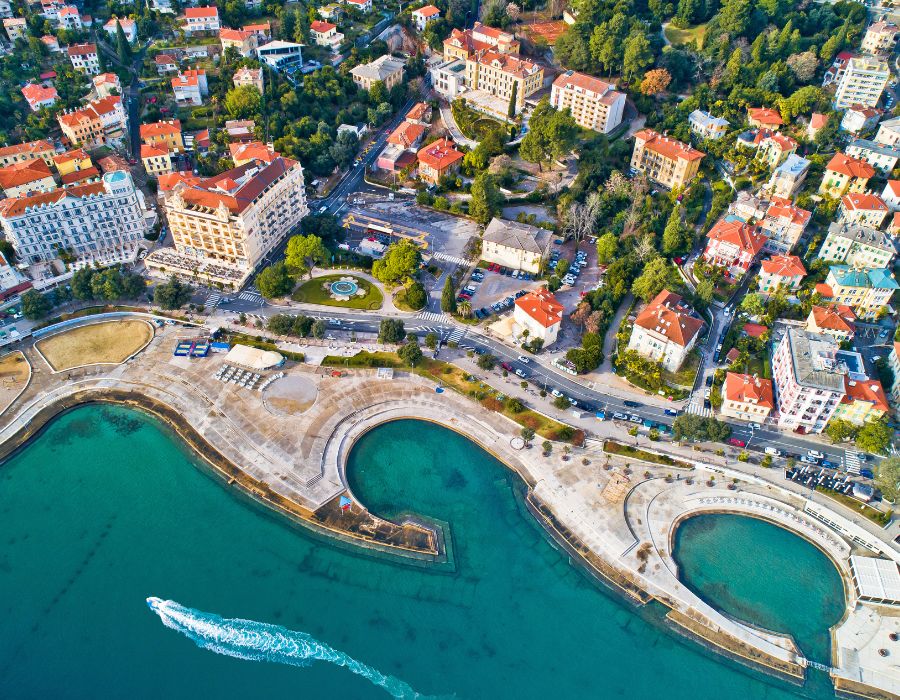
A fashionable resort since the 19th century, Opatija is lined with Habsburg-era villas, the grandest being the Villa Angiolina, which sits in a 3.7-hectare botanical garden and houses the Croatian Tourism Museum. The Lungomare, a 12-km seaside promenade, connects the town to the fishing village of Volosko to the south and the spa town of Lovran to the north. Out on the waterfront stands Opatija’s most photographed statue, the Girl with a Seagull; in 2015 the town added its own Walk of Fame honoring Croatian greats, among them inventor Nikola Tesla, tennis champion Goran Ivanišević, and poet Tin Ujević.
To get the most out of a luxury Croatia trip, you can trace the town’s rise from fishing village to belle-époque resort on a private walking tour of the promenade, gardens, villas, and old churches.
If you’d rather have the whole day handled, Not Another Wine Tour runs an excellent one-day trip into Istria’s wine country. You’ll meet the families behind the region’s award-winning wines, wander the cobbled lanes of hilltop Grožnjan, and sit down to a proper Istrian lunch at a family-run konoba — the kind of day that tends to end with you shipping a case home.
Opatija also happens to eat very well — it has three Michelin-starred restaurants — but don’t overlook the smaller konobas, cafés, and street stalls. For the wine, order the local Žlahtina, a dry white from grapes grown on the nearby island of Krk. It’s made for the sea: pair it with oysters and other seafood, white meat, or a wedge of sheep’s-milk cheese.
The Wineries Around Zagreb
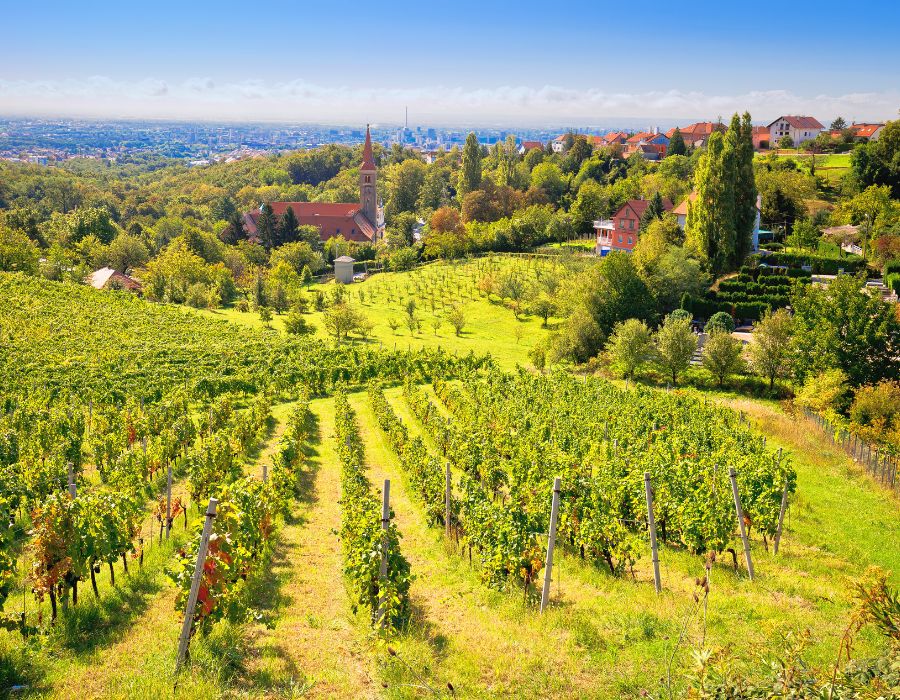
You don’t have to reach the coast to taste well. The countryside around the capital is dotted with villages, hilltop castles, and vineyards, and it’s full of small family wineries turning out some of the country’s best bottles — an easy day trip from Zagreb.
The Plešivica region, about 30 km southwest of the city, grows white varieties like Chardonnay, Pinot Blanc, and Graševina — and it’s Croatia’s go-to for traditional-method sparkling wine. Southeast of Zagreb, Moslavina is the home of Škrlet, an indigenous white that makes crisp, dry wines with a soft floral note.
North of the city, the green hills of Zagorje pair vineyards with museums, castles, and postcard scenery. A little to the east, in the town of Zelina, the native Kraljevina grape yields fresh, smooth, gently aromatic whites. And if you want to eat the way locals do, the storybook town of Samobor is known for its cured salami, garlicky pork, kremšnita custard cake, and Croatia’s iconic gingerbread hearts.
Frequently Asked Questions About Croatian Wine
What wine is Croatia known for?
Croatia’s calling cards are its indigenous grapes: Plavac Mali, the bold Dalmatian red; Pošip and Malvazija Istarska among the whites; and Graševina, the country’s most-planted variety, inland. It’s a country of native grapes rather than international ones — which is a big part of the fun of drinking here.
Is Zinfandel really Croatian?
Yes. DNA research traced California Zinfandel (and Italy’s Primitivo) back to an old Dalmatian grape called Crljenak Kaštelanski, also known as Tribidrag, grown along the Croatian coast for centuries. Its close relative, Plavac Mali, is still Dalmatia’s flagship red — so a glass on a Croatian beach is closer to home than you might think.
What is the best region for wine tasting in Croatia?
It depends on the trip. Istria — often called the Tuscany of the Adriatic — is the easiest and most polished, built around Malvazija and Teran. Dalmatia and the Pelješac peninsula (home to the prized Dingač and Postup vineyards) are the place for Plavac Mali. And the green hills around Zagreb — Plešivica and Zagorje — are ideal for whites and sparkling on a day trip from the capital.
When is the best time to visit Croatia for wine?
Late spring through early autumn. September and October are especially good — the harvest is underway, the cellars are busy, and the coast is quieter than it is at the height of summer. July and August are gorgeous but hot and crowded.
Why is Croatian wine so hard to find abroad?
Because Croatians drink most of it themselves. The country makes relatively little wine and exports only a small share, so the best way to get to know its indigenous grapes is still to taste them on the ground — exactly what makes a Croatian wine trip worthwhile.


Collect your Winetraveler passport — tap the regions & grapes you’ve tasted. Your stamps follow you across the whole site.
- Curious1 stamps
- Explorer3 stamps
- Connoisseur6 stamps
- Sommelier12 stamps
- Vigneron20 stamps
Your stamps are saved on this device.