
Last Updated on November 20, 2019.
Carignan Wine & Grape Variety Characteristics
Carignan (also known as Mazuelo and Cariñena) is a black, red wine grape variety that is grown throughout the world, but is often used as a blending grape variety in noteworthy Spanish wine regions like DOCa Rioja and DOQ Priorat. Carignan is believed to be native to Aragon, Spain. However, it wasn’t until it gained notoriety in Algeria hat it began to be exported in bulk to France. Ultimately, French winemakers in Southern France began to plant their own vineyard plots widely with this variety where it still today thrives.
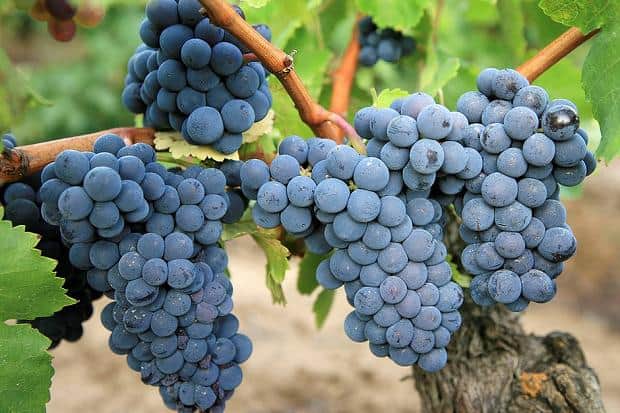
While Carignan vines are known to produce very large yields, it’s somewhat of a vulnerable wine grape variety in that it can be easily harmed by mildew and rot. Carignan must be grown in warmer climates for it to mature properly, where it often both buds late and ripens late. It is a common belief that old vine Carignan tastes much better than young Carignan wine. Priorat in particular grows and vinifies very fine Carignan from vines that now exceed 80 years of age.
RELATED: An Ideal 3 Week Itinerary for Visiting Spain
In the modern day wine world. the Carignan (Mazuelo) grape doesn’t get nearly the amount of attention it deserves, but is used extensively in a multitude of red wine blends, especially from regions like Languedoc-Roussillon.
Carignan Wine Taste and Characteristics
Characteristically, Carignan wine in the glass, as it exists in single varietal form (which is somewhat rare), is a richly colored, acidic and tannic wine that some have criticized as being too bitter and rustic. Because of these known generalities, you’ll be able to find Carignan, Mazuelo and Cariñena more frequently as a blended variety rather than a single varietal wine. In the glass, carignan is a deep and dark colored wine, with a deep purple hue and often crimson rustic attributes around the edges. This is especially true for old vine Carignan.
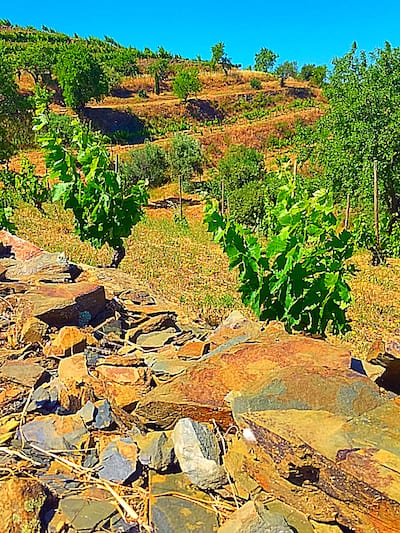
Carignan wine is almost always dry and tends to pack a bigger flavoric punch on the opening palate than on the close. It tends to have bright acid, gritty tannins, bitter spice and dry herb notes over red and black fruit. Because of its tannic content, expect to get a nice astringent mouth-feel with this grape. It works well in central and Northeastern Spain, where warm climates alongside shale and limestone based soil compositions add fine tuned minerality to Carignan varietal wines and blends. You can expect medium to lengthy finishes, backed by leather saddle, olive, dry forest floor, tobacco and burnt smokey brown sugar notes.
Learn About These Other Wine Grape Varieties
Written By Greig Santos-Buch
Greig Santos-Buch is a Co-Founder at Winetraveler.com and a WSET 2 Merit wine writer. He works with several brands focusing on experiential and immersive-style travel. In his spare time, you can find him hiking with a bottle of Cabernet Franc in his backpack or scuba diving trying to talk a reef shark into trying Swiss wine.
Additional sources and images courtesy: Drync, Gourmandbreaks.com, Forgottengrapes.com, Telegraph.co.uk, Wineaccess.com and Seriouseats.com.
Fruit
Red & Black (Ripe Raspberry, Plum, Cassis, Black Cherry, Fig)
Earth & Mineral Notes
Limestone, Shale, Schist, Bramble
Additional Complexities
Tobacco, Crisp Brown Sugar, Cacao, Olives, Cracked Red Pepper
Structure & Body
Body Medium
Sugar Dry
Tannins High
Acid High
Alcohol Medium-High
Finish Medium-Long
Meat, Marinated Poultry, Spices
Because Carignan (Cariñena) is such a gritty, tannic and acidic wine, your food should be bold in flavor as well. It's definitely ideal to pair Carignan with any cut of grilled steak, marinated poultry or moist, braised brisket. Try bringing out some spicy and savory vegetables to go with the meat. Along the lines of grilled bell pepper, jalapeño, squash and or sweet potato. Or, try making whiskey braised brisket along with sweet potato and egg as an ideal food pairing for Carignan. (Featured Above)