Beef stew is comfort in a bowl, and it asks for a wine with the backbone to match. Hours of slow cooking concentrate the beef, the vegetables and the braising liquid into something deep and savory, so a thin or delicate wine simply disappears next to it. What you want is a red with dark fruit, real structure and enough acidity to keep each spoonful lively.
There is a bonus rule with stew that you do not get with most dishes. Because you often cook it with wine, the bottle you braise with and the bottle you pour can and should be cut from the same cloth. Choose well and the pairing starts in the pot.
Reach for a bold, savory red with structure. A Cotes du Rhone or another Syrah-based wine is the classic match, with its dark fruit, pepper and savory depth. Cabernet Sauvignon suits the heartiest, beefiest stews, and a Sangiovese from Chianti is the answer when the stew is tomato-forward, because its acidity cuts the richness. Whatever you pour, cook with a dry red of the same style.
Beef Stew Wine Pairings at a Glance
| Style of Stew | Recommended Wine | Why It Works |
|---|---|---|
| Classic red-wine braise | Cotes du Rhone / Syrah | Dark fruit, pepper and savory depth mirror the slow-cooked beef. |
| Tomato-forward | Sangiovese (Chianti) | Bright acidity cuts the richness and matches the tomato. |
| Extra-hearty and beefy | Cabernet Sauvignon | Firm tannins and dark fruit stand up to the biggest stews. |
| Mushroom and root vegetable | Merlot | Soft, plummy fruit flatters the earthy vegetables. |
| Rustic and peppered | Malbec | Inky fruit and gentle spice suit a peppery pot. |
| Lighter and brothy | Grenache | Ripe berry and warmth without heavy tannin. |
Why Beef Stew Wants a Bold Red
Slow cooking is a concentrating process. The beef breaks down, the braising liquid reduces, and the flavors turn rich, savory and deeply meaty. A pairing wine has to meet that intensity, which is why beef stew is red-wine territory almost without exception. A white would be swamped in a single bite.
The best stew reds share two qualities: enough tannin and body to stand alongside the beef, and enough acidity to cut through the richness and refresh your palate. That is the sweet spot occupied by Syrah, Cabernet, Sangiovese and Malbec, each bringing its own accent to the same hearty foundation.
The Best Reds for Beef Stew
A Cotes du Rhone or a straight Syrah is the classic choice. Inter Rhone, the trade body for the Rhone Valley, points to the peppery, dark-fruited character of these wines as a natural companion to slow-cooked, savory dishes, and a beef stew is exactly that. For the biggest, beefiest pots, Cabernet Sauvignon brings the tannic grip to match.
When tomato is doing heavy lifting in the pot, switch to Sangiovese. The Consorzio Vino Chianti Classico built its reputation on high-acid, savory reds, and that acidity is precisely what a tomato-based stew needs to stay bright rather than heavy. For earthier stews full of mushrooms and root vegetables, a plush Malbec or a soft Merlot rounds everything off.
Cook With the Wine You Pour
The single best upgrade to a stew pairing is to braise with a dry version of the same wine you plan to drink. It builds a bridge of flavor between the bowl and the glass, so the pairing feels seamless rather than merely compatible. A modest Cotes du Rhone or a value Cabernet is perfect for this.
One thing to avoid is the bottle labeled cooking wine on the supermarket shelf. It is usually salted and low in quality, and it will make your stew taste harsh. If a wine is not good enough to drink, it is not good enough to cook with.
Two Beef Stew Recipes to Simmer This Weekend
The first is a classic red-wine braise made for Syrah or Cabernet. The second leans earthy with mushrooms and root vegetables, a natural partner for Merlot or Grenache. Both are built low and slow, so use a dry red you would happily drink rather than anything labeled cooking wine.
 Recipe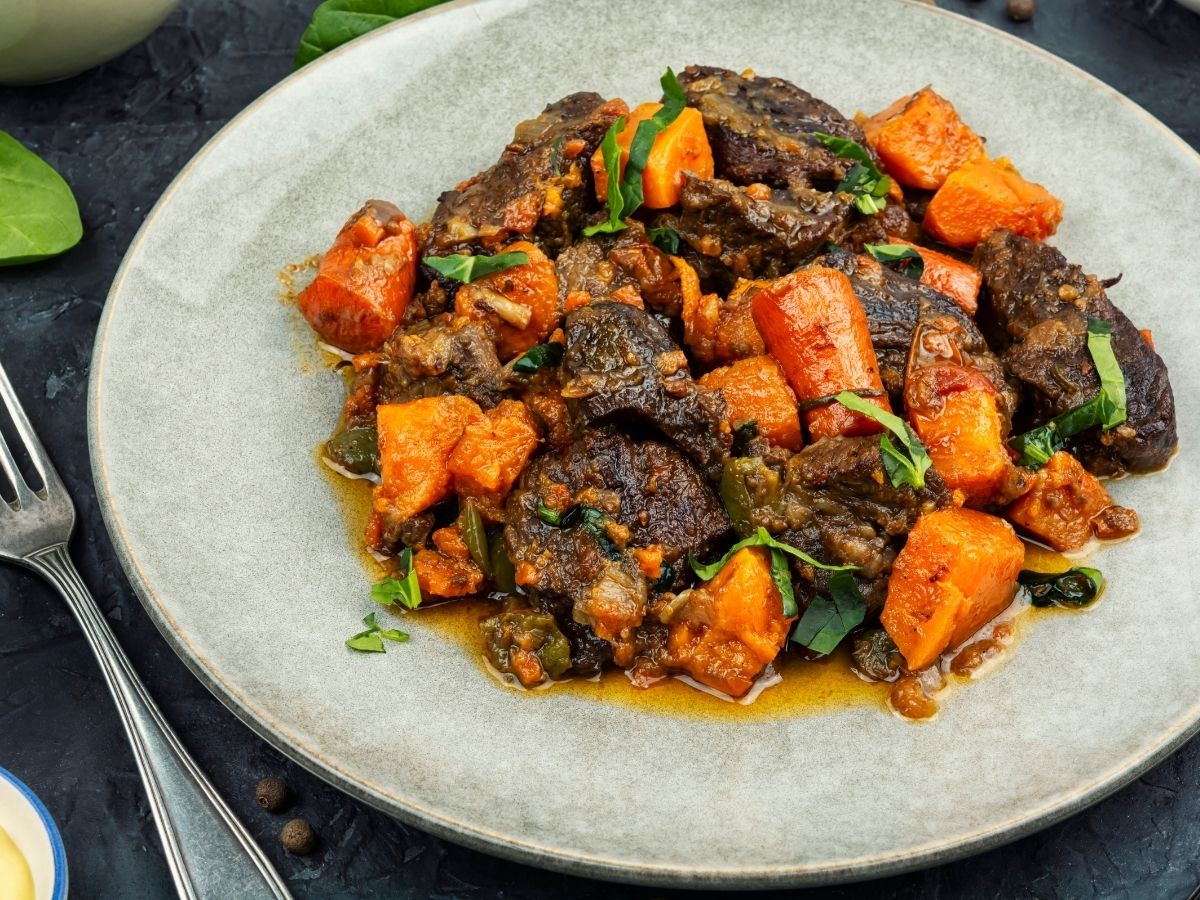
Classic Red-Wine Beef Stew
A deeply savory braise built for Syrah or Cabernet Sauvignon.
Ingredients
- 2 lb (900 g) beef chuck, cut into 1.5-inch cubes
- 3 tbsp all-purpose flour
- 2 tsp kosher salt
- 1 tsp black pepper
- 3 tbsp olive oil
- 1 large onion, diced
- 3 garlic cloves, minced
- 3 carrots, cut into chunks
- 2 tbsp tomato paste
- 1.5 cups (360 ml) dry red wine
- 3 cups (720 ml) beef stock
- 2 sprigs thyme
- 1 bay leaf
- 1 lb (450 g) baby potatoes, halved
Method
- Toss the beef with the flour, salt and pepper. Heat the oil in a heavy pot over medium-high and brown the beef in batches, then set aside.
- Lower the heat, add the onion and carrots, and cook until softened, about 6 minutes. Stir in the garlic and tomato paste and cook for 1 minute.
- Pour in the wine, scraping up the browned bits, and let it reduce by half.
- Return the beef, add the stock, thyme and bay leaf, and bring to a gentle simmer. Cover and cook for about 90 minutes.
- Add the potatoes and simmer uncovered for a further 45 to 60 minutes, until the beef is fork-tender and the sauce has thickened. Remove the bay leaf before serving.
Pour it with: A Cotes du Rhone or Cabernet Sauvignon, ideally the same style you braised with.
Recipe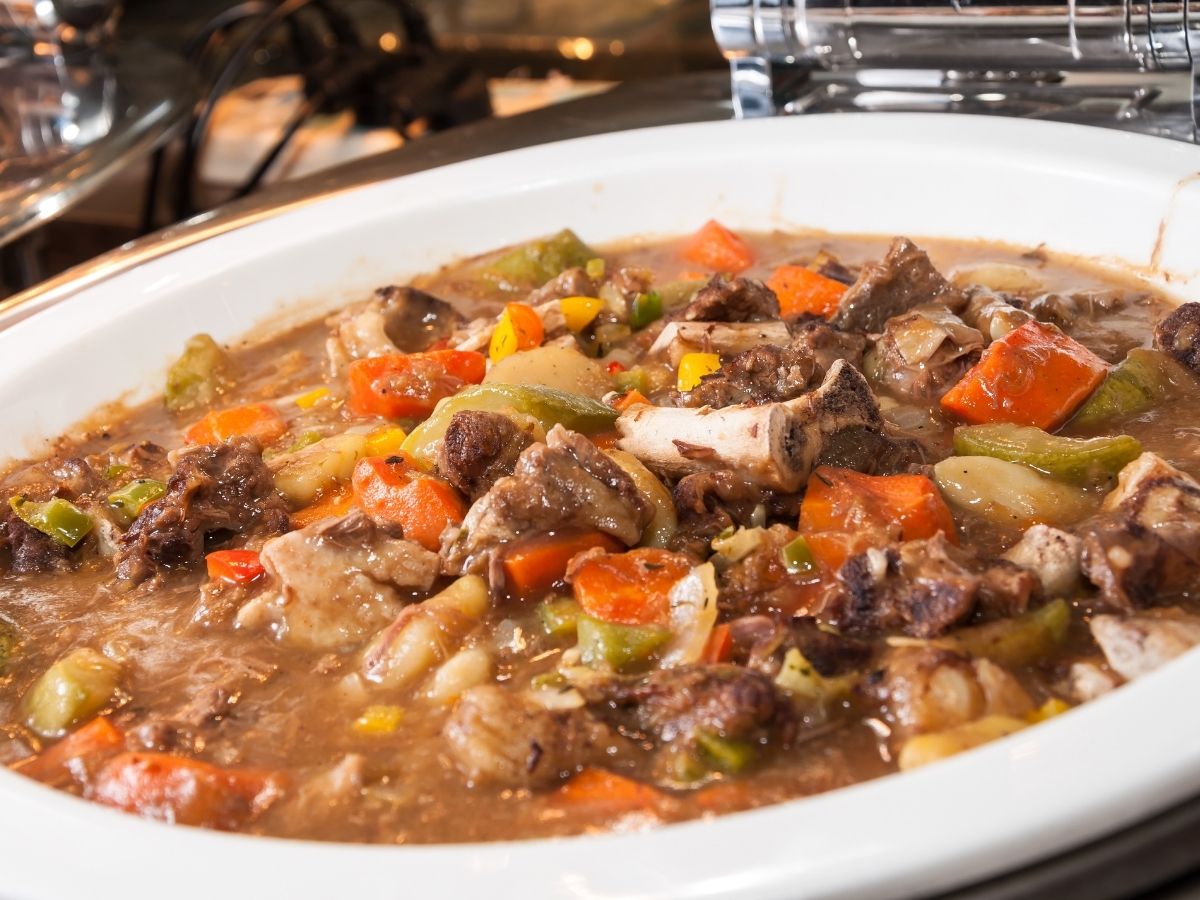
Mushroom and Root-Vegetable Beef Stew
An earthy, vegetable-rich stew that suits a soft Merlot or a fruity Grenache.
Ingredients
- 2 lb (900 g) beef chuck, cut into 1.5-inch cubes
- 3 tbsp all-purpose flour
- 2 tsp kosher salt
- 1 tsp black pepper
- 3 tbsp olive oil
- 1 onion, diced
- 8 oz (225 g) cremini mushrooms, quartered
- 2 parsnips, cut into chunks
- 2 carrots, cut into chunks
- 3 garlic cloves, minced
- 2 tbsp tomato paste
- 1 cup (240 ml) dry red wine
- 3 cups (720 ml) beef stock
- 2 sprigs thyme
- 1 bay leaf
Method
- Toss the beef with the flour, salt and pepper, then brown in the oil in batches in a heavy pot and set aside.
- Add the onion, mushrooms, parsnips and carrots and cook until they take on color, about 8 minutes. Stir in the garlic and tomato paste for 1 minute.
- Add the wine and reduce by half, scraping the pot.
- Return the beef with the stock, thyme and bay leaf. Simmer covered for about 2 hours, until the beef is tender and the vegetables are soft. Remove the bay leaf before serving.
Pour it with: A soft Malbec or a fruity Grenache to suit the earthy vegetables.
Frequently Asked Questions
What is the best wine to pair with beef stew?
A bold, savory red with structure. A Cotes du Rhone or Syrah is the classic choice, Cabernet Sauvignon suits the heartiest stews, and Sangiovese from Chianti is best for tomato-forward versions because its acidity cuts the richness.
What wine should I cook beef stew with?
Use a dry red you would happily drink, such as a Cotes du Rhone, Merlot or an inexpensive Cabernet. Braising with the same style you plan to pour builds a bridge of flavor between the pot and the glass. Avoid bottles labeled cooking wine, which are salted and low quality.
Does red or white wine go with beef stew?
Red, almost always. Beef stew is rich, savory and concentrated by long cooking, and it needs the body, tannin and dark fruit of a red wine to stand up to it. A white would be overwhelmed.
What wine goes with tomato-based beef stew?
Sangiovese, the grape of Chianti, is the standout. Its naturally high acidity matches the tomato and cuts through the richness of the stew, keeping the pairing bright rather than heavy.
Does Cabernet Sauvignon go with beef stew?
Yes, especially with the heartiest, beefiest stews. Cabernet firm tannins and dark fruit have the structure to match a rich braise. For lighter, brothier stews, a softer Merlot or Grenache is a better fit.
Can I pair a lighter red with beef stew?
Yes. For brothy or vegetable-forward stews, a fruity Grenache or a soft Merlot works well, offering ripe fruit and warmth without the heavier tannins of a Cabernet.
Sources and further reading
- Inter Rhone, on Syrah and Cotes du Rhone reds
- Consorzio Vino Chianti Classico, on Sangiovese and its acidity
- GuildSomm, on pairing wine with braised dishes