
← Part of the Piedmont wine region guide
Where are Barbaresco wines from and what grapes are they made with?
Barbaresco is an Italian wine region in the Northeast portion of Italy between Turin and Genoa. This wine is produced from Nebbiolo grapes. They are aged for a minimum of 2 years — at least 1 of which is in oak.
Barbaresco's high tannin, bright acidity, and savory Nebbiolo character — rose, tar, dried cherry, truffle — call for rich, fatty, umami-driven dishes like white-truffle pasta, braised and roasted meats, and aged cheese. Its firm structure needs protein and fat to soften, so avoid delicate or spicy plates.
Barbaresco Food Pairings at a Glance
| Food | Recommended Wine | Why It Works |
|---|---|---|
| White truffle risotto or tajarin | A classic Piedmontese match | Barbaresco's tar, truffle and dried-herb aromatics mirror the truffle's earthy umami, while acidity lifts the rich butter and starch |
| Brasato (wine-braised beef) | Beef braised slowly in Nebbiolo | Collagen and fat coat the palate; firm tannins bind to the meat protein and fat, softening the wine and cleansing the richness |
| Osso buco | Braised veal shanks with marrow | Gelatinous marrow and fatty meat tame the tannin; acidity cuts the unctuous sauce and brightens the gremolata's citrus |
| Wild game / venison | Roasted or braised venison, boar or hare | Gamey, savory meat echoes the earthy forest-floor notes; robust tannin stands up to the intensity |
| Roast duck | Duck with rendered fat | Duck fat softens tannin, and the wine's dried-cherry fruit resonates with the meat's richness |
| Porcini and mushroom dishes | Sautéed porcini or wild-mushroom pasta | Glutamate-rich mushrooms amplify the wine's savory umami; the tar-and-mushroom notes align directly |
| Aged Parmigiano or Castelmagno | 24-month-plus aged cheese | Crystalline aged cheese delivers salt, fat and umami that soften tannin; Castelmagno is the regional match |
| Hard aged alpine cheese | Aged Gruyère, Comté or matured pecorino | Concentrated fat and protein buffer the tannin, while the nutty savor complements the wine's mature notes |
| Tajarin with meat ragù | Thin Piedmontese egg pasta with beef/veal ragù | The meaty fatty ragù grips the tannin and the egg-rich pasta cushions the wine's structure — a native pairing |
| Roast lamb | Herb-crusted roast leg or rack | Lamb's fat and protein tame tannin; rosemary and herbs echo the savory dried-herb aromatics |
| Mushroom or Castelmagno polenta | Creamy polenta with mushrooms or melted cheese | Warm fatty comfort food softens the grip while the earthy toppings reinforce the savory character |
| AVOID: delicate white fish or spicy dishes | Skip lean poached fish, sushi, chili-heavy food | Tannin overpowers delicate fish and turns metallic; capsaicin heat amplifies tannin and alcohol, tasting harsh |
These wines tend to be light in color and body and aromatic with good structure. Barbaresco wines are dry and do require some aging to be at their best. Given these attributes, they are great food wines as opposed to those that can be enjoyed on their own.
Barbaresco offers hints of truffles, cherry, anise and fennel. My personal favorite producer is Bruno Giacosa. This leader in Barbaresco wine production began bottling wine in 1964 on an estate that is around 50 acres in size. Through the decades he has backed up his reputation for being a perfectionist with some of the best wines that the area has to offer. Year after year the vintages of his Barbaresco Asilli DOCG are outstanding. These wines tend to be on the expensive side but are worth it if you’re in the mood to spoil yourself. This speaks more the length of ageing, and quality of the product.
What Foods Pair Best with Barbaresco Wine?
It goes without saying that traditional regional Italian choice foods are perfect pairings with these wines. Braised meats, risotto’s with earthy tones such as porcini mushrooms and some of the more powerful cheeses such as blue cheese are all great options. In my opinion the perfect pairing is grilled meat and Barbaresco, a great choice for a summer wine and food pairing option.
[jetpack_subscription_form title=”Get These Articles Directly in Your Inbox” subscribe_text=”Subscribe to Winetraveler and receive notifications when new articles are published.” subscribe_button=”Let’s Do It!”]
How to Pair Barbaresco Food Pairings
- Pair with fat and protein: Nebbiolo's firm tannins need fatty, protein-rich dishes (braised meats, aged cheese, marrow) to bind to and soften.
- Lean into umami: truffle, mushrooms, aged cheese and slow-cooked meats echo the savory tar-and-earth character — truffle with Nebbiolo is the definitive regional pairing.
- Let the acidity work: the high acidity cuts rich, unctuous sauces and cleanses the palate between bites of fatty food.
- Decant and age: young Barbaresco benefits from an hour of decanting; the best examples reward 8–15+ years of cellaring.
- Avoid delicate and spicy foods: light fish, sushi and chili heat clash with the tannin, tasting bitter and metallic.
- Serve at 60–65°F — too warm exaggerates alcohol, too cold accentuates tannin.
The History and Origins of Barbaresco
Nebbiolo has grown in the Langhe hills for centuries, but for much of that history the fruit from around Barbaresco was sold off to Barolo producers rather than bottled under its own name. The turning point came in 1894, when Domizio Cavazza, an agronomist from Modena who served as headmaster of the Royal Enological School of Alba, gathered nine local growers to found the Cantina Sociale di Barbaresco. That first cooperative gave the village its own wine and its own identity.
Cavazza died in 1915, and the cooperative faltered through the fascist era and two World Wars. It was revived in 1958, when the parish priest Don Fiorino Marengo brought 19 small growers together to form the Produttori del Barbaresco, still one of the appellation’s benchmark producers. In the 1960s, Angelo Gaja began elevating Barbaresco onto the world stage, bottling single-vineyard wines such as Sorì San Lorenzo from the 1967 vintage and commanding prices that rivaled Burgundy.
Official recognition followed: Barbaresco received DOC status in 1966 and was promoted to DOCG in 1980, making it one of Italy’s very first denominations to earn the guaranteed top tier.
Barbaresco's Communes and Cru Vineyards
Barbaresco DOCG covers roughly 700 hectares of Nebbiolo across four production areas: the villages of Barbaresco, Neive and Treiso, plus the San Rocco Seno d’Elvio frazione of Alba. Each shapes the wine differently. Barbaresco tends to give perfumed, elegant reds; Neive, on warmer clay-rich slopes, leans toward fuller, more powerful structure; and higher, cooler Treiso produces fresher, more delicately aromatic wines.
In 2007, Barbaresco became the first Italian appellation to formally map its vineyards, dividing the zone into 66 official Menzioni Geografiche Aggiuntive (MGA), the local cru system. The most celebrated of these carry real weight on a label, among them Asili and Rabajà in Barbaresco, the monopole Martinenga, and Santo Stefano in Neive.
Aging rules reinforce the wine’s serious character. A standard Barbaresco must age at least 26 months before release, including a minimum of 9 months in oak. Riserva bottlings are held considerably longer, requiring at least 50 months of aging. That extended time in cask and bottle is part of why well-made Barbaresco can evolve gracefully for a decade or more.
Visiting the Langhe: Where Barbaresco Grows
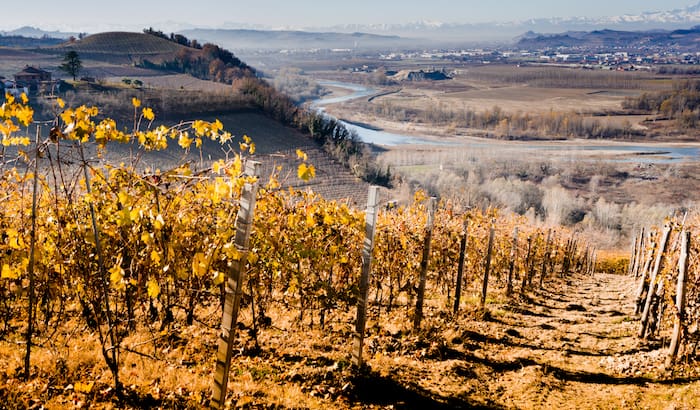
Barbaresco grows in the Langhe, the folded hills of southern Piedmont whose vineyard landscape was inscribed as a UNESCO World Heritage Site in 2014, recognized alongside Roero and Monferrato as a cultural landscape shaped by centuries of winegrowing. Rows of Nebbiolo climb ridgelines dotted with medieval towers, and the village of Barbaresco itself sits just a few kilometers from Alba.
Alba is the gastronomic heart of the region, famous for its white truffle and the autumn truffle fair that draws visitors from around the world. Barolo, Barbaresco’s more powerful sibling, lies a short drive to the southwest, making it easy to taste both appellations in a single day.
Autumn is the season most travelers aim for. From October into November the harvest is underway, the truffle season peaks, and the vines turn gold and russet across the hills. Tastings are straightforward to arrange: the Produttori del Barbaresco cooperative, in the center of the village, offers an approachable introduction to the appellation and its individual cru vineyards, a fitting place to taste the wine where the grapes are grown.
Frequently Asked Questions
What is Barbaresco wine?
Barbaresco is a prestigious red DOCG from Piedmont in northwest Italy, made entirely from Nebbiolo. Grown around the town of Barbaresco in the Langhe hills, it's prized for its perfume, firm tannins, bright acidity and savory complexity.
What is the difference between Barbaresco and Barolo?
Both are 100% Nebbiolo from neighboring Langhe zones. Barbaresco is generally more elegant and approachable earlier, with slightly softer structure. Barolo is typically more powerful, tannic and longer-lived, with longer minimum aging.
Is Barbaresco a dry wine?
Yes. Despite perfumed floral aromas of rose and cherry that can suggest sweetness, it's fully fermented with no residual sugar, showing high tannin, high acidity and a savory tar-and-truffle finish.
What does Barbaresco taste like?
Aromas of rose petal, tar, dried cherry and red berries evolve with age into truffle, leather, dried herbs and forest floor. On the palate it's medium-bodied but structured, with grippy tannins, vibrant acidity and a long savory finish.
How should I serve Barbaresco?
Serve at 60–65°F in a large Burgundy-style bowl to concentrate its aromatics. Young bottles benefit from an hour of decanting to soften the tannins, while older examples should be handled gently to preserve delicate tertiary notes.
How long does Barbaresco age?
It's built to age. A quality bottle drinks well from 5 to 15 years after the vintage, and top Riserva wines from the best sites can evolve gracefully for 20 years or more, softening in tannin and developing truffle and leather aromas.
Collect your Winetraveler passport — tap the regions & grapes you’ve tasted. Your stamps follow you across the whole site.
- Curious1 stamps
- Explorer3 stamps
- Connoisseur6 stamps
- Sommelier12 stamps
- Vigneron20 stamps
Your stamps are saved on this device.