
Provence rewards the traveler who turns off the main road. Behind the lavender fields and the vineyards, the hills are studded with stone villages that have watched over their valleys for a thousand years, each perched on its own rocky spur with a church tower, a warren of lanes and a view that stops you where you stand. This is our guide to the best hilltop villages in Provence, sixteen of them, from the five Luberon classics, Gordes, Roussillon, Ménerbes, Bonnieux and Lourmarin, to Les Baux-de-Provence in the Alpilles, Séguret and Venasque under Mont Ventoux, Le Castellet above Bandol, Moustiers-Sainte-Marie at the gates of the Verdon, Tourtour and Cotignac in the Var, and Èze, Saint-Paul-de-Vence and Gourdon in the hills behind the Riviera. For each one we give the wineries to visit nearby (every estate has its own page in our directory), the market day, how to see the lavender without breaking the rules, where to eat, and where to stay if you want the trip to feel like the postcard. Twelve of the sixteen carry the Plus Beaux Villages de France label, the national certification for France’s best-preserved rural villages: an independent association founded in 1982 that admits only villages of under 2,000 people with protected heritage, inspects them on site, and has accepted just 184 in the whole country. We flag it on each village below because it is the closest thing to an authority list.
How to use this guide: the villages are grouped by area, west to east, because that is how you will drive them. The Luberon and the Alpilles are one trip from Avignon or Aix; Bandol, the Var and the Verdon are a second from Marseille or Toulon; Èze, Saint-Paul and Gourdon are day trips from Nice. Jump to any village from the contents, and use the map to see how the wineries sit around them.
The Luberon: Gordes, Roussillon, Ménerbes, Bonnieux and Lourmarin
The Luberon is the Provence of the films and the books: a limestone ridge east of Avignon with the villages strung along its northern and southern faces, lavender at Sénanque, cherry orchards, and the Luberon appellation’s rosés, whites and increasingly good reds. Five villages, two unhurried days, and more wineries with walk-in tastings than anywhere else in this guide.
Gordes
- Scenery
- Tiers of honey-gray stone climbing to a Renaissance château, with the whole Luberon valley laid out below the D15 belvedere; the view at dusk is the one on the postcards for a reason.
- Eat & drink
- Tuesday market on the château square, Luberon rosé from the valley cellars, boards and orange wine at Domaine de la Coquillade, and a Palace-hotel dinner at Airelles for the splurge.
- History & archaeology
- A château rebuilt in 1525 on medieval foundations; the Cistercian Abbaye de Sénanque, founded 1148, in the valley behind; and the Village des Bories, a hamlet of dry-stone huts below the village.
- Don’t miss
- Sénanque in late June, seen from the road, and the bories at sunset.
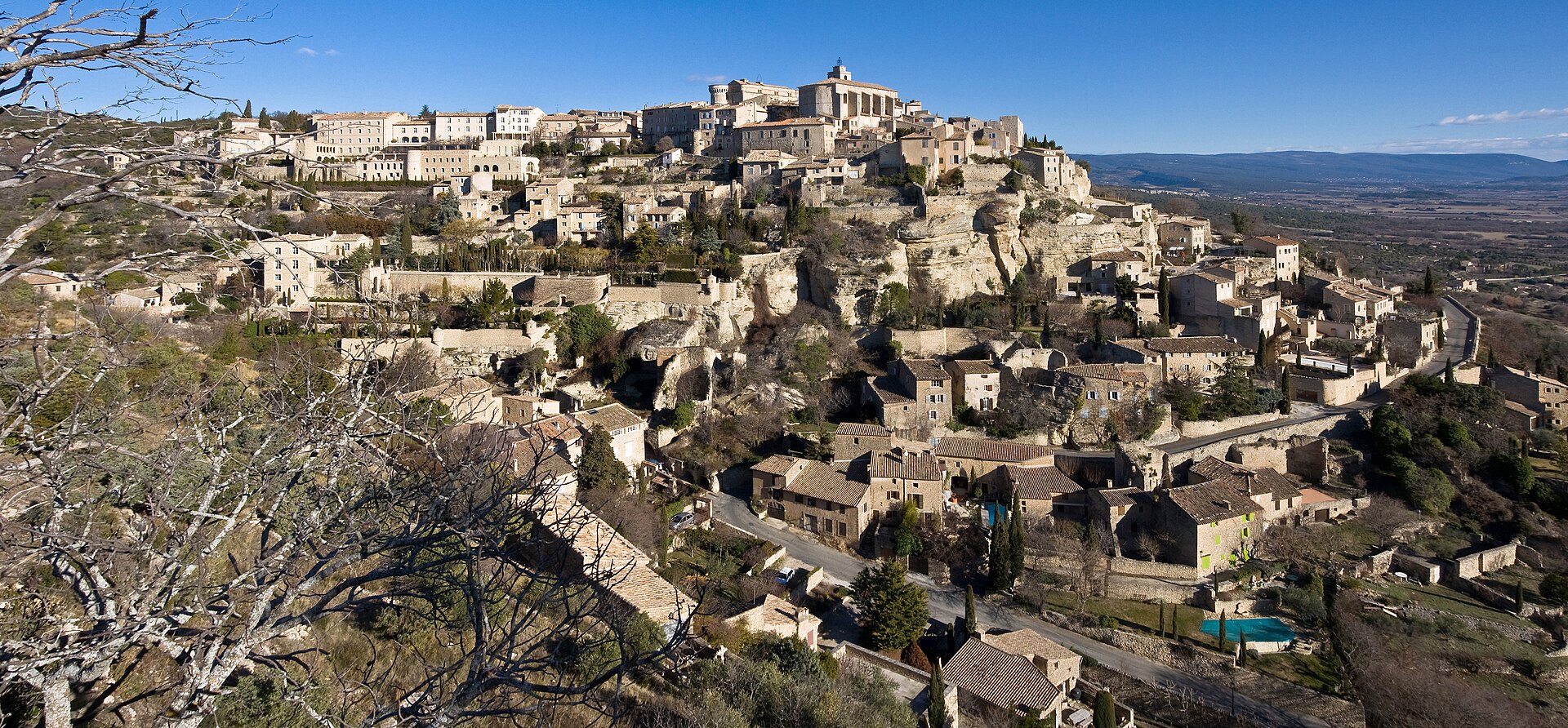
Gordes is the one on every postcard, and for once the postcard undersells it. The village climbs in tiers of pale gray-gold stone to a Renaissance château at the top, and the classic view from the road below at dusk is worth planning your day around. Come early or late to beat the coach tours, wander the calades (the cobbled ramps), catch the Tuesday morning market if you can, and drive out to Sénanque Abbey when the lavender is in bloom from late June into July (see the lavender section below for the rules). The Luberon villages and wineries day trip from Aix stops at Gordes and the abbey with a winery tasting on the way.
Wine tasting near Gordes
Domaine de la Coquillade, fifteen minutes east at Gargas, is the organic and biodynamic vineyard of the five-star Coquillade Provence resort, planted from 2006 by Andy Rihs and known until 2024 as Aureto. The caveau at Goult is walk-in, daily from mid-May to mid-September, and pours the range with cheese and charcuterie boards; ask for the orange wine.
Why Guests Love It: Orange Wine, Lunch Boards, Warm Welcome
Domaine de Tara sits on the Gordes road just outside Roussillon, open every day of the year from 10 am to 6 pm, holidays included, with walk-in tastings and sheep grazing the vines in winter. It farms under the Ventoux appellation with HVE certification and is converting to organic, and the barrel hall hosts an art show each summer.
Why Guests Love It: Free Tastings, Friendly Hosts, Sparkling Wines
Roussillon
- Scenery
- Every shade from butter yellow to blood red in the cliffs and the facades, changing tone as the sun moves; the largest ochre deposit in Europe is the village itself.
- Eat & drink
- Thursday market on Place du Pasquier, café terraces at the top of the village, and free daily tastings five minutes away at Domaine de Tara.
- History & archaeology
- Ochre was quarried here from the 18th century into the 1930s for pigment shipped around the world; the Sentier des Ocres walks the old pits and the Conservatoire des Ocres explains the trade.
- Don’t miss
- The 60-minute ochre loop, then a coffee in the square while the walls turn orange.
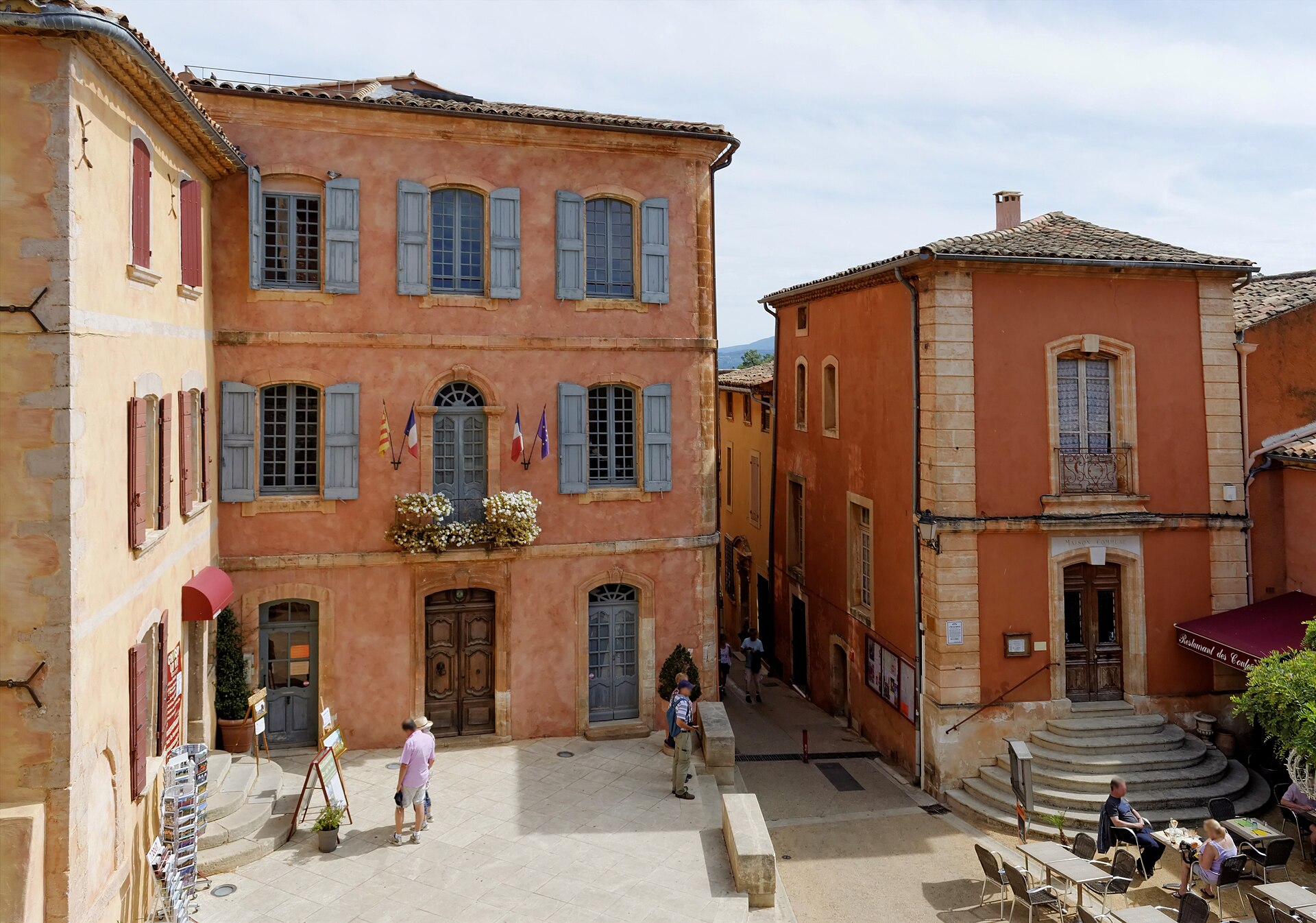
Roussillon is unlike anywhere else in Provence because it is built from the ground it stands on: the hill is the largest ochre deposit in Europe, and the houses glow in every shade from butter yellow to burnt red. Walk the short Sentier des Ocres trail through the old quarries, with a 30-minute and a 60-minute loop, to see where the color comes from, then have a coffee in the square and watch the stone change tone as the light moves. Thursday is market day.
Wine tasting near Roussillon
Château de Mille, ten minutes south on the road from Apt to Bonnieux, calls itself the oldest wine estate in the Luberon, and the grounds feel it. Constance and Lawrence Slaughter have been converting it to organic farming since 2018; the caveau is walk-in Monday to Saturday from May to October, there is a self-guided tour by QR code during opening hours, and the estate runs a wine escape game for 10 to 20 EUR a person. Domaine de Tara, above, is five minutes from the village on the Gordes road.
Why Guests Love It: Historic Grounds, Fresh Rosés, Self-Guided Walk
Ménerbes
- Scenery
- A ridge village stretched like a ship run aground, with Mont Ventoux one side and the Luberon the other and hardly a coach in sight.
- Eat & drink
- Free tastings and a terrace over the vines at Domaine de la Citadelle, the Maison de la Truffe et du Vin du Luberon in the village, a Thursday market from April to October.
- History & archaeology
- A Protestant stronghold that held out through a five-year siege in the Wars of Religion (1573 to 1578); Dora Maar, Picasso’s muse, kept a house here that is now an artists’ residency; Peter Mayle wrote A Year in Provence from a farmhouse nearby.
- Don’t miss
- The Corkscrew Museum at la Citadelle, 1,200 pieces for 4 EUR.
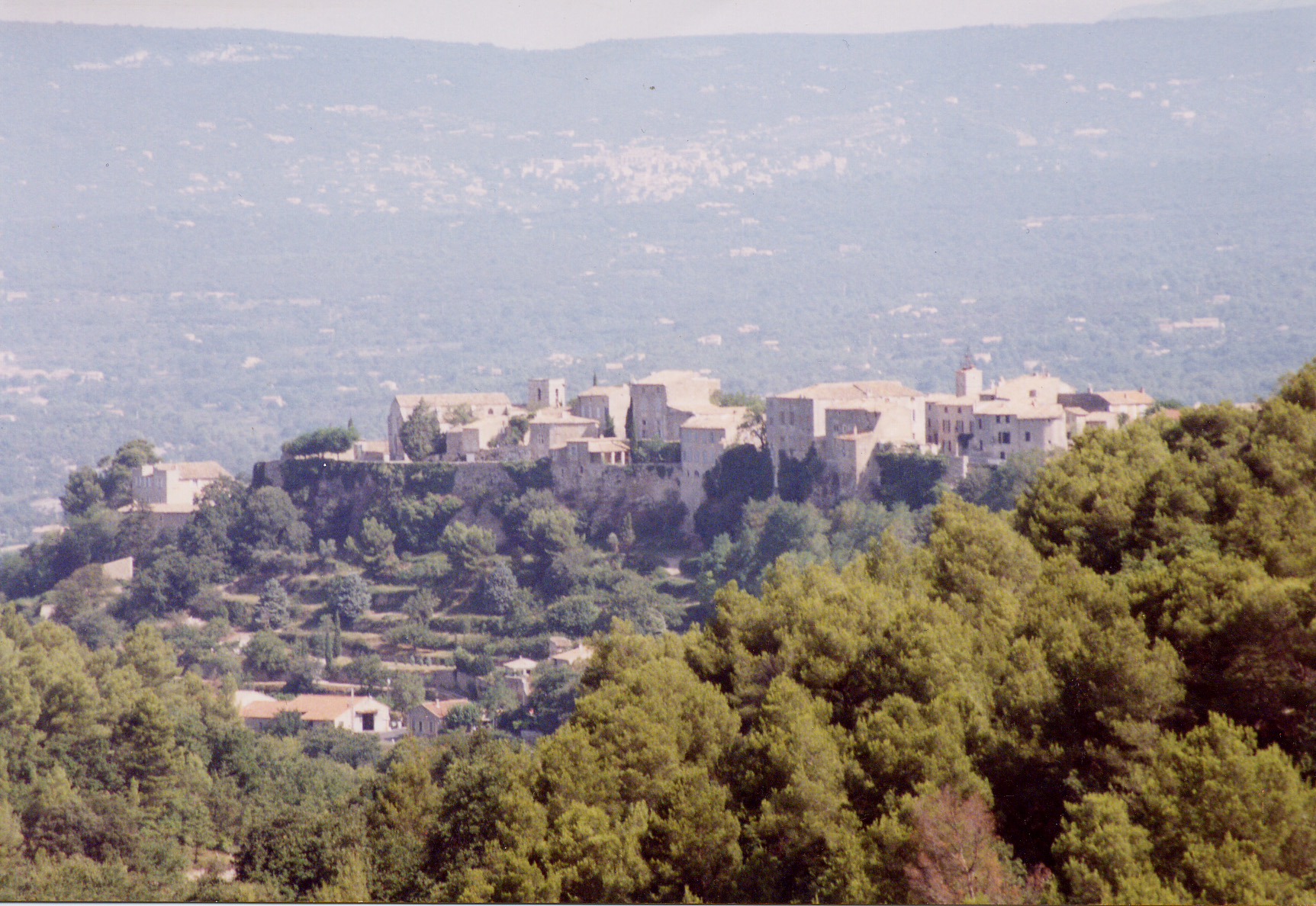
Ménerbes stretches along a narrow ridge like a ship run aground on the hillside, and it was from a farmhouse nearby that Peter Mayle wrote the book that made the Luberon famous. It is quieter than Gordes and all the better for it: a couple of good restaurants, long views in both directions, and the pleasure of having a lane more or less to yourself. It is also the best village on this list for wine, with four estates within ten minutes.
Wine tasting near Ménerbes and Oppède
Domaine de la Citadelle sits directly below the village and is the easiest winery visit in the Luberon: a free tasting at the caveau, open daily from May to October, a terrace over the vines, a guided tour with tasting for 25 EUR, and the Corkscrew Museum, founded in 1993 with more than 1,200 pieces, for 4 EUR. Organic since 2016.
Why Guests Love It: Free Tastings, Corkscrew Museum, Terrace Views
Mas des Infermières, between Ménerbes and Oppède, has belonged to Ridley Scott’s family since 1992, and its cellar tour passes an exhibition of props and storyboards from his films. The shop is walk-in; the one-hour Classic tour with tasting is 20 EUR and the 90-minute Superior tour 50 EUR, both booked online.
Why Guests Love It: Film-Set Cellar, Guided Tours, Idyllic Setting
Two smaller family estates round out the loop. La Royère at Oppède, founded in 1988 and organic since 2020, pours in a modern showroom beside an olive-oil museum, and Domaine La Garelle on the road between the two villages, organic since 2023 and entirely solar-powered, has a walk-in tasting room and an audio-guided trail through the vines.
Bonnieux
- Scenery
- A village stacked under its 12th-century old church, the Forêt des Cèdres on the ridge behind and the Roman bridge in the valley below.
- Eat & drink
- Friday morning market on Place Carnot, the first organic estate in the Luberon at Château la Canorgue, and three Michelin-starred tables within minutes, including the two-star La Table des Amis.
- History & archaeology
- The Pont Julien, a three-arched Roman bridge on the Via Domitia built around 3 BC, still stands two kilometers below the village; the cedar forest above was planted in 1861 from Atlas seed.
- Don’t miss
- The 86-step climb to the Vieille Église, then the cedar-forest walk.

Bonnieux tumbles down its hillside beneath an old church reached by a long stone staircase, and the climb pays off with one of the best panoramas in the Luberon. It is a working village with a Friday morning market, and, with three Michelin-starred tables in and around it, the best place in the Luberon for a serious dinner (see where to eat, below). Its small bakery museum has been closed for renovation since 2023, so do not plan around it.
Wine tasting near Bonnieux
Château la Canorgue, just below the village on the road to the Pont Julien, was the first certified-organic vineyard in the Luberon, farmed by the Margan family for five generations. The caveau is walk-in Monday to Saturday, with longer hours in July and August. Its golden farmhouse is a well-known film location, but the family would rather you came for the wine, and the château itself is not open to visitors. Château de Mille, above, is ten minutes up the Apt road.
Why Guests Love It: Organic Pioneer, Peaceful Setting, Welcoming Tastings
Lourmarin
- Scenery
- The soft village at the foot of the range, a Renaissance château across the fields and the Luberon combe opening behind it.
- Eat & drink
- One of the best Friday markets in Provence, bistros and wine shops on every lane, amphora-aged wines at Château Constantin, and Nadia Sammut’s starred, gluten-free La Fenière ten minutes away at Cadenet.
- History & archaeology
- The château, begun in the 15th century, is called the first Renaissance château in Provence; Albert Camus and the novelist Henri Bosco are both buried in the village cemetery.
- Don’t miss
- Friday market, then lunch on a terrace with a glass of Luberon white.
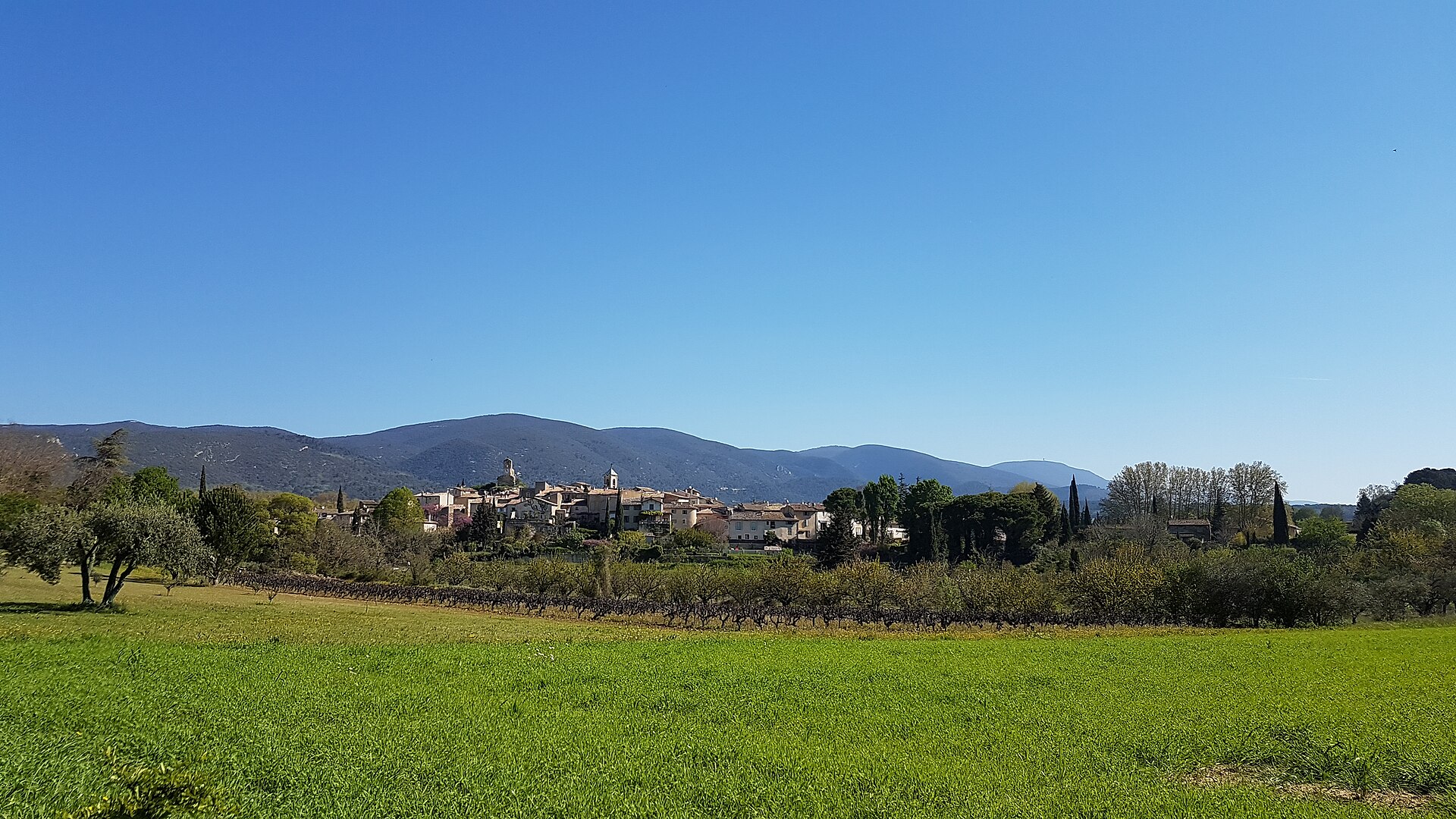
Lourmarin sits at the southern foot of the range rather than on top of it, which gives it a softer, more sociable feel than the perched villages. It has a Renaissance château, a lively Friday market that is one of the best in the region, and a cluster of good bistros and wine shops that make it a fine place to end the day. Albert Camus loved it enough to be buried here. The full-day Luberon wine tour from Aix finishes the southern side of the range around here.
Wine tasting near Lourmarin
Château Constantin is at the entrance to the village, an organic family estate run by the Bagnis family since 2016 that ages part of its range in terracotta amphorae. A 45-minute tasting of five wines costs 15 EUR and the vineyard walk is free.
Why Guests Love It: Amphora Wines, Family Welcome, Easy Booking
Domaine de Fontenille, ten minutes away at Lauris, has grown vines since 1638 and now farms 40 organic hectares around a Relais & Châteaux hotel; a one-hour cellar visit and tasting costs 22 EUR by booking. Domaine La Cavale, on the Cucuron road, is the modern one, a Jean-Michel Wilmotte-designed winery with free walk-in tastings and a 12 EUR cellar tour, closed Mondays.
Why Guests Love It: Striking Architecture, Free Tastings, Organic Whites
With more time, push south across the plain to Château Val Joanis at Pertuis, an estate dating to 1467 whose terraced garden has been classified a Jardin Remarquable since 2005 (tastings free, garden 3 EUR), and Château La Dorgonne at La Tour-d’Aigues, 70 hectares of organic vines and olive groves with three free signposted vineyard walks open from 9 am to 7 pm.
The Alpilles and the Ventoux: Les Baux-de-Provence, Séguret and Venasque
West of the Luberon the Alpilles are a short, sharp range of white rock above Saint-Rémy, and north of it Mont Ventoux looms over the Côtes du Rhône villages. Both are an hour or less from Avignon, both grow serious wine, and both have a village that belongs on any Provence list.
Les Baux-de-Provence
- Scenery
- A citadel rock above the Alpilles with the Crau plain running to the sea, white limestone in every direction and the ruins on top.
- Eat & drink
- L’Oustau de Baumanière, three Michelin stars and a Green Star at the foot of the rock; free tastings at Mas de la Dame and Mas Sainte Berthe; the AOP olive oil of the Vallée des Baux.
- History & archaeology
- The medieval Lords of Baux ruled from the citadel until Richelieu had it dismantled in 1632; the red rock gave its name to bauxite, identified here in 1821; the quarries now house the Carrières des Lumières.
- Don’t miss
- Carrières des Lumières, then the château ramparts at closing time when the coaches have gone.
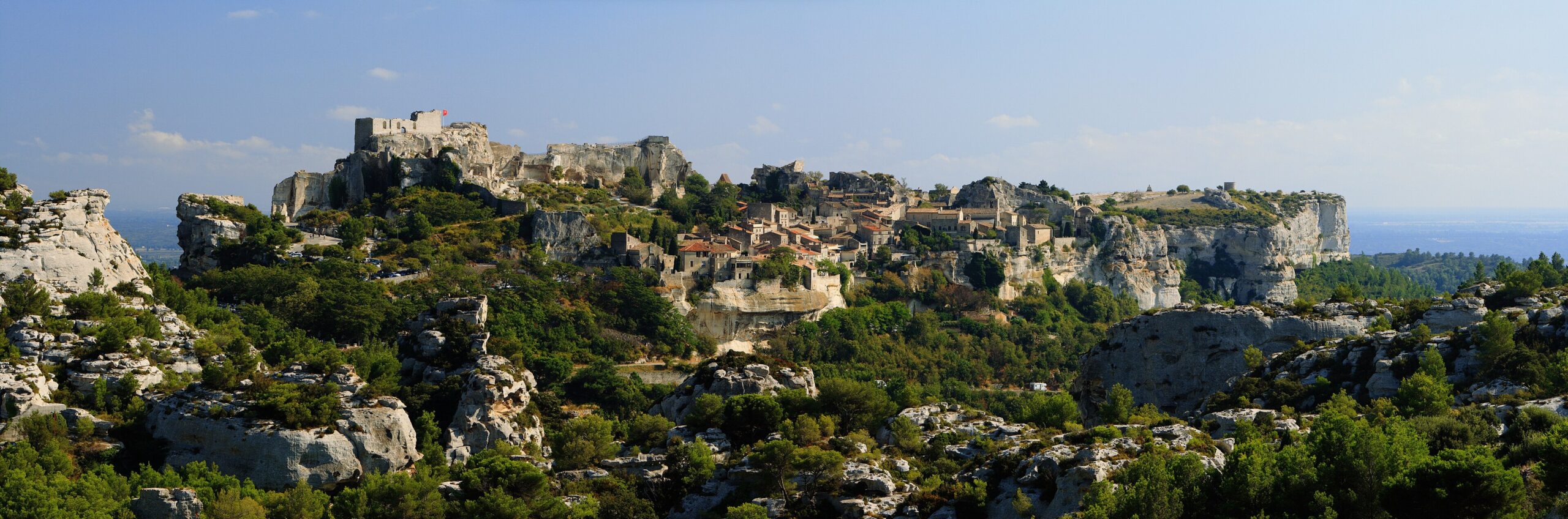
Les Baux-de-Provence is the most visited village in Provence, a fortress rock above the Alpilles with a ruined medieval citadel on top and the whole valley of olives and vines below. The Château des Baux opens daily (9 am to 7 pm in high season, 10 am to 5 pm in winter; adults 10 EUR), and the Carrières des Lumières, the immersive art show projected inside the old quarries, runs Picasso and Frida Kahlo programs in 2026 (adults 16.50 EUR, online booking, or a 21 EUR combined ticket with the château). It is a Plus Beau Village and it is crowded: come at opening or after 5 pm in July and August, and note that the summer-only bus 707 from Avignon is the only public transport. Saint-Rémy-de-Provence, 10 kilometers away, has the hotels, the Wednesday and Saturday markets and the Van Gogh sites.
Wine tasting near Les Baux-de-Provence
The Les Baux-de-Provence appellation is one of the most organic in France, and four estates sit within ten minutes of the rock. Mas de la Dame, on the Saint-Rémy road in the setting Van Gogh painted, opens its cellar every day for free tastings of its organic wines and olive oils, with a 20 EUR guided visit on spring Tuesday afternoons. Mas Sainte Berthe, directly below the citadel, has a free 1.6-kilometer trail through the vines looking up at the château, daily walk-in tastings and an olive oil that won gold at the 2026 Concours Général Agricole. Château Romanin, biodynamic, is worth the 20 EUR reserved tour for its winery alone, the Chai Cathédrale cut into the rock of the hillside. Further round the range, Domaine de Lauzières at Mouriès ages its Sine Nomine wines in 57 clay amphorae, and Domaine des Terres Blanches outside Saint-Rémy has farmed organically since 1970.
Why Guests Love It: Van Gogh Setting, Free Tastings, Olive Oil
Séguret and Vaison-la-Romaine
- Scenery
- A cascade of stone houses under the jagged Dentelles de Montmirail, castle ruins above and the Côtes du Rhône vine plain below.
- Eat & drink
- Domaine de Mourchon’s English-language cellar tours at 350 meters above the village; Vaison’s Tuesday market of 350 stalls; a Thursday night market in the village in summer.
- History & archaeology
- Medieval gates, a 17th-century mascaron fountain and a 1680 clock inside the walls; nine kilometers away Vaison-la-Romaine has one of the largest Roman sites in France, two excavated quarters and a Roman bridge still in use.
- Don’t miss
- Vaison’s Roman quarters on a 9 EUR pass, then Séguret’s lanes at dusk.

Séguret climbs a hillside under the Dentelles de Montmirail nine kilometers south of Vaison-la-Romaine, a Plus Beau Village of cobbled ramps, a 15th-century fountain, a communal oven and a Romanesque church, with castle ruins above and Côtes du Rhône vines below. It has no weekday market (a summer night market runs on Thursday evenings), which is part of its calm. Pair it with Vaison-la-Romaine, whose Roman sites (a 24-hour pass is 9 EUR) and medieval upper town across the Roman bridge fill a morning, and whose Tuesday market, 350 stalls from 8:30 am, is one of the best in Provence.
Wine tasting near Séguret
Domaine de Mourchon sits at 350 meters on the slopes above the village, 35 organic and biodynamic hectares run by the McKinlay family since 1998 around a gravity-flow winery; the cellar is open weekdays year-round, and from Easter to September there are guided tours at 5 pm on Wednesdays in English. For the wider Côtes du Rhône, from Gigondas to Châteauneuf-du-Pape, see our two-day southern Rhône itinerary.
Why Guests Love It: Hilltop Winery, English-Speaking Tours, Gravity-Flow Cellar
Venasque
- Scenery
- A spur above the Nesque gorge with Mont Ventoux filling the sky behind, quiet enough to hear the swifts.
- Eat & drink
- Venasque cherries in May and June, Ventoux reds at Château Pesquié twenty minutes away, and a Thursday evening market in summer.
- History & archaeology
- One of the oldest villages in the Comtat, which took its name from here (the Comtat Venaissin); the 6th-century baptistery, built on reused Roman columns, is among the oldest religious buildings in France and free to enter.
- Don’t miss
- The baptistery, then the road over the Gorges de la Nesque.
Venasque is the quiet one, a Plus Beau Village on a spur above the Nesque gorge between Carpentras and Gordes, with a 6th-century baptistery built on reused Roman columns that is open daily from 9 am to 6 pm and free to enter. There is a summer evening market on Thursdays from late May to late August. It is twenty minutes from Gordes, which makes it the natural link between the Luberon and the Ventoux.
Wine tasting near Venasque
The Ventoux appellation is the value story of Provence, and two estates twenty minutes from the village show why. Château Pesquié at Mormoiron, three generations of the Chaudière family, organic and farmed biodynamically, pours a free tasting daily in summer and Monday to Saturday in winter with the mountain filling the windows. Domaine de Fondrèche at Mazan makes the cult reds of the appellation, some without added sulfur, and opens weekday afternoons only.
Why Guests Love It: Free Tastings, Plane-Tree Drive, Ventoux Views
Bandol, the Var and the Verdon: Le Castellet, Moustiers-Sainte-Marie, Tourtour and Cotignac
East of Marseille the villages get emptier and the wine gets darker. Le Castellet sits above the Mourvèdre vineyards of Bandol; the Var interior around Tourtour and Cotignac is rosé country with a Michelin-starred vineyard resort; and Moustiers-Sainte-Marie, at the mouth of the Gorges du Verdon, is the one village in this guide with no wine at all and the one you will remember longest.
Le Castellet
- Scenery
- Ramparts on a ridge above the Bandol vine plain, the sea to the south and the Sainte-Baume massif framed in the Trou de Madame gap.
- Eat & drink
- Free weekday tastings at Domaine Tempier, the benchmark of Bandol; a three-star dinner at La Table du Castellet; the Saturday market at Le Plan du Castellet below.
- History & archaeology
- A 15th-century château and 12th-century church inside walls raised against pirates; Marcel Pagnol shot La Femme du boulanger in these lanes in 1938; the Circuit Paul Ricard opened on the plateau in 1970.
- Don’t miss
- A Bandol tasting at Tempier, then the walls at golden hour.
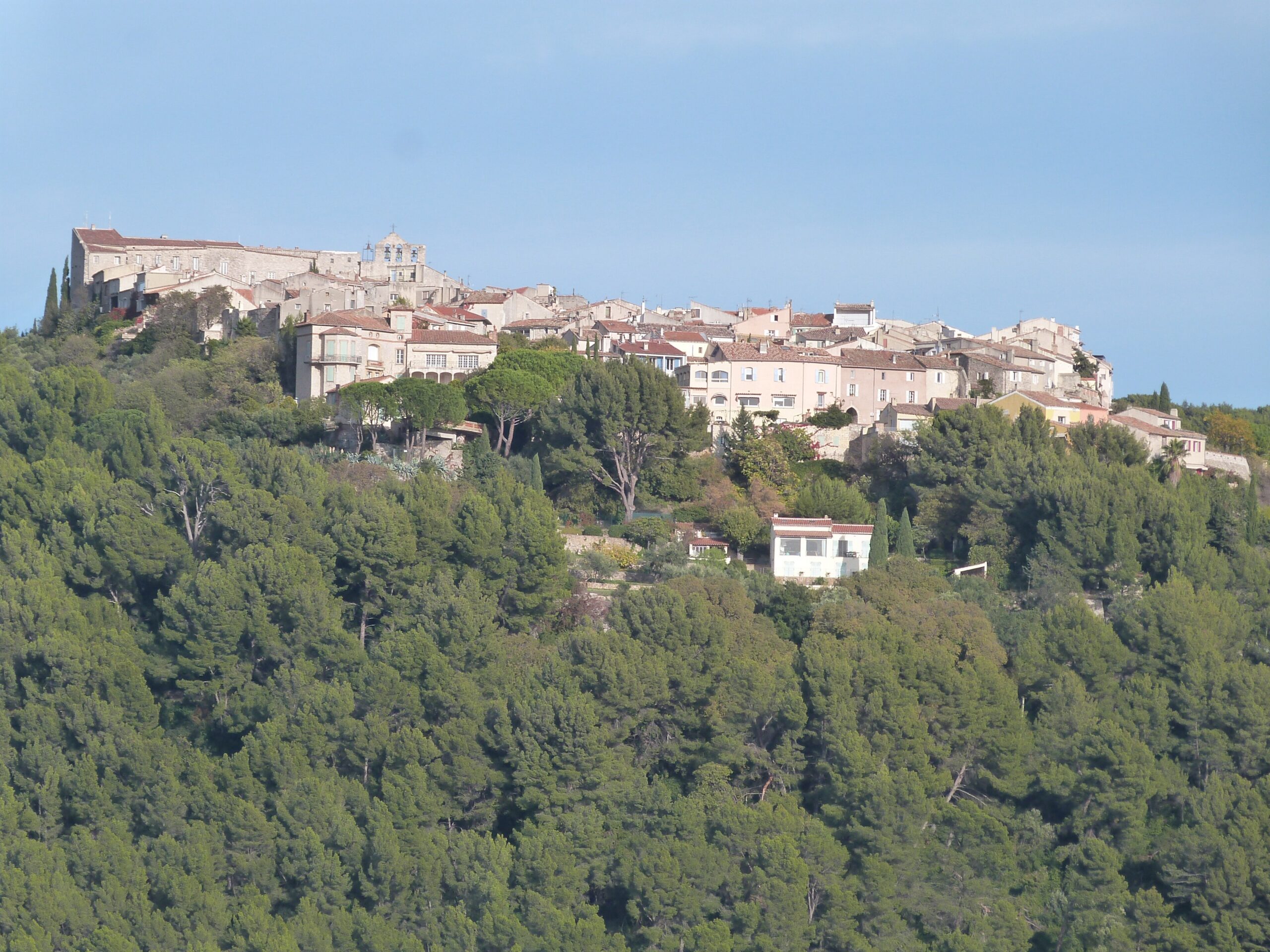
Le Castellet became a Plus Beau Village in 2022, a walled medieval village on a ridge above the Bandol vineyards with a 15th-century château, a 12th-century church and a gap in the ramparts, the Trou de Madame, that frames the Sainte-Baume massif. The Circuit Paul Ricard, home of the French Grand Prix, is on the plateau behind it. The Saturday morning market is at Le Plan du Castellet, the hamlet below the perched village, not in the village itself. Toulon is about 20 kilometers away and Bandol a quarter of an hour.
Wine tasting near Le Castellet: the Bandol estates
Bandol is the great red of Provence, Mourvèdre grown on terraces between the village and the sea, and five estates cover the range. Domaine Tempier, the estate that made the appellation famous, pours a free walk-in tasting of its white, rosé and red on weekdays. Domaines Bunan, the Moulin des Costes family estate below La Cadière, is open seven days a week in season with a free self-guided walk through the vines and land art. Château de Pibarnon farms a natural amphitheater of terraces up to 300 meters with the sea beyond and takes visitors by appointment Monday to Saturday; Domaine de la Bégude, on the plateau at the top of the appellation, offers tastings, cellar tours and pairings by appointment Tuesday to Saturday; and Château Pradeaux at Saint-Cyr, the traditionalist, sells and pours on weekdays with a 15 EUR guided visit by reservation. Our Bandol wineries itinerary turns these into a day on foot or by bike.
Why Guests Love It: Free Weekday Tastings, Benchmark Mourvèdre, Legendary Rosé
Moustiers-Sainte-Marie
- Scenery
- A village wedged into a cleft in the cliffs with a waterfall through the middle, a gilded star hung on a 135-meter chain overhead and the turquoise Lac de Sainte-Croix five minutes below.
- Eat & drink
- La Bastide de Moustiers, Alain Ducasse’s starred, Green-Starred inn; the Friday market; lavender honey and faience from the village workshops.
- History & archaeology
- Faience has been fired here since the 17th century; the star legend dates to a crusader knight of the Blacas family and the current star to 1995; the Notre-Dame de Beauvoir chapel above the village is 12th to 16th century.
- Don’t miss
- The 262 steps to the chapel at opening time, then a boat into the Verdon gorge.
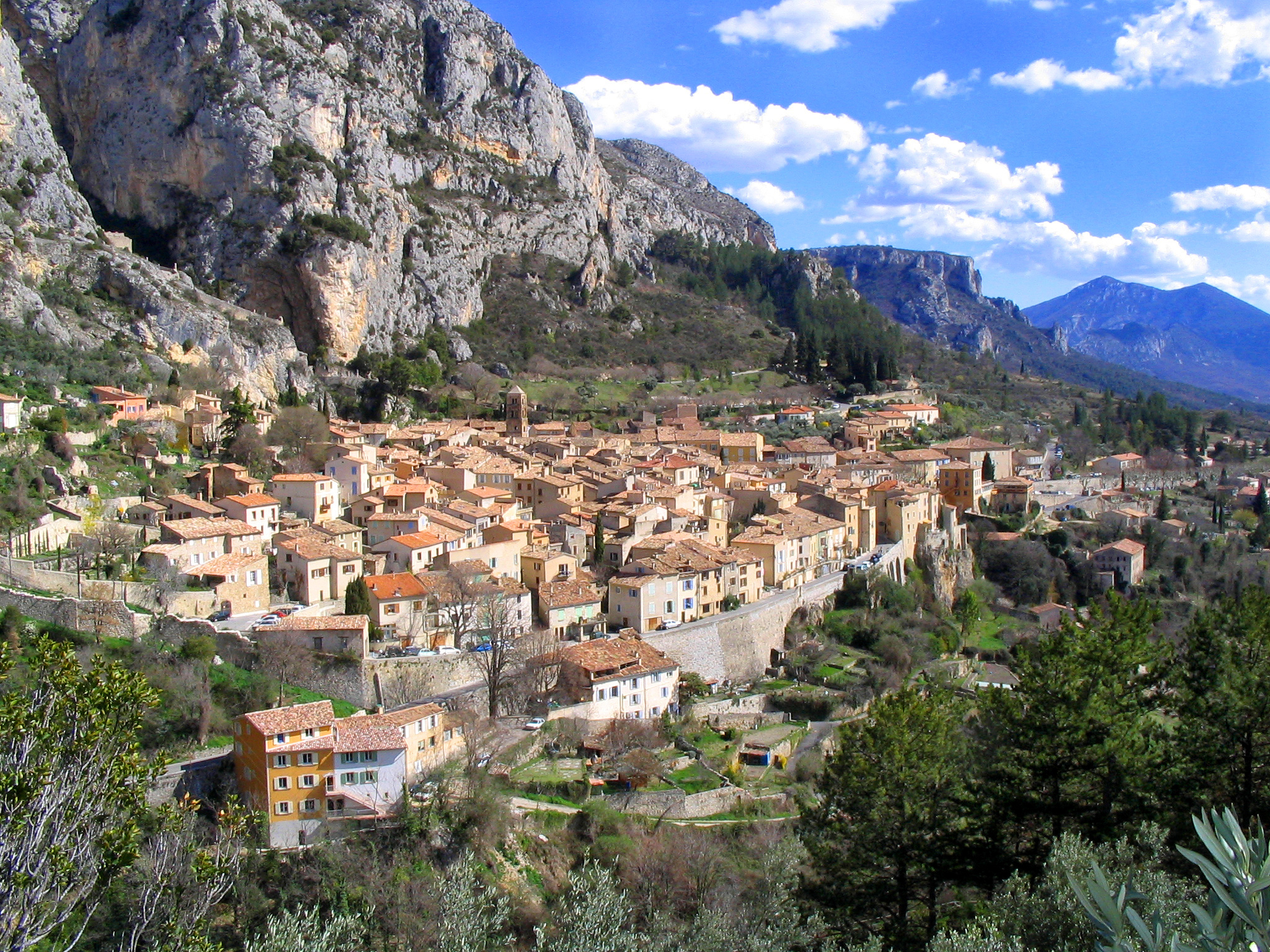
Moustiers-Sainte-Marie is wedged into a cleft in the cliffs at the entrance to the Gorges du Verdon, with a waterfall through the middle of the village and a gilded star hanging on a 135-meter chain between the two rock walls. The legend says a knight of the Blacas family hung it as a vow after his release from a Saracen prison; the current star dates from 1995 and is at least the eleventh. Climb the 262 steps to the Notre-Dame de Beauvoir chapel for the view, visit the Musée de la Faïence for the tin-glazed pottery the village has made since the 17th century (5 EUR, closed Tuesdays and in January), and drive five minutes to the turquoise Lac de Sainte-Croix to rent a pedal boat into the gorge. Market on Friday mornings. It is a Plus Beau Village, about 1 hour 45 from Aix and 2 hours from Marseille, with no wineries; the tourist office lists none, and the nearest tastings are on the Durance side around Manosque.
Tourtour
- Scenery
- The village in the sky at 635 meters, a square of elms and eight fountains, and a view that reaches the Mediterranean on a clear day.
- Eat & drink
- Wednesday and Saturday markets from March to October, the free Wednesday cellar tour at Château Thuerry below the village, and black truffles at the Aups market ten minutes away from November to March.
- History & archaeology
- A 12th-century old château and a 17th-century communal olive mill in the village; the painter Bernard Buffet lived and worked here at the Domaine de la Baume; a fossil museum holds the finds from the surrounding limestone.
- Don’t miss
- The fossil museum, then the belvedere at the church.
Tourtour calls itself the village in the sky, a Plus Beau Village at 635 meters in the Haut-Var with a square of elms and eight fountains, a market on Wednesday and Saturday mornings from mid-March to mid-October, and a view that reaches the sea on a clear day. It is fourteen kilometers from Cotignac and about twenty from Draguignan.
Wine tasting near Tourtour
Château Thuerry at Villecroze, ten minutes below the village, is a 340-hectare estate with 40 hectares of vines, 750 olive trees and a bastide with Templar origins; the shop is open six days a week and a free guided cellar tour runs on Wednesdays and Fridays at 2 pm by reservation. Half an hour south, Château de Berne is the Var’s vineyard resort, 175 organic hectares with a Relais & Châteaux hotel and the Michelin-starred Jardin de Berne, and its tasting cellar is open daily from 10 am.
Why Guests Love It: Templar Bastide, Free Cellar Tours, Olive Groves
Cotignac
- Scenery
- An 80-meter cliff of tuff riddled with caves above a plane-tree cours, waterfall-carved and honeycombed with troglodyte dwellings.
- Eat & drink
- Tuesday market of 80 stalls, Château Nestuby’s wine bar in the village, Lou Calen’s Green-Star Jardin Secret, and a two-hour biodynamic estate visit at Château Carpe Diem.
- History & archaeology
- The cliff dwellings sheltered villagers from the Middle Ages on; the sanctuary of Notre-Dame-de-Grâces on the hill marks a 1519 apparition, and Louis XIV came here in 1660 to give thanks for his birth.
- Don’t miss
- The rock walkway through the caves, then the cours at aperitif hour.
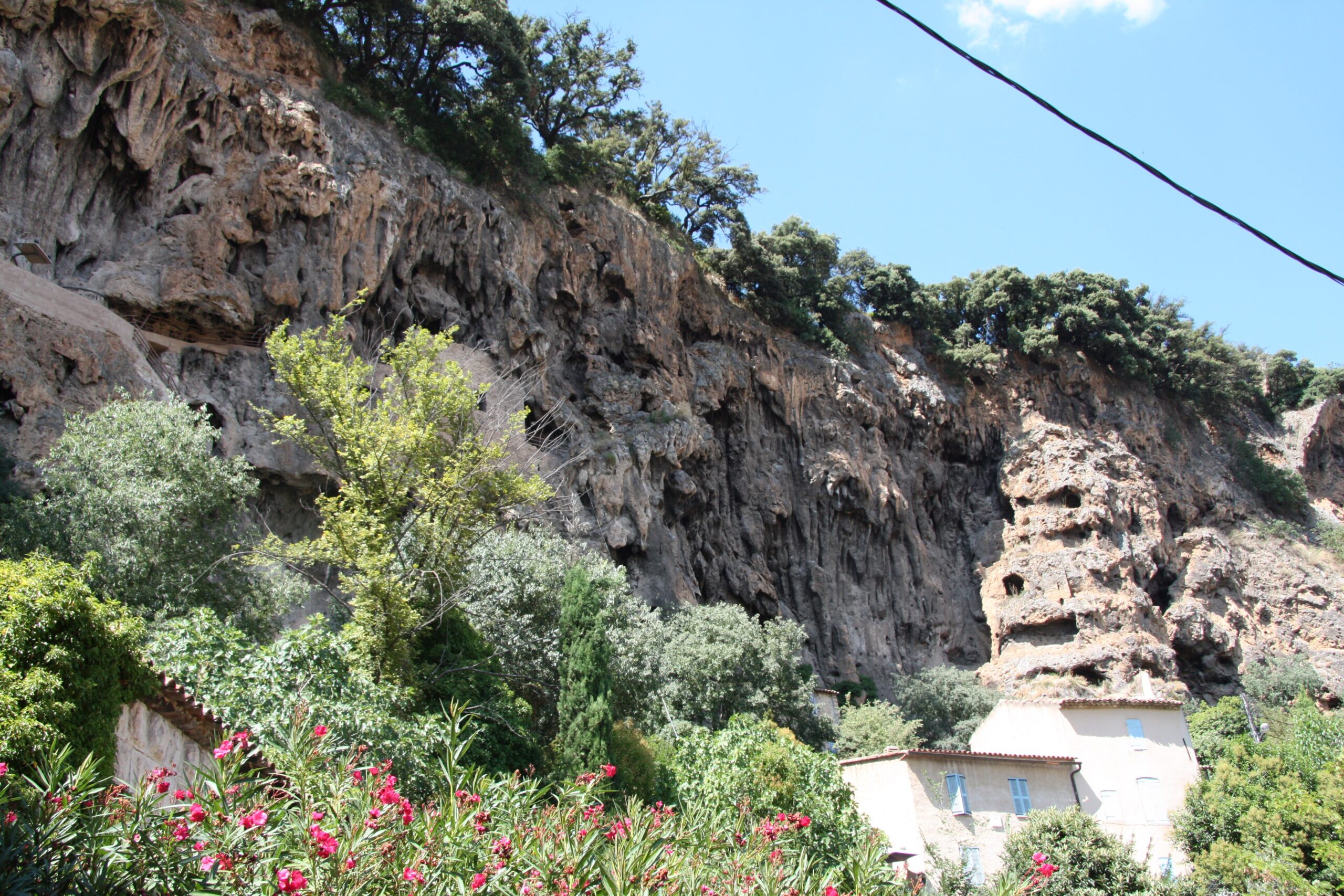
Cotignac sits at the foot of an 80-meter tuff cliff riddled with troglodyte dwellings you can walk into along a rock path, a Plus Beau Village with a plane-tree cours, a Tuesday morning market of about 80 stalls and the 16th-century sanctuary of Notre-Dame-des-Grâces on the hill above. It is the most lived-in of the Var villages, with a real café life.
Wine tasting near Cotignac
Château Nestuby, in the same family since 1949, is the village estate, with a cellar open Monday to Saturday, cellar visits by reservation, guest rooms in the château and a wine bar in the village. Château Carpe Diem, organic and biodynamic in the hills outside town, runs a two-hour estate visit and tasting for 20 EUR by reservation. Château Miraval at Correns, the famous one, does not receive visitors; its wines are tasted at the Famille Perrin cellar in Châteauneuf-du-Pape.
Why Guests Love It: Cotignac Local, Family Since 1949, Château Rooms
The Riviera Hinterland: Èze, Saint-Paul-de-Vence and Gourdon
Strictly these are the Côte d’Azur, but every American who searches for hilltop villages in Provence has Èze and Saint-Paul on the list, so here they are, with the one wine region nobody expects: Bellet, a roughly 50-hectare appellation on the hills above Nice growing grapes found almost nowhere else. All three villages are day trips from Nice, and two of them can be done by bus.
Èze
- Scenery
- A stone village 400 meters straight above the Mediterranean, with Cap Ferrat and the Riviera curving away beneath the Jardin Exotique.
- Eat & drink
- La Chèvre d’Or, two Michelin stars on the cliff edge; Château Eza’s one-star table; the Bellet estates above Nice, twenty minutes away, for a wine almost nobody outside the region has tasted.
- History & archaeology
- The medieval castle on the summit was razed on Louis XIV’s orders in 1706 and its site is now the garden; Nietzsche composed part of Thus Spoke Zarathustra on the path that climbs from the sea.
- Don’t miss
- The Nietzsche path up from Èze-sur-Mer, then the garden at the top.
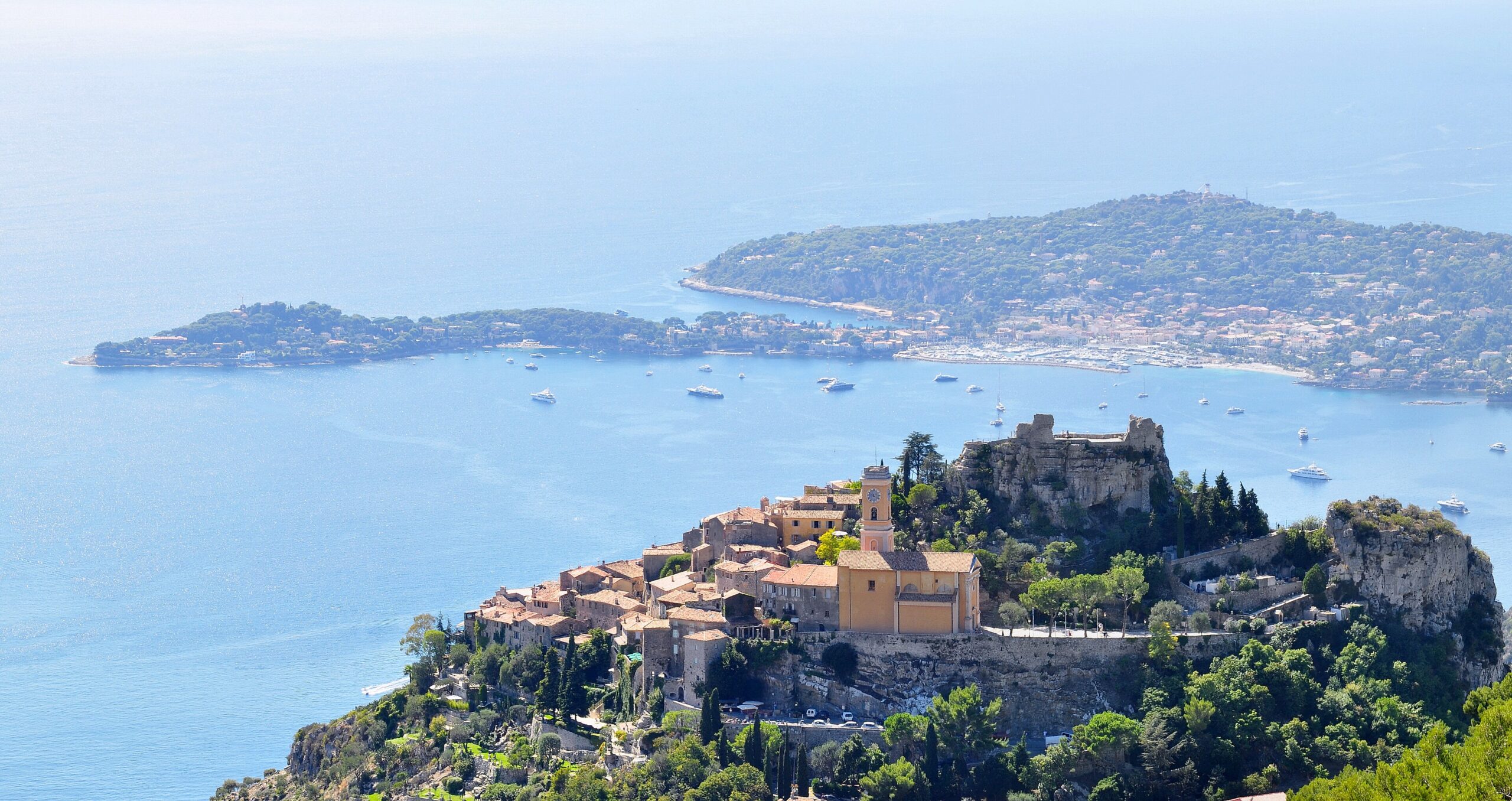
Èze hangs 400 meters above the sea between Nice and Monaco, a stone village of lanes too narrow for cars with the Jardin Exotique of cacti and sculpture at the summit (adults 10 EUR, open from 9 am daily, to 7:30 pm in summer). The Fragonard and Galimard perfume factories at the foot of the village give free guided tours every day with no booking, and the Chemin de Nietzsche, 2.1 kilometers and 350 meters of descent to Èze-sur-Mer, is the walk the philosopher took while writing Zarathustra. The airport is 30 minutes away, and Lignes d’Azur bus 82 from Nice Vauban reaches the village, so this is the one village you can do without a car.
Wine tasting near Èze: the Bellet estates above Nice
Twenty minutes from the airport, the Bellet hills grow Rolle for the whites and Braquet and Folle Noire for the reds and rosés. Château de Bellet, the estate of the barons who named the appellation, runs a 50-minute tour ending with three wines in a deconsecrated chapel (20 EUR, booked online). Château de Crémat, an early-1900s castle in 14 hectares of vines, is open Monday to Saturday year-round with 45-minute tours and tastings of three or six wines for 25 or 30 EUR. Domaine de la Source, the Dalmasso family’s organic seven hectares, pours reserved tastings from 25 EUR, and Clos Saint-Vincent, organic and biodynamic since 1993, receives visitors by appointment.
Why Guests Love It: Chapel Tasting Room, Nice’s Own Wine, Twenty Minutes From the Airport
Saint-Paul-de-Vence
- Scenery
- A walled spur between two valleys, ramparts, cypresses and the Alps behind, twenty minutes from the Nice waterfront.
- Eat & drink
- Lunch under Picassos and Légers at La Colombe d’Or, the new 2026 star at La Table de Pierre, Wednesday and Friday markets, and pétanque on the square where Yves Montand played.
- History & archaeology
- The ramparts were built under François I in 1538; the Fondation Maeght opened in 1964 with works by Miró, Giacometti and Chagall, and Chagall himself is buried in the village cemetery.
- Don’t miss
- The Maeght, then the ramparts walk at closing time.
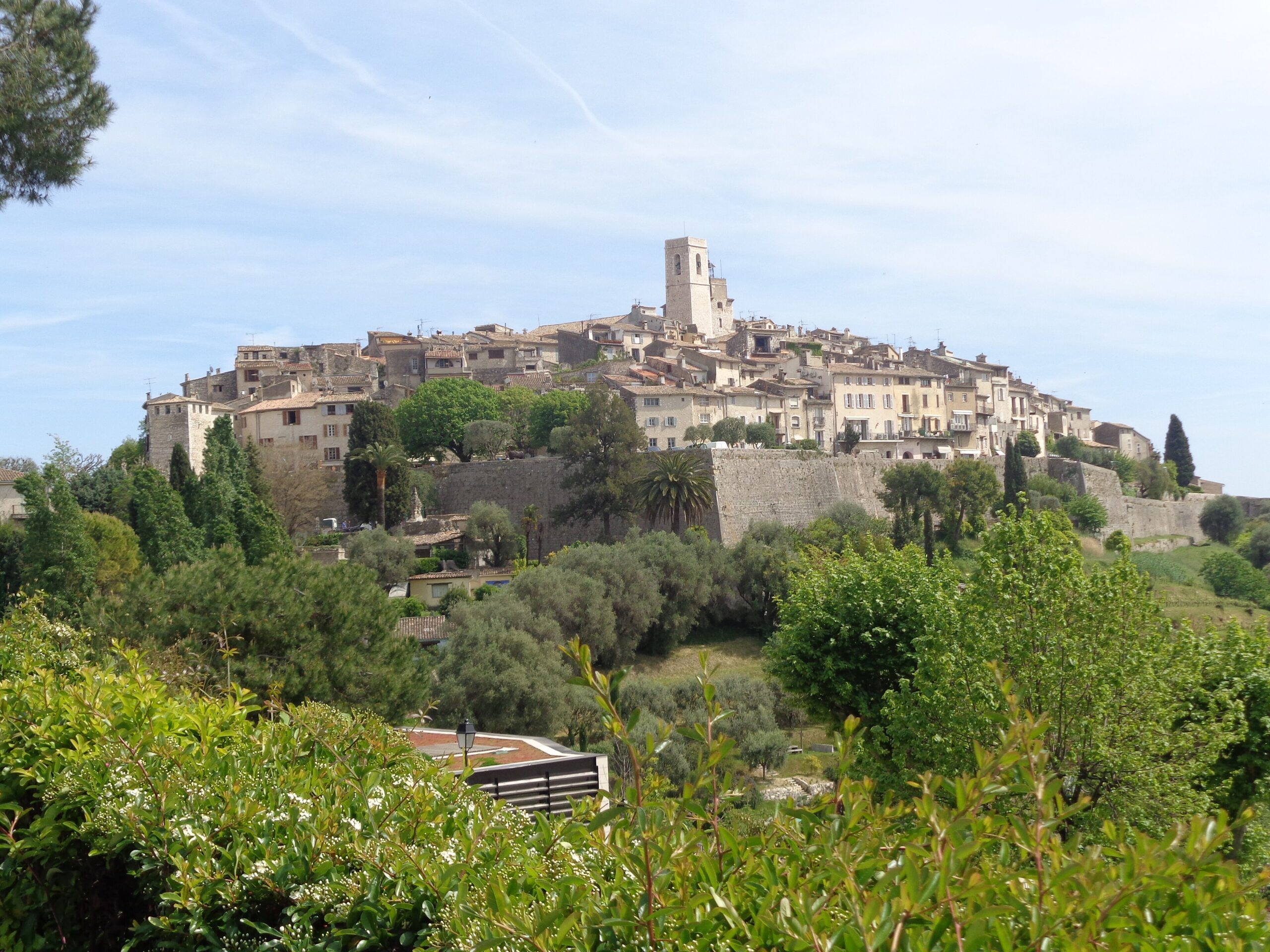
Saint-Paul-de-Vence is the artists’ village, a 16th-century walled town 20 kilometers from Nice where Chagall is buried and where the Fondation Maeght (adults 18 EUR, open daily) holds one of Europe’s great modern-art collections in a Sert building among the pines. La Colombe d’Or, the inn where Picasso, Matisse and Léger paid in paintings, still serves lunch under them and still books by phone or email only; it closes from early November until Christmas. Markets are on Wednesday and Friday mornings. The old bus 400 from Nice no longer runs; take the tram to Parc Phoenix, then buses 9 or 620 to Cagnes-sur-Mer and 655 up to the village, about 1 hour 10 in all, or drive 15 kilometers from the airport.
Gourdon
- Scenery
- An eagle’s nest at 760 meters on the lip of the Loup gorge, with the coast from Nice to Cap d’Antibes spread out from the belvedere.
- Eat & drink
- A coffee on the belvedere, the Sunday market from April to October, and the violet growers of Tourrettes-sur-Loup on the road down.
- History & archaeology
- A château rebuilt in the 17th century on 12th-century foundations, private and closed, with gardens attributed to Le Nôtre seen from the walls; Queen Victoria came up for the view in 1891.
- Don’t miss
- The belvedere, then the Gorges du Loup road back toward the coast.

Gourdon sits at 760 meters on the lip of the Loup gorge above Grasse, a Plus Beau Village so small you can walk it in twenty minutes, with a belvedere on Place Victoria named for the queen’s visit in 1891 and a view over the coast from Nice to Cap d’Antibes. The château is private and currently closed, so its Le Nôtre gardens are admired from the walls. Sunday market from April to October. Come for the view and the drive, and taste the violets of Tourrettes-sur-Loup on the way down.
Map: Provence Hilltop Villages and the Wineries Near Them
Every estate in this guide has its own page in our winery directory, with hours, tasting prices and directions. Gold circles are the villages; pins are the wineries. The Luberon cluster also includes Domaine des Peyre at Robion on the western edge of the park, an organic estate with an art trail through the vines and tastings from 8 EUR.
Hilltop villages of Provence and the wineries to visit near them · tap a pin for the winery guide. Map data © OpenStreetMap.
Lavender in Provence: Sénanque, Valensole and Sault
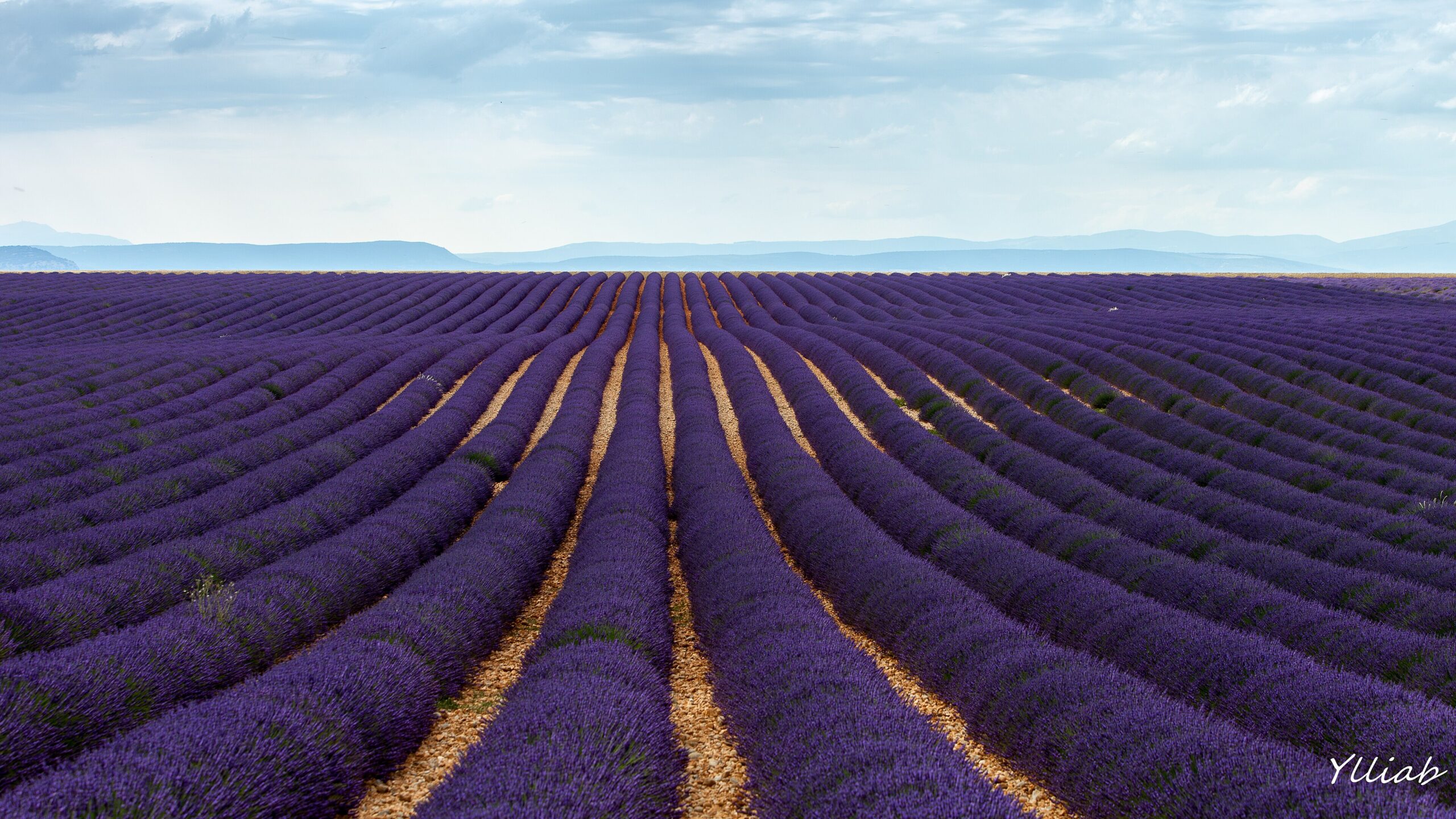
The photograph everyone wants is the 12th-century Cistercian Abbaye de Sénanque in its valley below Gordes with the lavender in front of it, and the lavender is at its best from late June into the first half of July, before the harvest. A few things to know before you go. The abbey is a working monastery, so visits keep to set hours: Monday to Saturday from 9:45 am with a break at midday and last entry at 5 pm, Sunday afternoons only. Adult admission is 8 EUR, children 6 to 17 pay 4 EUR, and you can choose a one-hour guided tour in French, a self-guided visit with the HistoPad app in eleven languages, or an unguided walk; booking ahead online is recommended in lavender season. A proper dress code and silence are asked of visitors. Access to the lavender fields themselves is forbidden to protect the harvest, so the shot is taken from the road and the car park, not from among the rows. The public car park is free and five minutes’ walk from the entrance, and from March 15 to September 30 the D177 from Gordes runs one-way, so follow the signed loop back toward the village.
Sénanque is the famous photograph, but the sea of lavender most people picture is the Valensole plateau, forty minutes from Moustiers, where the bloom runs from roughly June 15 to July 15 (in 2026 it opened on June 10 and the cutting began at the end of the month) and the Fête de la Lavande falls on Sunday, July 19, 2026. Most of Valensole is lavandin, the high-yield hybrid; true fine lavender grows higher up around Sault, where it flowers in the first half of July and the harvest runs into August, with Sault’s festival on August 15. The rules are the same everywhere: the fields are private farms, so stay on the paths and out of the rows, park only where signed, and take your litter. The Luberon’s own lavender, around Gordes and Bonnieux, follows Sénanque’s late-June-to-mid-July window.
Getting to the Villages: Trains, Airports and Why You Need a Car
You need a car for almost all of this. From Paris, the TGV reaches Avignon TGV in as little as 2 hours 33 and Aix-en-Provence TGV in about 2 hours 54; both stations sit outside their cities (a five-minute shuttle train links Avignon TGV to the center, bus A2 links Aix TGV to Marseille airport and Aix), and both have car rental. Marseille Provence airport is 65 kilometers from Les Baux and about 76 from Gordes; Nice airport is 15 kilometers from Saint-Paul and 30 minutes from Èze. Budget roughly 5 to 10 EUR in tolls each way between Marseille and the Luberon, and about 21 EUR between Aix and Nice. Public transport reaches Èze (bus 82 from Nice) and Saint-Paul (tram plus buses 9 or 620 and 655) all year, and Les Baux (bus 707 from Avignon) and Moustiers (Zou! line 450) in summer only; Ménerbes, Lourmarin, Séguret, Venasque, Le Castellet, Tourtour, Cotignac and Gourdon have no practical service. Two sensible loops from Avignon or Aix: Gordes, Roussillon and Sénanque on one day, then Ménerbes, Bonnieux and Lourmarin the next; and Les Baux with Saint-Rémy on a third.
Market Days in the Hilltop Villages
Provence runs on market mornings, and the villages are at their best on theirs. Days from the tourist offices, all morning markets unless noted: Gordes Tuesday; Roussillon Thursday; Ménerbes Thursday, April to October; Bonnieux Friday; Lourmarin Friday; Lacoste Wednesday, April to September; Saint-Rémy-de-Provence (for Les Baux, which has no weekly market) Wednesday and Saturday; Vaison-la-Romaine Tuesday, plus a farmers’ market Saturday; Séguret and Venasque Thursday evenings in summer only; Le Castellet Saturday at Le Plan du Castellet; Moustiers-Sainte-Marie Friday; Tourtour Wednesday and Saturday, mid-March to mid-October; Cotignac Tuesday; Saint-Paul-de-Vence Wednesday and Friday; Gourdon Sunday, April to October. Off-season has its own calendar: the Aups black-truffle market on Thursday mornings from late November to March, Richerenches on Saturdays from mid-November, Marseille’s santon fair on the Vieux-Port from November 14, 2026, and the green-olive festival at Mouriès on the third weekend of September.
Guided Village and Wine Tours From Aix and Avignon
If you would rather not drive, or you want to taste without counting glasses, a guided day trip pairs the villages with the estates. The full-day tours from Aix cover the hilltop villages and two or three Luberon domaines with lunch; the half-day from Avignon is the option if you are short on time. We earn a small commission if you book through these links, at no extra cost to you.
A full day from Aix that pairs the hilltop villages with Luberon domaine visits and tastings, the closest thing to this article on wheels.
Check availability on ViatorA wine-first day around the Luberon from Aix with several estate tastings, for travelers who want more cellar time than village time.
Check availability on ViatorA five-hour small-group tour from Avignon into the classified Provence estates, the option if you are based on the Avignon side and short on time.
Check availability on ViatorWhere to Stay in Provence: The Best Luxury Hotels Near the Villages
Provence has one of the densest clusters of five-star, Palace and Relais & Châteaux hotels in rural Europe, most of them old bastides with pools looking over the vines. Base yourself in the hills rather than commuting from the cities; the villages are at their best at breakfast and after the day-trippers leave. These are the ones we would book, area by area. Saint-Rémy, Gordes and Saint-Paul have the deepest hotel inventory if you want choice; Les Baux, Lourmarin and Moustiers have the fewest rooms, so book early. We earn a small commission on the booking links, at no extra cost to you.
The Luberon
Nine hotels within fifteen minutes of the five Luberon villages.
Airelles Gordes, La Bastide
The only Palace-rated hotel in the Luberon, awarded the distinction in 2016, Airelles Gordes occupies an 18th-century bastide on the edge of the village with the valley view that made Gordes famous. Thirty-four rooms and six suites, an Airelles Spa by Guerlain with an indoor pool, and four restaurants including Clover Gordes from chef Jean-François Piège. This is the splurge.
Check availability on Booking.comLes Bories & Spa, Gordes
A five-star Small Luxury Hotels member in the hills above Gordes, Les Bories has 34 rooms and suites among old stone bories and lavender, a 300-square-meter spa, indoor and outdoor heated pools, tennis and a Michelin-listed restaurant under chef Nguyen Danh Cuong. Quieter than the village hotels and a short drive from Sénanque.
Check availability on Booking.comLe Phébus & Spa, Joucas
Ten minutes from Gordes and Roussillon at Joucas, Le Phébus is a five-star Relais & Châteaux with 30 rooms and suites in a four-hectare park, a spa, a heated pool and chef Xavier Mathieu’s Michelin-starred table. The pick if you want a starred dinner with both villages within reach.
Check availability on Booking.comLe Mas des Herbes Blanches, Joucas
A Relais & Châteaux member since 1976, Le Mas des Herbes Blanches has 48 rooms and suites on the Joucas hillside facing the Luberon, a CODAGE spa with an indoor pool, a seasonal outdoor pool and two restaurants. The view from the terrace at sunset is the reason to book.
Check availability on Booking.comCoquillade Provence Resort & Spa, Gargas
The one five-star in the Luberon with its own vineyard on the property: Coquillade Provence, a Relais & Châteaux member since 2010, is an 11th-century hamlet on a hill between Gargas and Roussillon with rooms, suites and villas, a 1,500-square-meter spa, two outdoor pools and two restaurants, and the organic Domaine de la Coquillade wines poured at the table and in the caveau below.
Check availability on Booking.comLa Bastide de Marie, Ménerbes
The Sibuet family’s La Bastide de Marie is a five-star farmhouse hotel set inside the 30 hectares of vines of Domaine de Marie below Ménerbes, with 14 rooms plus private villas, a Pure Altitude spa, pools and a Michelin Key. It is the closest thing in the Luberon to sleeping in the vineyard with a Provençal kitchen downstairs.
Check availability on Booking.comCapelongue, a Beaumier Hotel & Spa, Bonnieux
Long known as La Bastide de Capelongue, Capelongue is now a five-star Beaumier hotel above Bonnieux with 57 rooms and suites across the bastide, the farm and the dovecote, a spa with a Roman bath, two pools, padel courts and a Michelin Key. Its restaurant La Bastide holds a Michelin star under chef Noël Bérard.
Check availability on Booking.comDomaine de Fontenille, Lauris
Ten minutes from Lourmarin, Domaine de Fontenille is a Relais & Châteaux hotel in an 18th-century bastide with 19 rooms and suites, a heated pool and hammam, its own 40-hectare organic vineyard and a Michelin-listed restaurant, La Cuisine d’Amélie. Taste, dine and sleep without moving the car.
Check availability on Booking.comLe Moulin, Lourmarin
For a base in Lourmarin itself, Le Moulin is Beaumier’s 35-room four-star boutique hotel in an old mill in the village, with a pool and two restaurants, and the Friday market, the château and Château Constantin’s tasting room all within walking distance.
Check availability on Booking.comThe Alpilles: Les Baux-de-Provence and Saint-Rémy
Baumanière, below the rock of Les Baux, is the legend: a five-star Relais & Châteaux of 53 rooms and suites in five houses, three pools, a spa, and L’Oustau de Baumanière, which holds three Michelin stars and a Green Star under Glenn Viel (closed Tuesday to Thursday and from late January to early March). Founded in 1945, it is where Provence’s great hotel tradition began.
Check availability on Booking.comDomaine de Manville, on the plain below Les Baux, is the modern alternative: a five-star with 30 rooms and nine villas, a spa, a pool, an 18-hole golf course, a Michelin Key and L’Aupiho, its one-star restaurant. In Saint-Rémy, Le Vallon de Valrugues has 59 rooms, seven villas with private heated pools and a 600-square-meter spa, and the nine-suite Hôtel de Tourrel in the town center holds a Michelin Key and a one-star table.
Domaine de Manville on Booking.com Le Vallon de Valrugues on Booking.comBandol and the Var
Hôtel & Spa du Castellet, on the plateau above the village beside the circuit, is a five-star Relais & Châteaux with 43 rooms and suites, indoor and outdoor heated pools, a spa, and La Table du Castellet, where chef Fabien Ferré holds three Michelin stars (lunch Friday to Sunday, dinner Wednesday to Saturday).
Check availability on Booking.comChâteau de Berne, between Lorgues and Flayosc, half an hour from Tourtour and Cotignac, is the vineyard resort of the Var: a five-star Relais & Châteaux of 34 rooms and suites and seven villas in 175 hectares of organic vines, an 800-square-meter Cinq Mondes spa, and Le Jardin de Berne, one Michelin star and a Green Star under Louis Rameau. In Cotignac itself, Lou Calen has 36 rooms in three hectares with three heated pools and the Green Star restaurant Jardin Secret; above Tourtour, the four-star La Bastide de Tourtour has 23 rooms, a spa and an indoor pool five minutes’ walk from the square.
Château de Berne on Booking.com Lou Calen on Booking.comThe Verdon: Moustiers-Sainte-Marie
La Bastide de Moustiers is Alain Ducasse’s country inn on the edge of the village, 11 rooms and two suites in a 17th-century bastide with a pool and a kitchen garden, and a restaurant that holds a Michelin star and a Green Star (menus from 90 EUR; closed Tuesdays and Wednesdays in spring and autumn). It is a four-star, not a five, and the best address in the Verdon by some distance.
Check availability on Booking.comThe Riviera Hinterland: Èze and Saint-Paul-de-Vence
Château de la Chèvre d’Or is the Èze icon, a five-star Relais & Châteaux of 45 rooms and suites stacked down the cliff with two pools, a spa and four restaurants, the main one holding two Michelin stars under Tom Meyer (open April 9 to October 24, 2026). Its neighbor Château Eza, 14 rooms in a 400-year-old prince’s residence, has its own one-star table and the same view.
Château de la Chèvre d’Or on Booking.com Château Eza on Booking.comIn Saint-Paul, Le Domaine du Mas de Pierre is the resort: a five-star Relais & Châteaux of 76 rooms and suites in nine bastides on eight hectares, a 2,000-square-meter spa, a lagoon pool, and La Table de Pierre, which won its first Michelin star in 2026. Le Saint-Paul, 20 rooms inside the walls, is the Relais & Châteaux for sleeping in the village itself (no car access; luggage is carried in). La Colombe d’Or, the art-hung inn of the Picasso years, takes bookings by phone or email only and is not on the booking sites.
Le Domaine du Mas de Pierre on Booking.com Le Saint-Paul on Booking.comFor the wider region, see our guide to the best luxury hotels in Provence, and pair the villages with our guide to the best Provence wineries to visit and the Provence destination hub.
Where to Eat: Michelin-Starred Restaurants Near the Villages
The 2026 Michelin Guide gives these villages a density of stars you would not expect from places this small, and almost all of them sit within fifteen minutes of a village above. All take reservations, most close two days a week, and the starred tables shut for part of the winter, so book before you commit to a village for the night. In the Luberon:
La Table des Amis at Le Mas Les Eydins outside Bonnieux is the region’s two-star, Christophe and Alexandra Bacquié’s single-menu table in a farmhouse among the vines; book online well ahead. Also in Bonnieux, La Bastide at Capelongue holds one star under Noël Bérard, with dinner Tuesday to Saturday and lunch on Fridays and Saturdays from late April to late September (tasting menus 155 to 175 EUR), and JU, Maison de Cuisine, Julien Allano’s one-star in the village, is the more relaxed of the three. In Joucas, La Table de Xavier Mathieu at Le Phébus has its star, dinner nightly and lunch Friday to Sunday. South of the range, La Petite Maison de Cucuron, Éric Sapet’s one-star on the village square, serves lunch and dinner Wednesday to Saturday and Sunday lunch; Garrigue in Ansouis, Nicolas Seibold’s table, won its first star in 2026 (lunch menu 55 EUR midweek, tasting menu 95 EUR); and Le Goût du Bonheur at Auberge La Fenière in Cadenet, ten minutes from Lourmarin, is Nadia Sammut’s one-star, entirely gluten-free kitchen with a Michelin Green Star, serving fifteen covers a sitting Thursday to Sunday. For a cheaper night, La Table de Pablo in Villars near Apt has held a Bib Gourmand since 2009, and Le Carillon in Goult is a Michelin-listed village restaurant, closed Tuesdays and Wednesdays.
Around Les Baux and Saint-Rémy: L’Oustau de Baumanière is the region’s three-star, with a Green Star, closed Tuesday to Thursday; L’Aupiho at Domaine de Manville has one star, dinner Wednesday to Sunday; in Saint-Rémy, L’Auberge de Saint-Rémy by Fanny Rey and Jonathan Wahid holds two stars and La Table de Tourrel one. Around Bandol and the Var: La Table du Castellet has three stars under Fabien Ferré; Le Jardin de Berne at Château de Berne one star and a Green Star, dinner only; Jardin Secret at Lou Calen in Cotignac a Green Star. In the Verdon: La Bastide de Moustiers, one star and a Green Star. Behind the Riviera: La Chèvre d’Or in Èze, two stars, open April to October; Château Eza, one star; La Table de Pierre at the Mas de Pierre in Saint-Paul, a new star in 2026; and Alain Llorca at La Colle-sur-Loup next door, one star. Le Tilleul on the ramparts of Saint-Paul is the Michelin-listed lunch at 32 to 39 EUR.
What to drink where: a Luberon white with lunch in Bonnieux, Ventoux red with the lamb in Venasque, Les Baux-de-Provence red or a Bandol rosé from Tempier at the coast, a Bellet white in Èze, and the house rosé everywhere else, which in Provence is rarely a mistake.
Frequently Asked Questions
What are the most beautiful villages in Provence?
The closest thing to an official answer is the Plus Beaux Villages de France label, France’s national certification for its best-preserved rural villages (184 in the country). In Provence it goes to Gordes, Roussillon, Ménerbes and Lourmarin in the Luberon; Les Baux-de-Provence in the Alpilles; Séguret and Venasque under Mont Ventoux; Le Castellet above Bandol; Moustiers-Sainte-Marie at the Verdon; Tourtour and Cotignac in the Var; and Gourdon above Grasse. Bonnieux, Èze and Saint-Paul-de-Vence are not certified but belong on any itinerary.
Which hilltop village in Provence is best to stay in?
Gordes and Saint-Rémy (for Les Baux) have the most luxury hotels, from Airelles Gordes to Baumanière. Lourmarin, Bonnieux and Cotignac are best for markets and café life. For a starred dinner with a view, Èze; for a vineyard stay, Domaine de Fontenille near Lourmarin, Château de Berne in the Var or La Bastide de Marie below Ménerbes.
What are the best wineries to visit near the Provence villages?
Domaine de la Citadelle (Ménerbes) and Domaine La Cavale (Lourmarin) for free walk-in tastings; Château la Canorgue (Bonnieux), the Luberon’s first organic estate; Mas de la Dame and Mas Sainte Berthe below Les Baux; Domaine Tempier and Domaines Bunan in Bandol; Domaine de Mourchon above Séguret; Château Pesquié under Ventoux; and Château de Bellet or Château de Crémat above Nice. All 35 estates in this guide have pages in our winery directory.
When does the lavender bloom in Provence?
Late June to mid-July in most of Provence. The Valensole plateau runs roughly June 15 to July 15 with the harvest from late June; Sénanque Abbey near Gordes peaks from late June into July; the fine lavender around Sault flowers in the first half of July and is harvested into August. The fields are private farms: photograph from the paths, never from inside the rows.
Can you visit the Provence hilltop villages without a car?
Only two of them easily: Èze (bus 82 from Nice) and Saint-Paul-de-Vence (tram plus buses 620 and 655 from Nice). Les Baux and Moustiers have summer-only buses. The Luberon, Séguret, Venasque, Le Castellet, Tourtour, Cotignac and Gourdon need a car or a guided tour from Avignon, Aix or Marseille.
How many days do you need to see the villages of Provence?
Two days for the five Luberon villages, one for Les Baux and Saint-Rémy, one for Bandol and Le Castellet, one for Moustiers and the Verdon, and one for Èze and Saint-Paul from Nice. A week covers the west and the coast; ten days covers everything in this guide without rushing.
Are there Michelin-starred restaurants in the Provence villages?
Yes, an unusual number. Three-star: L’Oustau de Baumanière at Les Baux and La Table du Castellet above Bandol. Two-star: La Table des Amis at Bonnieux, L’Auberge de Saint-Rémy, La Chèvre d’Or in Èze. One-star tables sit in or beside Bonnieux, Joucas, Cucuron, Ansouis, Cadenet, Les Baux, Saint-Rémy, Moustiers, Lorgues, Èze and Saint-Paul-de-Vence. Book ahead and check winter closures.
When is the best time to visit the hilltop villages of Provence?
May, June and September. Lavender peaks from late June into July, which is also when Gordes, Les Baux and Moustiers are most crowded. July and August are hot; start early. From November to March many hotels and restaurants in Gordes, Les Baux and Moustiers close for some weeks, so check before booking, though the truffle markets at Aups and Richerenches make winter worth it for eaters.
Sources and further reading
- Les Plus Beaux Villages de France
- Abbaye Notre-Dame de Sénanque
- Alpes-de-Haute-Provence Tourisme (Valensole lavender)
- Ventoux Provence (Sault lavender)
- Destination Luberon
- Les Baux-de-Provence tourist office
- Carrières des Lumières
- Moustiers-Sainte-Marie tourist office
- Èze tourist office
- Saint-Paul-de-Vence tourist office
- Michelin Guide France 2026
- Relais & Châteaux
- SNCF Connect
- Zou! regional transport